
What if a pocket-sized camera could deliver studio-quality product shots? This guide compares the best point-and-shoot cameras for product photography and recommends what to buy in 2026. Whether you’re upgrading from a smartphone or downsizing from a bulkier kit, you’ll find concise buying advice and real-world trade-offs.
We look at how compact cameras handle stills and video, from tight e-commerce packshots to short demo clips for social. Our focus is on reproducible color, fine detail, and practical features that speed up a shoot. I’ll also weigh ergonomics, file formats, and ease of transfer so you can keep your workflow moving.
Portability often comes at the cost of lens reach and sensor size, and those limits affect low-light performance and depth-of-field control. But many compact cameras strike excellent balances, delivering sharp detail in controlled lighting and usable video for product demos. We’ll explain which compromises matter most depending on product scale, texture, and output size.
By the end you’ll know which compact setups are best for jewelry, small electronics, apparel, or lifestyle imagery. The goal is to match a pocketable camera to your lighting, retouching workflow, and where your images will appear. Read on to save time, avoid costly mistakes, and pick a compact camera that genuinely improves your product photography.
1. Sony RX100 VII Overview
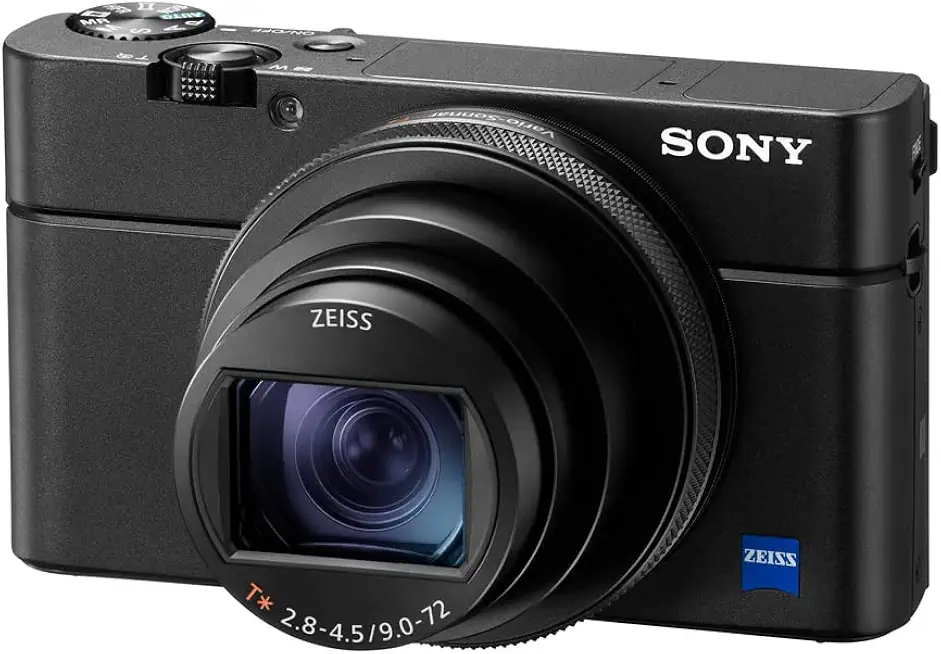
Sony RX100 VII DSC-RX100M7
Pocketable powerhouse delivering pro-grade image quality, lightning-fast autofocus, versatile zoom range, and advanced video features for creators on the move.
Check PriceThe Sony RX100 VII is a compact workhorse that punches above its size for product photography. It pairs a 20.1MP 1‑inch stacked Exmor RS CMOS sensor with a Zeiss 24–200mm f/2.8–4.5 zoom, giving you a huge framing range in a pocketable body.
Autofocus is a standout — 357 phase‑detection + 425 contrast‑detection points with real‑time tracking and eye AF makes locking onto fine product details fast and reliable. The camera even offers 20 fps blackout‑free burst shooting, though be aware buffer clearing delays can interrupt long continuous sequences.
In good light the RX100 VII delivers very good image quality and vibrant colors, and 4K video with direct pixel readout is excellent for product demo clips. Noise becomes noticeable above ISO 1600, so plan on solid lighting or controlled studio illumination for clean stills.
The 24–200mm zoom is superb for framing everything from small accessories to larger items without moving the camera, but sharpness drops noticeably at the full 200mm end — I usually avoid the extreme tele end for critical detail. Ergonomically the small body is convenient for travel and tight spaces, though it can feel cramped during long shoots.
Bottom line: if you need a highly portable camera with exceptional AF, flexible framing and strong daylight performance for e‑commerce or on‑location product work, the RX100 VII is a great choice. Add good lighting and avoid relying on the very end of the zoom for tack‑sharp detail.
- Exceptional, fast autofocus for precise product focus
- Versatile 24–200mm zoom for framing flexibility
- Very good image quality for a compact camera
- Highly portable for small studios or on-the-go shoots
- Noticeable sharpness falloff at maximum zoom
- Small body can be uncomfortable for long sessions
2. Fujifilm X100F / X100V Overview

Fujifilm X100V
Classic-styled compact with large sensor, exceptional color science, hybrid viewfinder, and sharp fixed lens for stunning street and travel photography.
Check PriceThe Fujifilm X100F / X100V is a compact, fixed‑lens camera built around an APS‑C X‑Trans CMOS III/IV sensor (24.3–26MP) paired with a sharp 23mm (35mm equivalent) f/2 prime. It combines hybrid autofocus with Fujifilm’s film simulation modes and offers a large 3‑inch LCD plus a hybrid optical/electronic viewfinder for precise composition.
In practice this body delivers punchy, vibrant files that are excellent for print and e‑commerce — the color accuracy and texture rendering are particularly strong, so fabric, finishes and product details really pop. The larger APS‑C sensor also gives you better dynamic range and image quality than typical 1‑inch compacts, which matters when you need clean, high‑detail shots for catalogs.
The 23mm f/2 prime is incredibly sharp and ideal when your priority is texture and fine detail, but the trade‑off is flexibility: framing requires physically moving the camera or product because there’s no zoom. The hybrid OVF/EVF and 3‑inch LCD make it easier to nail composition and critical focus despite the fixed focal length.
Autofocus is reliable for still product work, though it won’t match the speed of the fastest compacts in continuous or low‑light scenarios, so expect to take a bit more time for tricky focusing. Battery life is solid for extended shoots; be aware the X100F lacks weather sealing while the X100V adds partial sealing if you need more ruggedness.
If you want outstanding color, texture and print‑ready files and can work around a single focal length, the X100F/X100V is a photographer’s compact that rewards careful setup and composition.
- Excellent APS‑C image quality (24.3–26MP)
- Sharp 23mm f/2 prime — great for texture/detail
- Film simulations for creative, accurate color
- Solid battery life for extended shoots
- No zoom — must move camera to reframe
- Autofocus slower in continuous or low light
3. Ricoh GR II / GR III Overview
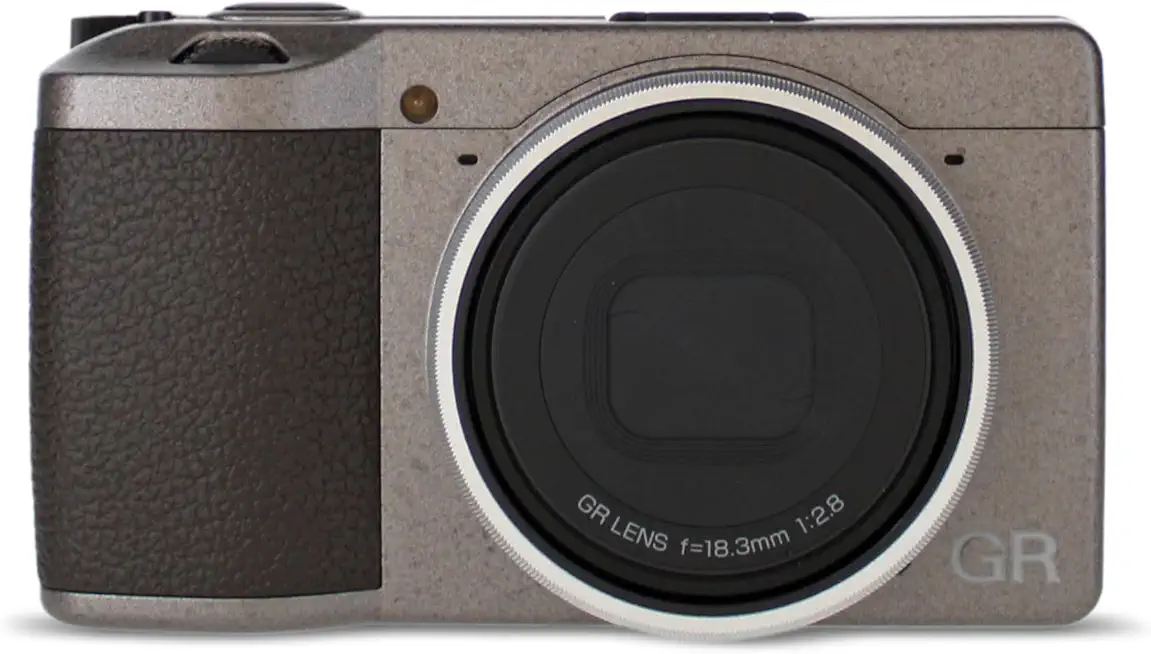
Ricoh GR III Diary Edition 24MP APS-C (28mm f/2.8)
Minimalist APS-C compact with ultra-sharp 28mm equivalent lens, discreet performance, and a stylish special-edition finish for everyday shooting.
Check PriceThe Ricoh GR II / GR III pairs an APS‑C sensor with a fixed 28mm f/2.8 lens and a 16MP resolution, all in a compact, pocketable textured body. That combination gives you real image quality advantages over typical compacts while staying small enough to carry everywhere.
In practice the camera delivers strong JPEG and RAW image quality, and its operation is fast and easy — exactly what I want when shooting product details on location. Some shooters even embrace the occasional lens flare as a stylistic choice, which can add a natural, editorial feel to lifestyle product images.
For on‑the‑go or lifestyle product work this camera is a gem: ultra‑portable and quick to deploy, it lets you capture natural-looking shots without a lot of setup. The GR II also offers a pop‑up flash for fill lighting, which is handy for quick fills when you don’t want to tote strobes.
The GR III builds on the platform with improved autofocus and a refined sensor, so if you need slightly better AF performance the III is the logical step. That said, the fixed 28mm field of view and lack of zoom mean this camera favors wider, contextual shots and smaller setups rather than tight studio product telephoto framing.
If you want pocketable APS‑C quality, excellent straight‑out‑of‑camera JPEGs, and a fast, unobtrusive workflow for lifestyle or location product photography, the Ricoh GR line is mostly a win. Avoid it if your work demands telephoto reach or very tight, isolated product frames.
- APS-C image quality in a pocketable format
- Great JPEGs straight out of camera; easy to use
- Ultra-portable for quick, natural product shots
- Built-in pop-up flash on GR II for fill lighting
- 28mm wide view may be too wide for some product types
- No zoom/telephoto capability
4. Canon G1X Mark II / G7X Mark III

Canon PowerShot G7 X Mark III
High-performance compact designed for vloggers: 1-inch sensor, bright lens, vertical video support, and live-stream friendly features.
Check PriceThe Canon G1X Mark II and G7X Mark III make a strong case for product photographers who want compact bodies with useful zoom ranges and familiar controls. The G1X Mark II pairs a 12.8MP 1.5‑inch sensor with a 24–120mm f/2–3.9 lens, while the G7X Mark III offers a 20MP 1‑inch sensor and a brighter 24–100mm f/1.8–2.8 lens plus uncropped 4K video.
Those zoom ranges are genuinely handy for shooting anything from small cosmetics to mid‑sized objects without swapping gear. The G1X II is praised for comfortable handling during longer sessions, which matters when you’re lighting and compositing many product shots.
The G7X III’s brighter lens and uncropped 4K video make it especially useful if you also produce product demos or social clips. Both cameras have 3‑inch LCDs and tactile controls, which help DSLR migrants get up to speed quickly and control exposure and focus precisely.
Do note the practical limits: Wi‑Fi connectivity exists for faster workflow, but setup can be fiddly and inconsistent on older G1X units. Also, low‑light capability is limited compared with larger‑sensor alternatives, so plan to use additional studio lighting for clean, low‑noise files.
In short, these Canons are great if you need a compact, versatile camera with useful zooms, solid image quality for the sensor class, and video capabilities for demos. They’re less suited to shooters who require extreme low‑light performance or large resolution for heavy cropping.
- Versatile zoom ranges for varied product sizes
- Good image quality for the sensor class in controlled lighting
- Familiar, tactile controls for DSLR migrants
- Wi‑Fi for faster workflow
- Wi‑Fi can be unreliable on older models
- Limited low‑light performance; studio lighting often required
5. Sony ZV-1 Overview

Sony ZV-1
Creator-focused compact with fast autofocus, flip screen, clear directional mic, and easy background defocus for polished vlogs and social content.
Check PriceThe Sony ZV-1 packs a 1-inch 20.1MP sensor behind a versatile 24–70mm f/1.8–2.8 zoom, which makes it a compact workhorse for product photography. Its bright f/1.8 maximum aperture at the wide end gives you real breathing room in dimmer setups and for subtle background separation.
Autofocus is a standout: face and eye tracking are reliable and fast, so when you’re shooting small items or demoing products on camera you spend less time chasing focus. The touchscreen interface and creator-focused controls keep the workflow simple, which matters when you’re running shoots solo.
High-ISO handling is good for the class, so you can push settings a bit without wrecking the file — useful for quick tabletop grabs without rebuilding lights. The body is compact and praised for ease of use, making it an excellent pick for entrepreneurs and small businesses who need quality without a heavy kit.
Video capabilities are strong, designed with creators in mind; this camera shines for product demos and social-content pieces where motion and narration matter as much as still detail. For static studio work you’ll still get crisp results, but remember it’s optimized for hybrid shooters.
There are limits: the 24–70mm zoom is handy but not generous for tight framing on larger products, so you may need to move the camera more. Also, the ZV-1 lacks an electronic viewfinder, which can make composition tricky in very bright conditions or when you prefer eye-level shooting.
Overall, if you need a compact, easy-to-use camera that handles both stills and video well—and you value fast AF and a bright lens—the ZV-1 is a very strong contender for small-studio and social-driven product work.
- Fast f/1.8 aperture useful in lower light
- Intuitive touchscreen and simple controls
- Compact and portable for small studios or on-the-go
- Reliable autofocus for stills and video
- Limited 24–70mm zoom range reduces framing flexibility
- No electronic viewfinder
Choosing Sensor Size For Product Photography
Choosing the right sensor size is one of the most practical decisions you’ll make for product work. Bigger sensors gather more light, deliver finer detail, and give you cleaner files at higher ISOs. That extra latitude matters when you’re pushing for large prints, tight crops, or rich tonality in studio shots.
Sensor size also changes how depth of field behaves. Full‑frame and medium‑format bodies produce a shallower DOF at the same aperture and field of view, which is great when you want to isolate a subject like jewelry or cosmetics. Smaller sensors—APS‑C, Micro Four Thirds, or 1‑inch chips—yield deeper DOF, which helps keep entire products in focus without needing tiny apertures.
Match the sensor to the job. For high‑end catalogs, art prints, or when you need maximum detail, full‑frame or medium format is worth the extra bulk and cost. For routine e‑commerce, social content, or on‑location lifestyle shots, APS‑C or a 1‑inch compact gives a much better balance of quality and portability.
Practical shooting matters too. If you’re shooting small items, wide apertures like f/2.8 on a larger sensor can isolate details beautifully, but you’ll often need focus stacking or stopping down to f/8–f/11 for full product sharpness. Keep in mind diffraction: extremely small apertures (f/22) will soften detail no matter the sensor.
Remember crop factor affects focal length and working distance. A 50mm on APS‑C behaves roughly like a 75mm full‑frame lens, so you’ll need to adjust your position or lens choice to get the framing you want. Smaller sensors also require more light if you stop down to increase DOF, so plan your lighting accordingly.
In short: pick the sensor that fits your output and workflow. If you need portability and solid web/catalog results, APS‑C or 1‑inch compacts are smart. If ultimate detail and tonal range are the priority, opt for full‑frame or medium format and be ready for a more studio‑centric setup.
Managing Depth Of Field For Product Photography
Depth of field is one of the simplest tools to make product photos read clearly. Use it to either isolate a subject — think a ring or lipstick tube — or to keep every detail tack-sharp for catalog shots. Understanding how aperture, distance, focal length and sensor size interact will save you time on set.
Start with aperture. Wide apertures like f/2.8 give a beautiful, shallow fall‑off that makes small items pop against a soft background. For larger or more detailed products I prefer f/8–f/11; that range is where many lenses hit their sweet spot before diffraction starts to soften things around f/16–f/22.
Remember the other variables. Move closer and DOF shrinks. Switch to a longer focal length and it shrinks too. Larger sensors produce shallower DOF at equivalent settings. That means many point‑and‑shoots (with smaller sensors) naturally deliver deeper DOF, which is great when you need everything in focus but can make subject isolation harder.
Because tighter apertures need light, plan your lighting accordingly. Use continuous studio lights or a strobe so you can run f/8–f/11 at low ISOs. That keeps textures and colors clean without introducing noise from high ISO settings.
When a product has depth — like a shoe or layered packaging — don’t be shy about focus stacking. I lock the camera on a tripod, take a series of shots moving the focus point incrementally, then blend the frames in post for edge‑to‑edge sharpness. Manual focus with live‑view magnification is another small habit that pays off for critical detail.
On set I work in this order: decide whether I want isolation or full sharpness, choose an aperture that supports that goal, set working distance and focal length, lock focus manually and shoot test frames at 100% to confirm. If a single frame won’t do it, stack. Balancing intention and technique is what turns a decent product shot into a professional one.
What People Ask Most
What features should I look for in a point-and-shoot camera for product photography?
Look for a camera with good image quality, reliable autofocus, and useful manual controls or exposure locks for consistency. A versatile lens range and solid build or ergonomics help with different product types and longer shoots.
Can a point-and-shoot camera produce professional-quality product photos?
Yes, with controlled lighting and careful technique a point-and-shoot can deliver professional-looking results for many uses. For very large prints or the most demanding studio work, larger sensors and interchangeable lenses may offer advantages.
How do I set up a point-and-shoot camera for product photography?
Use a stable support such as a tripod, control your lighting, and set a consistent white balance for accurate color. Frame carefully, focus precisely, and use a remote or timer to avoid camera shake.
What camera settings work best on a point-and-shoot camera for product photography?
Choose settings that prioritize sharpness and low noise, and lock exposure and white balance for consistency across shots. Use precise focus or manual focus when available to ensure critical details are sharp.
Is a point-and-shoot camera good for e-commerce product photography?
Yes, they are often well suited for web and catalog images because they are compact and can produce clean, usable photos under controlled lighting. Higher-end advertising or very large-format printing may still require larger-sensor systems.
Should I shoot in RAW with a point-and-shoot camera for product photography?
Shooting RAW is recommended when available because it preserves more color and exposure information for editing and color accuracy. JPEGs can work for quick turnaround or smaller output if you need a faster workflow.
Can a smartphone replace a point-and-shoot camera for product photography?
Smartphones can handle many simple product shots and are very convenient for quick social content or small listings. Dedicated cameras still offer more control, better optics, and improved image quality for demanding or consistent studio work.
Conclusion On Best Point-And-Shoot For Product Photography
Choosing the right point-and-shoot comes down to matching the camera to the product type, the level of image quality you require, and the practical needs of your workflow.
Hands‑on comparison of shortlisted models in real shooting conditions is invaluable—pay attention to handling, autofocus feel, and how easily you can control lighting and depth of field.
Keep in mind that good lighting, careful aperture and focus control, and techniques like focus stacking often have a bigger impact on final images than the camera body alone.
If you want to improve your skills and confidence before buying, read more of our site’s articles to explore techniques, workflows, and real‑world comparisons.
Questions or undecided between models? Leave a comment below and we usually reply within a few hours to help you choose the best fit for your product work.



0 Comments