
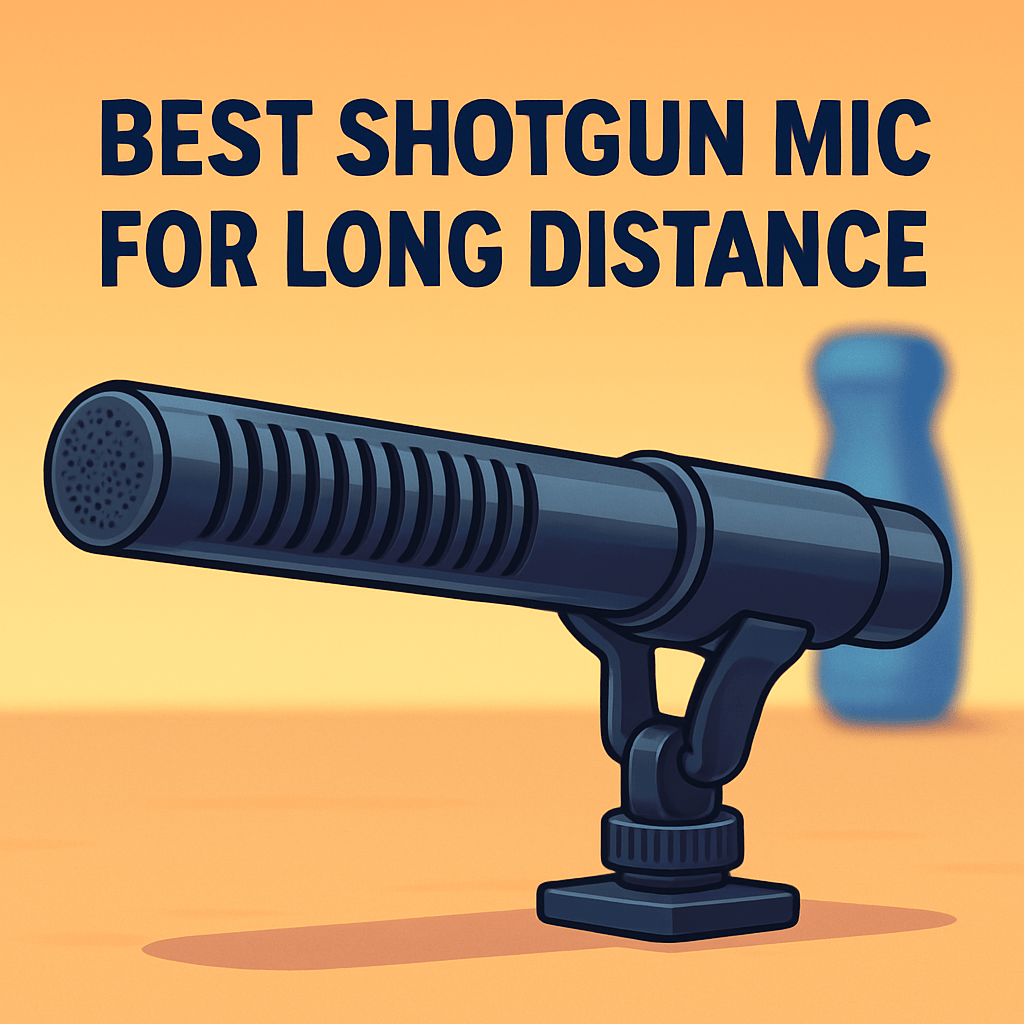
Ever tried to record clean dialogue from across a noisy field and come away with nothing but hiss and half-words? Capturing distant sound is one of the trickiest skills in a pro’s toolbox. The right shotgun mic can turn a frustrating take into a usable track.
In this guide we compare five shotgun microphones optimized for long-distance recording. We cut through marketing claims to show how each performs in practical situations. You’ll find hands-on notes, candid pros and cons, buying guidance, usage tips, and a concise FAQ designed for fieldwork.
This piece is written for professional photographers and content creators who need reliable audio without adding cumbersome gear. Whether you shoot documentaries, events, or remote interviews, microphone choice can make or break the final edit. Real-world speed and reliability beat theoretical specs when you’re on a tight shoot schedule.
We evaluated reach, off-axis rejection, sensitivity, and resilience in windy, busy, and quiet environments. You’ll also get practical advice on power options, mounting, windscreens, and simple techniques that improve distant pickup. No single mic fits every situation, so we highlight which trade-offs are worth accepting.
By the end you’ll know which long-range designs suit your workflow, budget, and shooting conditions. Expect clear recommendations and field-tested tips so you can capture clean, natural audio even when distance and noise are working against you.
1. Sennheiser MKE 600 Overview

Sennheiser Shotgun Microphone 505453 XLR-3 to 3.5mm
Precision directional pickup with XLR-to-3.5mm compatibility, low self-noise and rugged build for film, ENG, and location sound.
Check PriceI rely on the Sennheiser MKE 600 on shoots where isolating dialogue matters. It’s a workhorse in professional video production, documentaries, and run-and-gun scenarios.
It consistently isolates dialogue from a distance, even in moderately noisy environments. That makes it a solid pick for indie filmmakers, event videographers, and journalists who need dependable long-distance capture.
The mic delivers clear, natural-sounding audio several feet away without sounding overly colored. In the field I find the tonal balance very usable straight off the camera or recorder.
Power flexibility is a real practical plus. The MKE 600 works with battery and phantom power, so you can use it with cameras that lack 48V or with recorders on longer setups.
Build quality matters when you’re outdoors or moving between locations. The MKE 600 has a durable build and withstands regular field use, so it handles the bumps of daily production life.
Be aware of a couple of caveats. The low-cut filter can make voices sound thin if not adjusted, so pay attention to that setting in post or on set.
Also, the mic is relatively long, which makes it less ideal for tight spaces or mounting on small cameras. If you often shoot cramped interiors or need compact rigging, plan accordingly.
- Excellent off-axis rejection
- Clear, natural-sounding audio several feet away
- Works with battery and phantom power
- Durable build; withstands regular field use
- Low-cut filter can make voices sound thin if not adjusted
- Relatively long; less ideal for tight spaces or small-camera mounting
2. Audio-Technica AT897 Overview

Audio-Technica AT897 Shotgun Condenser Microphone
Lightweight, short shotgun offering crisp, natural dialogue capture, low handling noise and reliable performance for run-and-gun video and broadcast.
Check PriceI often recommend the Audio-Technica AT897 when a shoot demands reliable long-distance capture. It’s widely used in film/TV, broadcast, and wildlife recording for distant capture, so you know it’s proven in professional workflows.
What stands out is the AT897’s smooth, natural sound and effective noise isolation. The smooth frequency response and minimal coloration keeps dialogue sounding honest, while the effective low-cut filter helps tame wind and traffic rumble in outdoor situations.
This mic is frequently chosen when the microphone must be placed farther from the subject—think interviews and outdoor shoots where you can’t get the mic close. Its robust build quality makes it suited to demanding environments, which is why many professionals favor it for long-distance tasks.
There are a couple of real-world trade-offs to be aware of. It can be heavy for extended handheld use, so consider mounting or boom support for long takes. Also, the very narrow polar pattern demands careful aiming to keep the subject centered in the pickup.
- Exceptional long-distance pickup; clear audio even when subject is far.
- Smooth frequency response; minimal coloration.
- Effective low-cut filter for wind/traffic reduction.
- Robust build quality for demanding environments.
- Can be heavy for extended handheld use.
- Very narrow polar pattern requires precise aiming.
3. Neumann KMR 81i Overview

Neumann KMR 81 i Shotgun Condenser Microphone
Studio-grade supercardioid design delivering pristine, detailed audio with exceptional off-axis rejection—ideal for film and classical recording.
Check PriceThe Neumann KMR 81i is a premium choice for high-end film and broadcast applications. As a photographer who often rigs audio for narrative shoots, I appreciate its focus on fidelity and consistency when distance is unavoidable.
In real-world use it’s praised for unmatched clarity and accuracy at significant distances. You get outstanding, detailed, natural-sounding dialogue capture from afar, which makes it a go-to when spoken word must remain pristine even several meters away.
Its modular design with interchangeable barrel lengths for distance needs is a real workflow advantage. Swapping barrels lets you tailor directionality and reach without changing your core mic, so you can match the pickup pattern to the scene quickly.
Neumann’s engineering shows in its superior off-axis rejection and the internal low-frequency roll-off with an optional low-cut filter. That combo helps control ambient rumble and keep the subject focused in the mix, particularly in controlled studio or carefully staged field environments.
Two practical cautions: the KMR 81i carries a high price point, so it’s primarily aimed at professionals and serious productions rather than casual users. Also, its sensitivity can pick up subtle handling noise if not mounted securely, so plan for solid mounting and careful boom technique when you shoot.
- Outstanding, detailed, natural-sounding dialogue capture from afar
- Highly modular; interchangeable barrels for directionality/distance
- Superior off-axis rejection
- Internal low-frequency roll-off and optional low-cut filter
- High price point; less accessible for casual users
- Sensitivity can pick up subtle handling noise if not mounted securely
4. Shure VP89M Overview

Shure VP89M Shotgun Microphone
Modular mid-length design for clear, focused dialogue; durable construction, interchangeable capsules, and consistent performance in challenging environments.
Check PriceThe Shure VP89M is a hypercardioid shotgun mic built for long-distance capture, a favorite on film sets and live events. It delivers crisp, clear audio several meters away while offering precise isolation of the subject.
The hypercardioid polar pattern gives exceptional directionality and strong off-axis rejection. That tight focus makes it excellent when you need to isolate a voice from ambient noise several meters out.
Rugged construction and consistent field performance mean the VP89M stands up to regular location use. You get stable, repeatable results take after take, with minimal coloration or distortion.
In real shoots you’ll notice clear dialogue and a neutral character that’s easy to match in post. That clarity helps editors and sound mixers, especially when working across multiple takes or cameras.
There are trade-offs to consider: the narrow polar pattern requires careful aiming to remain on-axis. If you or your boom operator often move rapidly, staying perfectly aimed becomes critical.
Also note the low-cut filter settings are somewhat limited compared to other models, so handling low-frequency rumble or very noisy environments may need additional solutions. Still, for cinematographers and event recordists who prioritize distant, isolated capture, this mic is a strong, reliable choice.
- Exceptional directionality
- Durable construction
- Consistent, low‑coloration audio
- Effective off‑axis rejection
- Requires careful aiming
- Limited low‑cut filter settings
5. Azden SGM-3500L Overview

Azden SGM-3500L Shotgun Microphone (Hypercardioid)
Budget-friendly hypercardioid pickup with long reach, low noise, and shock-mounted capsule—perfect for indie filmmakers and vloggers.
Check PriceAs a photographer who often doubles as a one-person production crew, the Azden SGM-3500L stands out when I need reach without sacrificing clarity. Its very long interference tube provides exceptional reach and isolation, so I can capture distant subjects with focused, usable audio.
On location, that long tube translates into clear, focused audio at long ranges, which is exactly what you want for wildlife or outdoor shoots. The focused polar pattern and reliable outdoor performance make it a go-to when background noise is a problem and the subject is far from the camera.
I’ve found it particularly useful for specialty applications where maximum reach is required; mounting it on a boom or a sturdy pole lets you stay out of the frame while still getting dialogue or animal sounds. Because it’s praised for clear audio from far away, you can be confident the recorded signal will sit well in post without excessive noise reduction work.
That said, practical considerations matter. The length and weight reduce convenience for handheld or tight-space use, so it’s not ideal for run-and-gun scenarios where mobility is key. Also, the lack of a high-pass filter can be a limitation in windy or traffic-prone environments, so plan on using external wind protection and low-cut processing in post if necessary.
If your projects demand long-distance capture and outdoor robustness, the Azden SGM-3500L is mostly a strong, purpose-built choice. It delivers reach and isolation in real-world settings, but be ready to mitigate its size and the absent high-pass option.
- Very long interference tube for superior long-distance pickup.
- Clear, focused audio at long ranges.
- Durable build suited to outdoor conditions.
- Effective at rejecting ambient noise.
- Length and weight reduce convenience for handheld or tight-space use.
- Lack of a high-pass filter can be a limitation in some situations.
Choosing the Right Shotgun Mic
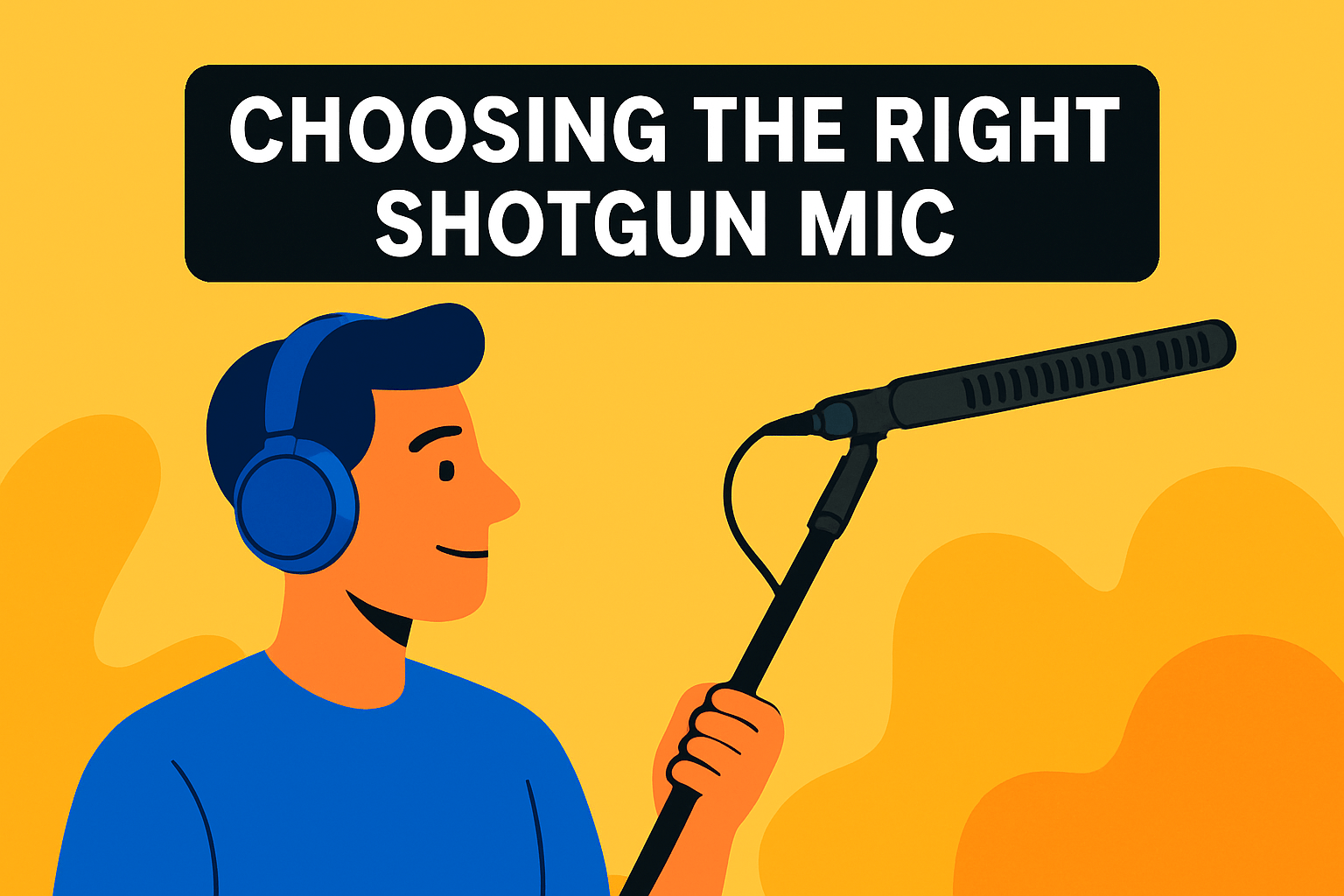
Choosing the right shotgun mic starts with directionality. For long-distance work I lean toward hypercardioid or supercardioid patterns because they give a tighter on-axis pickup and better side rejection. Remember that longer interference tubes generally sharpen that focus, but they also make the mic harder to handle in tight spaces.
Sensitivity and self-noise matter more than people realize. Sound level drops fast over distance, so a mic with higher sensitivity and low self-noise (ideally under ~15 dB(A)) will give you a cleaner signal without cranking preamp gain into the noise floor. If you’re shooting quiet dialogue or nature, prioritize low self-noise over flashy features.
Pay attention to frequency response and tonal character. A relatively flat response keeps dialogue natural, while a slight mid-range lift can help distant voices cut through. Avoid mics with exaggerated highs that make wind or rustle more apparent at distance.
Power and compatibility are practical concerns on set. Most pro shotguns want 48V phantom power, so confirm your mixer or recorder can supply it; battery options are useful when phantom power isn’t available. Also check weight and balance—very heavy barrels work great on a stand or boom but tire your grip during handheld use.
Build quality and environmental resistance are non-negotiable for outdoor shoots. Rugged housings, RF-bias circuitry, and weather resistance keep performance consistent in humidity and dust. Always plan for the worst: a good shock mount, a proper foam or furry windshield, and a blimp for windy locations will save whole days of re-takes.
In the end balance spec sheets with how you work in the field. A tight polar pattern demands precise aiming and boom technique, while a longer tube trades convenience for reach. Choose the mic that fits your workflow, then practice positioning, gain staging, and monitoring so you get that usable, distant dialogue on the first take.
Long-Distance Shotgun Mic Tips
When you need usable dialogue from a distance, aim is everything. Point the interference tube directly at the talker and keep the mic slightly above or below the subject’s sightline so it stays out of frame. Even a small misalignment will cost signal-to-noise ratio faster than you expect.
Use a boom pole to get the mic closer without drawing attention. Closer equals clearer audio, and the difference between five and ten feet can be dramatic. Handheld work is fine for short bursts, but for sustained takes you’ll thank yourself for the pole and a secure shock mount.
Wind and handling noise will ruin a long-distance capture faster than distance loss. Always pair the mic with the right protection: foam for light breezes, a furry windshield for variable outdoor conditions, and a full blimp for steady windy locations. The extra bulk is worth the usable takes.
Mind your gain staging. Set preamp levels so the dialogue sits strong but never clips, and engage a low-cut to tame rumble when needed. Be careful though — aggressive low-cut settings can thin voices when the mic is far away.
Place unwanted noise sources at the mic’s sides or rear where rejection is strongest. Don’t point at reflective surfaces like windows or cars; reflections introduce comb filtering and wash out clarity. When practical, reposition the subject or change your angle rather than relying on post-production fixes.
Monitor on good headphones in real time and listen for tonal shifts as you reposition. Small adjustments in angle or height often yield noticeable improvements. If you hear handling or wind artifacts, stop and fix them before rolling again.
Finally, respect the environment and your gear. Phantom power or battery options affect setup choices in the field, and humidity or temperature can change mic behavior. Practice smooth boom technique, secure mounts, and quick checks; the more you rehearse these basics, the fewer surprises you’ll have on shoot day.
What People Ask Most
What is the best shotgun microphone for long-distance recording?
There is no single best model; the right choice depends on your needs, budget, and shooting conditions. Look for strong directionality, low self-noise, flexible power options, and a rugged build for reliable field use.
How far can a shotgun mic pick up clear audio?
Effective range varies widely depending on the microphone, environment, and placement. Background noise, wind, and how precisely the mic is aimed all have a big impact on usable distance.
Are shotgun mics effective for long-range dialogue capture?
Yes, they can be very effective when aimed properly and used with the right accessories. Proper mounting, wind protection, and real-time monitoring help ensure clear dialogue at a distance.
What features make a shotgun mic suitable for long-distance use?
Useful features include tight on-axis directionality, low self-noise, and options for low-frequency filtering or power flexibility. Durable construction and compatibility with mounts and wind protection are also important for field work.
How do you set up a shotgun mic for recording from a distance?
Point the mic directly at the source, use a boom or stand to place it as close as possible without entering the frame, and isolate it with a shock mount. Use appropriate windscreens outdoors, set gain conservatively, and monitor in headphones to catch issues early.
Can shotgun microphones be used for outdoor long-distance recording?
Yes, they are commonly used outdoors but perform best with proper wind protection and secure mounting. Environmental factors like wind and humidity can affect results, so plan for shields and monitoring.
What’s the difference between a shotgun mic and a boom mic for long-distance audio?
A shotgun mic refers to a microphone design with an interference tube that increases directionality, while a boom mic describes how the mic is positioned on a pole for capture. They are often used together to aim a directional mic at a distant source while keeping it out of frame.
Conclusion for Long-Distance Shotgun Mics
We compared five long‑distance shotgun mics with real‑world pros and cons to help you pick gear that actually performs in the field.
The main takeaway is to match a mic’s directionality, sensitivity, build quality, and available accessories to your shooting environment and workflow rather than chasing a single “best” model.
Technique matters just as much as gear: aim precisely, use proper mounts and windscreens, monitor in headphones, and practice smooth boom work to get the cleanest distant dialogue.
If you want to sharpen your recording and location sound skills, explore more articles on the site for practical tips, comparisons, and workflow ideas.
Have a question or experience to share about long‑distance mics? Leave a comment below and we usually reply within a few hours.


0 Comments