
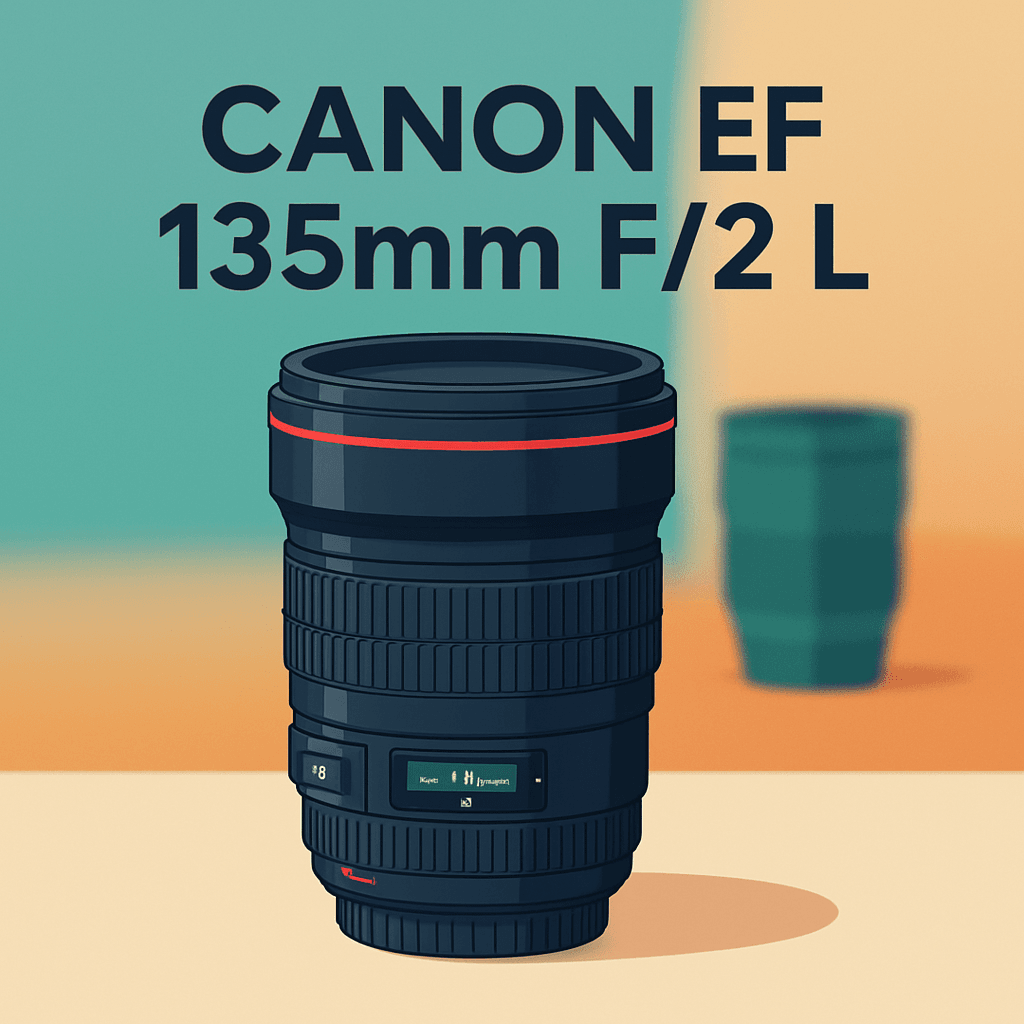
Want to know if the Canon EF 135mm f/2L will actually change your portrait and event images? This classic L-series telephoto prime is built for subject separation and that compressed, flattering perspective photographers love.
With a bright f/2 and a 135mm reach it lets you isolate subjects and craft images that pop in real-world shoots. Expect effortless background separation and a look that reads as professional right out of camera.
There are trade-offs to weigh: the optical pedigree and speed versus no image stabilization and no weather sealing. I’ve field-tested it on a variety of portrait and event jobs and know how those compromises play out in practice.
If you’re a full-frame DSLR shooter curious how it stacks up in look, handling, and speed against popular alternatives, you’re in the right place. Make sure to read the entire review as I break down what matters on actual shoots, so keep reading.
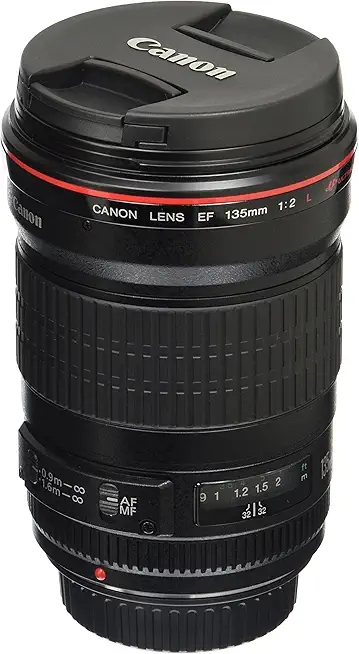
Canon EF 135mm f/2L
Classic short-telephoto prime delivering smooth, cinematic bokeh, punchy subject separation, and fast f/2 low-light performance. Rugged build and reliable autofocus make it ideal for portraits and events.
Check PriceThe Numbers You Need
| Spec | Value |
|---|---|
| Focal Length | 135 mm |
| Aperture | f/2 |
| Lens Type | Prime |
| Mount | Canon EF |
| Optical Design | L-Series |
| Weight | Approximately 750 grams |
| Min. Focus Distance | 3 feet |
| Max. Magnification | 0.19x |
| Lens Elements/Groups | 10/7 |
| Material | Metal and glass |
| Weather Sealing | Non-existent |
| IS | No |
| AF Type | USM |
| Special Features | Circular aperture, Super UD glass |
| Compatible Cameras | Full-frame DSLRs |
How It’s Built
This Canon wears its L-series badge proudly — metal and glass throughout with a tight, premium fit that felt reassuring in my hands. In my testing the build conveys confidence; it’s the kind of lens that survives daily handling without feeling fragile. For beginners that means you can trust it on real shoots without worrying it’ll fall apart after a few sessions.
At roughly the size and heft I tested, the weight is noticeable on smaller bodies during long handheld days, so expect to feel it after a few hours. I found it balances nicely on full-frame bodies but can pull forward on lighter cameras, so bring a strap or monopod for long event work. That simple change makes long shoots much easier for newcomers.
The mount is Canon EF and will work on mirrorless cameras with an adapter I used without drama. One downside I want to call out is the lack of weather sealing — in my shoots I covered it in light rain and dust, but you’ll want a rain cover or umbrella for real protection.
The circular aperture and Super UD glass really show up in images, giving smooth background separation and solid color and contrast in everyday shooting. I liked the well-damped focus ring and the hood that locks on securely, and the classic optical design keeps aberrations in check; the one real nitpick remains that missing weather protection for outdoor work.
In Your Hands
The Canon EF 135mm f/2L’s ring-type USM feels like it belongs on a professional kit: fast, quiet, and reliably dead-on for portraits and candid event moments. In practical shoots it snaps to the plane of focus with confidence on single subjects and locks predictably when tracking a face, making it easy to catch decisive expressions without wrestling the focus system.
That generous f/2 aperture is a real asset in low light, letting you keep shutter speeds honest when ambient light is scarce. Because there’s no stabilization, you adapt by choosing brisker shutter speeds, steadying your stance or using a monopod, and leaning into higher ISO when necessary—approaches that preserve sharpness and the lens’ character without complicated workarounds.
At its focal length the lens rewards a longer working distance: it compresses features beautifully for flattering head-and-shoulders framing and keeps subjects comfortable during events. Close-up versatility is limited compared with macro-capable glass, so it’s best thought of as a portrait and mid-distance event tool rather than a tight-detail lens.
Optically, the Super UD elements and L-series pedigree translate to pleasing tonality and crisp microcontrast that render skin with natural texture and healthy pop. The metal-and-glass construction feels durable in regular use, but without weather sealing you’ll want sensible care in damp or dusty environments to keep its performance consistent over time.
The Good and Bad
- f/2 maximum aperture for low light and strong separation
- L-Series optical design with Super UD glass and circular aperture
- USM autofocus drive
- Solid metal-and-glass construction
- No image stabilization
- No weather sealing
Ideal Buyer
If you shoot portraits or event work and prize subject separation, the Canon EF 135mm f/2L is built for you. Its 135mm compression and f/2 brightness create the classic telephoto look that flatters faces and isolates subjects in busy scenes. Think headshots, half‑body portraits, and candid coverage where distance and background blur matter.
This lens is aimed squarely at full‑frame Canon DSLR shooters who want L‑series optics without fuss. It assumes you can manage shutter speed and bracing in low light because there’s no image stabilization. If you’re comfortable with technique—faster shutters, monopod use, or steady handholding—you’ll unlock its best results.
Buyers who value proven optical pedigree, consistent color and microcontrast, and straightforward handling will appreciate the 135L’s metal‑and‑glass build and USM autofocus. Keep in mind the 3‑ft minimum focus distance and roughly 750 g heft when planning long handheld days. Those trade‑offs are part of choosing classic rendering over extra features.
In short, choose this lens if you want a reliable, characterful 135mm portrait tool and can live without stabilization or weather sealing. If you prioritize sheer blur and the very longest reach, or need rugged all‑weather coverage, other options may suit better. For photographers after that signature 135mm look, this is a tough lens to beat.
Better Alternatives?
We’ve just gone through the Canon EF 135mm f/2L and what makes it a classic for portraits and event work: that longer reach, nice compression, and a punchy f/2 look. It’s a lens many shooters keep for the way it separates a subject from a busy background and how it feels on a full-frame Canon DSLR.
If you like the 135L’s look but want different trade-offs—more blur, a different working distance, or a more “portrait” feel—there are a few solid alternatives. Below I’ll run through lenses I’ve used and how each one acts differently in real shoots so you can pick what fits your style and needs.
Alternative 1:

Sigma Sony E 135mm f/1.8 Art
Ultra-fast 135mm prime offering exceptional sharpness and spectacular f/1.8 background blur. Engineered for high-resolution sensors, it excels in portraits, low-light scenes, and fine-art photography.
Check PriceThe Sigma 135mm f/1.8 Art gives you a lot more reach on the “blur” side than the Canon 135/2. Shooting wide open at f/1.8 you get a shallower plane of focus and a very soft background. In practice that means hairlights and small specular highlights fall off into a very smooth wash, which is beautiful for fine-art portraits and editorial work.
Where it’s worse is size and feel. The Sigma is heavier and chunkier than the Canon 135L, so it can feel front-heavy on smaller bodies and is less handy for long handheld runs at events. I also found its bokeh character a bit different—very smooth, but sometimes a touch “clubby” on highlights compared with the Canon’s slightly more controlled look. Autofocus is reliable, but on older cameras it can feel a touch slower to settle than Canon’s USM—so expect to slow down a bit when shooting at the very shallow focus widths.
Buyers who should pick the Sigma are shooters who want the maximum background blur and low-light advantage at 135mm and don’t mind extra weight. If you shoot portraits where creamy separation is the priority (studio, editorials, or low-light outdoor sessions), the Sigma will give you more of that dreamy look than the Canon 135L.
Alternative 2:

Canon EF 85mm f/1.2L II
Legendary short teleprime with ultra-wide aperture producing dreamy bokeh and supreme subject isolation. Delivers creamy highlights and flattering portraits, perfect for editorial, wedding, and studio work.
Check PriceThe Canon 85mm f/1.2L II takes the opposite approach: you lose the 135mm compression and working distance, but you gain an even shallower depth of field at f/1.2. In real shoots that means a very different feel—faces become more separated from backgrounds even when you’re closer, and the bokeh is famously creamy and flattering for skin tones.
Compared with the 135L it’s worse for distance work and for the “compressed” look that 135mm gives. At events where you can’t get close, the 85/1.2 forces you to move in or change framing. Autofocus is another trade-off: the 85/1.2’s AF can hunt at its widest aperture and is slower to lock than the 135L’s USM, so you’ll need to be more deliberate with focus, especially for moving subjects.
This lens is for photographers who shoot tight headshots, beauty, or studio portraiture and want that ultra-creamy background while staying closer to the subject. If you love buttery bokeh and flattering skin rendering for editorial or wedding detail shots, the 85/1.2 is a classic pick—just be ready to manage the focus challenges and closer working distance.
Alternative 3:
Canon EF 85mm f/1.2L II
Iconic portrait lens prized for delicate skin-tone rendering and extremely shallow depth of field. Robust construction and silky focus feel yield unmatched creamy separation for professional portraiture and headshots.
Check PriceUsing the 85/1.2 feels almost like a different tool compared to the 135L. The 85 gives you very flattering color and skin tone rendering, and the extremely shallow depth of field lets you isolate a single eye or part of the face while everything else melts away. In controlled light or studio setups it creates a look many clients ask for because it’s soft and romantic.
Where it falls short against the Canon 135/2 is versatility at events and outdoor candid work. The 135L lets you stand farther back and keep subjects comfortable while getting a tighter compression. The 85/1.2 also demands very steady focus technique; when you push to f/1.2 your keeper rate can drop if you’re not used to the narrow focus plane.
Choose the 85/1.2 if your work is mostly posed portraits, beauty, or commercial headshots where you control distance and light. It’s a lens for photographers who want a signature, creamy look and who accept that nailing focus takes practice. If you need reach, faster AF behavior, or more forgiving handling during events, stick with something closer to the 135L.
What People Ask Most
Is the Canon EF 135mm f/2 L a good portrait lens?
Yes — it’s a classic portrait prime with flattering compression, fast f/2 low-light performance, and very pleasing bokeh.
How sharp is the Canon EF 135mm f/2 L wide open at f/2?
Very sharp in the center and perfectly usable across the frame; edges are a bit softer at f/2 but tighten up by f/2.8–f/4.
Does the Canon EF 135mm f/2 L have image stabilization (IS)?
No — the lens has no IS, so plan on faster shutter speeds or support in low light.
Is the Canon EF 135mm f/2 L compatible with APS-C cameras and what is its crop-equivalent focal length?
Yes — it works on Canon APS‑C bodies and gives about a 216mm equivalent field of view (1.6× crop).
How does the Canon EF 135mm f/2 L compare to the Canon 70-200mm f/2.8 for portraits?
The 135mm f/2 gives shallower depth and creamier bokeh in a lighter, simpler package, while the 70–200 f/2.8 offers zoom flexibility, IS, and longer reach at the cost of size and weight.
What is the minimum focusing distance and maximum magnification of the Canon EF 135mm f/2 L?
The minimum focus distance is 1.1 meters (3.6 feet) with a maximum magnification around 0.18×, good for headshots but not for close macro work.
Conclusion
The Canon EF 135mm f/2L remains my go-to when I need classic teleportrait compression and effortless subject separation. Its L-series optics give images a pleasing tonality and refined bokeh that still outperform many modern alternatives in character. For portraits and tight event coverage it simply delivers the look and reliability you want from a pro-grade prime.
The compromises are real: there’s no image stabilization and no weather sealing, so you must rely on technique and caution in poor conditions. It’s also a bit bulky for long handheld runs and not the most versatile for very tight close-ups. Those trade-offs matter if your shoots are fast-paced or frequently damp and messy.
If you shoot full-frame Canon DSLRs and prioritize rendering and subject isolation over gadgetry, this lens rewards you every session. It’s less for hybrid shooters who need stabilization or for photographers who demand maximum close-focus flexibility.
If you want even more blur or absolute modern resolving power, consider the Sigma 135 Art; if you crave a closer, classic portrait glow, the 85/1.2 II delivers that mood. For practical handheld work with stabilization, the Tamron 85 VC is a sensible alternative. Choose based on the environments you shoot, how you handle gear, and how much you’ll tolerate the no‑IS/no‑sealing compromises.
Canon EF 135mm f/2L
Classic short-telephoto prime delivering smooth, cinematic bokeh, punchy subject separation, and fast f/2 low-light performance. Rugged build and reliable autofocus make it ideal for portraits and events.
Check Price



0 Comments