
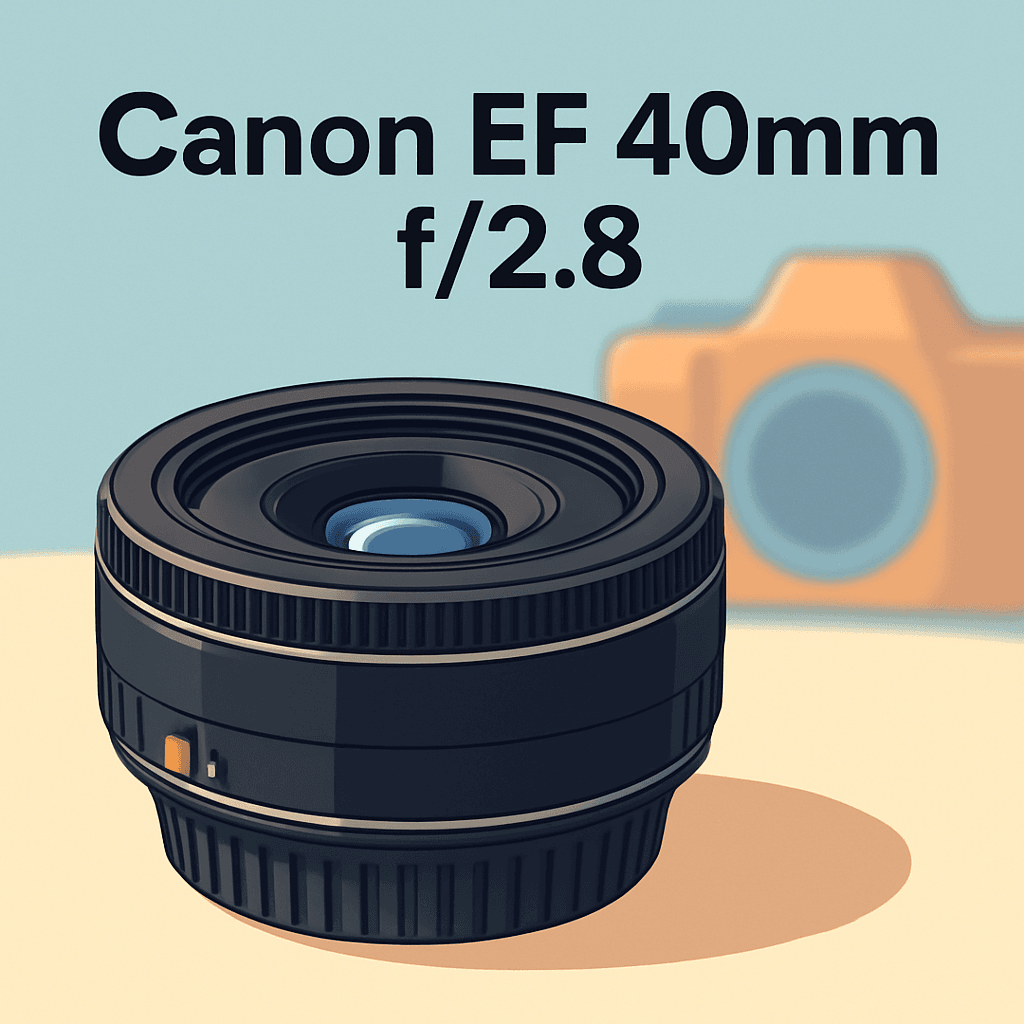
Want a lens that disappears in your bag but still helps you make better images on the street and while traveling?
I took the Canon EF 40mm f/2.8 STM into real-world shoots to see how it performs when you actually use it.
If you favour street, travel, everyday carry, or environmental portraits, this lens is aimed at you.
Its biggest wins are pocketable size and whisper-quiet STM focusing, which make candid shooting effortless.
Tradeoffs include a slower aperture and no image stabilization, so you’ll manage low light differently; make sure to read the entire review as I break down when this tiny prime really shines — keep reading.

Canon EF 40mm f/2.8 STM
Ultra-compact pancake design delivers sharp results with quiet, responsive autofocus—perfect for travel, street, and everyday shooting. Slim profile and fast optics make candid photos and videos effortless.
Check PriceThe Numbers You Need
| Spec | Value |
|---|---|
| Focal Length | 40mm |
| Maximum Aperture | f/2.8 |
| Lens Mount | Canon EF |
| Lens Type | Pancake prime lens |
| Format Compatibility | Full-frame and APS-C (1.6x crop factor on APS-C) |
| Optical Construction | 6 elements in 4 groups |
| Minimum Focus Distance | 0.3 m (30 cm) |
| Autofocus Motor | STM (Stepping Motor) for quiet and smooth AF |
| Image Stabilization | None (no IS) |
| Filter Thread Size | 52mm |
| Maximum Diameter | Approximately 68 mm |
| Length | Approximately 21 mm (compact/pancake design) |
| Weight | Approximately 130 g |
| Aperture Blades | 7 rounded blades for smooth bokeh |
| Minimum Aperture | f/22 |
How It’s Built
In my testing the Canon EF 40mm f/2.8 STM feels built around one idea: stay tiny and stay out of the way. It’s a true pancake lens — so light and low-profile that I often forgot it was on my camera, which makes it perfect for street and travel shooting when you don’t want to attract attention.
Picking it up the fit and finish impressed me; the mount felt solid and the barrel has a pleasant, smooth finish with tight tolerances. The focus ring is small because of the compact design, but it turns smoothly and is accurate enough for everyday use; it’s just a bit short on throw for very precise manual tweaks, which could be improved.
I also liked that the flat front makes using filters like polarizers or NDs easy in the field. One downside in real-world use is the lack of image stabilization, so in dim light you’ll rely on faster shutter speeds, higher ISO, or a tripod. Overall, it’s a simple, well-made lens that’s forgiving for beginners and great for anyone who values discreteness.
In Your Hands
Out on the street or in a camera bag, the Canon EF 40mm f/2.8 STM disappears—low profile and unobtrusive so people behave naturally. On full-frame it’s a versatile everyday lens; on crop bodies it tightens into a short-telephoto useful for tighter framing and portraits.
For environmental portraits it strikes a good balance between subject emphasis and contextual storytelling, keeping backgrounds readable without pushing people into isolation. That modest field of view makes it easy to show where a person sits in their environment, which suits editorial and lifestyle work.
It also gets close enough for food and product detail work, rendering texture and surface quality without pretending to be a macro optic. Focus holds reliably at working distances, so you can frame small scenes quickly and confidently.
In mixed light the modest aperture means you’ll balance shutter speed and ISO more than with faster primes, but the results are usable for day‑to‑night shooting when you make that tradeoff. Handheld motion asks for a steady hand or quicker shutter, yet the lens rewards restraint with clean, usable frames.
Rounded aperture blades yield pleasant, unobtrusive background blur, and the STM drive produces smooth, nearly silent focus pulls for video. On‑camera mics may catch faint motor noise, but in practice the package is a dependable, go‑anywhere workhorse.
The Good and Bad
- Ultra-compact pancake (approx. 21 mm long) and very lightweight (approx. 130 g)
- Quiet, smooth STM autofocus
- Full-frame and APS-C compatibility
- 7 rounded aperture blades for smoother out-of-focus areas
- Maximum aperture f/2.8 (slower than f/1.8–f/1.4 primes)
- No image stabilization
Ideal Buyer
Photographers who prize compactness and discretion will love the Canon EF 40mm f/2.8 STM. It’s a true pocketable pancake that disappears on a strap and keeps you out of the way when shooting streets, travel days, or quick everyday moments.
On full‑frame it gives a natural, slim‑normal field of view that works as a go‑everywhere lens. On APS‑C bodies it becomes roughly a 64mm short‑tele, flattering for tighter portraits and detail work, with a 0.3 m close‑focus distance that’s useful for food and product shots.
Hybrid shooters and run‑and‑gun videographers will appreciate the STM motor’s smooth, quiet focusing for on‑camera audio and gentle focus pulls. The lens’s low profile encourages candid shooting and long carry without fatigue.
This isn’t the lens for photographers who need extreme low‑light speed or in‑body stabilization. If you regularly shoot handheld slow‑shutter scenes or demand heavy background separation from f/1.4–f/1.8 glass, look at faster or IS alternatives instead.
Better Alternatives?
We’ve already gone through what makes the Canon EF 40mm f/2.8 such a handy, pocketable normal lens: tiny size, quiet STM focus, and a natural field of view that works for street, travel, and everyday shooting. That compactness is the 40mm’s big selling point, but it does trade away a bit of light-gathering and stabilization.
If you find yourself wanting stronger subject separation, better low-light performance, or more stabilization for handheld shooting, there are a few obvious alternatives worth considering. Below I’ll run through three lenses I’ve used in real life, how they compare to the 40mm, and who each one suits best.
Alternative 1:
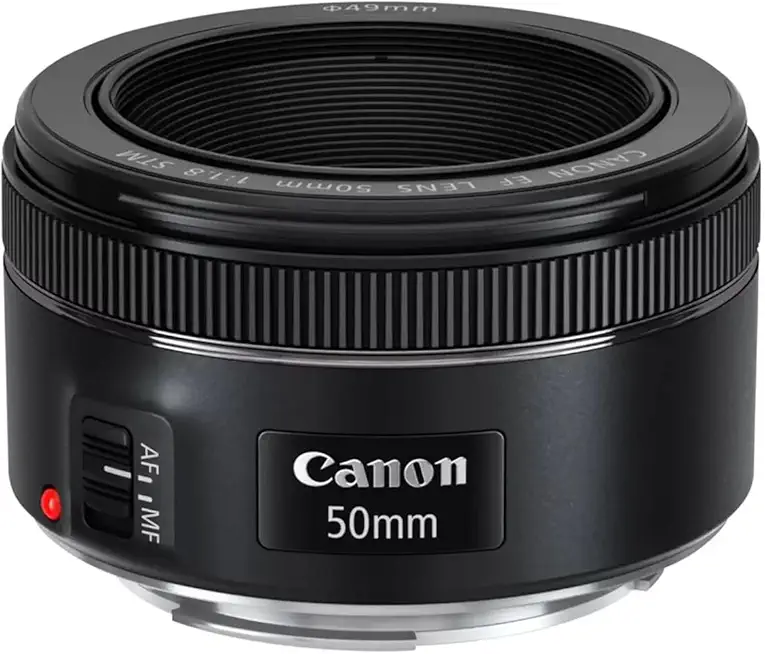
Canon EF 50mm f/1.8 STM
Fast, bright aperture creates creamy background blur and excellent low-light performance. Lightweight, budget-friendly portrait optic offers precise autofocus and crisp central sharpness for flattering headshots and everyday use.
Check PriceI’ve carried the 50mm f/1.8 as a walkaround and portrait lens and the first thing you notice is how much more it separates your subject. Compared to the 40mm f/2.8, the 50mm’s f/1.8 gives noticeably creamier backgrounds and lets you shoot at lower ISOs in dim interiors. If you’re after tight headshots or want that classic blurry background on a budget, this is a clear upgrade.
What it doesn’t do as well as the 40mm is stay subtle and pocketable. The 50mm is a little bulkier and on APS-C bodies it feels tighter (roughly an 80mm equivalent), so it’s not as versatile for everyday street work. Wide-open the 50mm can be softer in the corners and show more vignetting than the 40mm stopped down, so you trade compactness and even-field rendering for stronger subject isolation.
Buyers who will like the 50mm are portrait shooters and anyone who often works in low light but doesn’t want to spend much. It’s great if you need more background blur and lower ISO options. If you value the tiny, discreet footprint of the 40mm for candid street shooting, the 50mm may feel a bit too tight or obvious.
Alternative 2:

Canon EF 35mm f/2 IS USM
Versatile wide-normal optic combines impressive image stabilization and swift, precise autofocus for handheld low-light shooting. Delivers edge-to-edge sharpness and beautiful bokeh for streets, environmental portraits, and events.
Check PriceThe 35mm f/2 IS USM is one I reach for when I want more context in a shot but still stay fairly close to a normal perspective. Compared to the 40mm pancake, the 35mm is wider so it captures more of the scene—ideal for street work and environmental portraits where background matters. The image stabilization really helps handheld shooting at dusk or indoors, where the 40mm’s lack of IS forces you to bump ISO or use a faster shutter.
It’s bigger and heavier than the 40mm and costs more, so you lose some of that “invisible” carrying comfort. Autofocus on the 35mm is quicker and more responsive (USM), which is great for events, but the lens is less pocketable and more noticeable on a small body. Optically it feels a bit more finished across the frame, but you sacrifice the ultra-small size that makes the 40mm so pleasant for tight street work.
Pick the 35mm if you want a do-it-all everyday lens that handles low light better while still giving a natural look—travel shooters, event photographers, and video shooters who need stabilization will appreciate it. If you prize the 40mm’s minimal footprint over low-light capability, stick with the pancake.
Alternative 3:
Canon EF 35mm f/2 IS USM
Compact, well-built lens excels at capturing smooth handheld video and tack-sharp stills thanks to effective stabilization and fast focusing. Ideal for travel storytelling, landscapes at dusk, and intimate environmental portraits.
Check PriceOn video, the 35mm’s IS and fast autofocus really shine. I’ve shot walk-and-talks and run-and-gun interviews with it and the footage looks steadier and more professional than what I get handheld with the 40mm. The focus pulls are quick and predictable, and the lens builds a nicer separation from background without needing to open up too wide.
Compared to the 40mm, the 35mm’s downsides are still size and price. It’s a heavier package to carry all day and it draws more attention when you’re trying to be discreet. You also give up a little of the exact “normal” feel the 40mm gives on full-frame; the 35mm reads a touch wider, which is great for storytelling but less ideal if you want that slightly longer, closer look.
This third option is for shooters who make video or often work in low light and need a reliable all-rounder. Travel storytellers, documentary shooters, and anyone who prefers stabilization and edge-to-edge sharpness over pure pocketability will likely pick the 35mm over the tiny 40mm. If you want the smallest, most unobtrusive lens, the 40mm remains the better choice.
What People Ask Most
Is the Canon EF 40mm f/2.8 pancake lens worth buying?
Yes — it’s a great value if you want a tiny, lightweight prime for street, travel, and everyday use, but it’s only f/2.8 so not ideal for extreme low light or very shallow depth of field.
How sharp is the Canon EF 40mm f/2.8?
It’s surprisingly sharp in the center and very usable across the frame, especially stopped down to f/4–f/8; wide open at f/2.8 it’s slightly softer but still fine for most work.
Is the Canon EF 40mm f/2.8 good for portraits?
On full-frame it’s a bit wide for tight headshots but works well for environmental portraits, and on APS-C bodies the ~64mm equivalent is a very practical portrait focal length.
Is the Canon EF 40mm f/2.8 a pancake lens and how compact is it?
Yes — it’s a true pancake prime and one of Canon’s slimmest EF lenses, keeping your camera compact and much easier to carry for travel and street shooting.
Does the Canon EF 40mm f/2.8 autofocus on all Canon cameras?
Yes — it has a built-in STM motor so it will autofocus on modern Canon EOS DSLRs and on mirrorless bodies with an EF adapter, and it focuses quietly for video and live view.
How does the Canon EF 40mm f/2.8 compare to the Canon EF 50mm f/1.8?
The 50mm f/1.8 gives more background blur and better low-light performance, while the 40mm is smaller, more discreet, and slightly wider — pick 50mm for portraits/low light and 40mm for portability and street use.
Conclusion
The Canon EF 40mm f/2.8 STM is an almost‑perfect pocket prime for photographers who prize discretion and everyday versatility. Its pancake profile and quiet STM focusing make it a go‑to for street, travel, and environmental portrait work. The tradeoff is obvious: the moderate maximum aperture and lack of stabilization mean it won’t replace faster or stabilized lenses for low‑light or aggressive subject separation.
On full‑frame it delivers a natural, slim‑normal perspective that blends context with subject and is superb for walking around without drawing attention. On APS‑C bodies the same field of view tightens into a short‑tele feel that flatters portraits and detail work. If your priorities are size, balance and stealth, few lenses feel as effortless in hand or in a pocket.
I recommend the Canon EF 40mm f/2.8 STM as a smart, shoot‑first choice for photographers who want a no‑fuss everyday optic that stays out of the way. If you often shoot in very low light or need strong background separation or handheld slow‑shutter performance, look toward faster or stabilized alternatives. For most street and travel shooters, though, its combination of compactness, pleasant rendering and quiet AF makes it hard to beat.
Canon EF 40mm f/2.8 STM
Ultra-compact pancake design delivers sharp results with quiet, responsive autofocus—perfect for travel, street, and everyday shooting. Slim profile and fast optics make candid photos and videos effortless.
Check Price



0 Comments