
Want a camera that’ll help you nail peak-action shots and still survive a rainy assignment?
I’ve field-tested one in sports and wildlife settings. This canon eos 7d mark ii review focuses on real-world payoffs.
It’s aimed at sports, wildlife, and event shooters who value speed, durability, and reliable tracking. I’ll cover strengths—AF, 10 fps, rugged build, dual slots—and trade-offs like no IBIS and a fixed LCD; make sure to read the entire review and keep reading.
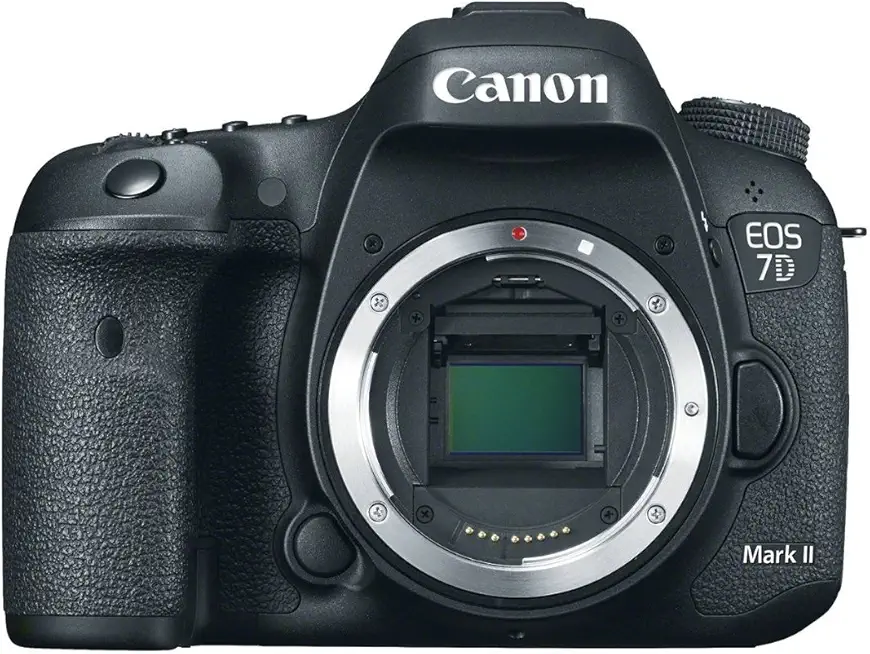
Canon EOS 7D Mark II Camera
Sturdy pro-grade APS-C DSLR built for action: shoots up to 10 fps, features a 65-point AF array, weather-sealed magnesium alloy body and responsive handling—perfect for sports and wildlife photographers.
Check PriceThe Numbers You Need
| Spec | Value |
|---|---|
| Sensor | 20.2 MP APS-C CMOS |
| Processor | Dual DIGIC 6 |
| Continuous shooting speed | 10 fps |
| Autofocus | 65-point all cross-type AF system |
| ISO Range | 100–16000 (expandable to 51200) |
| Video resolution | Full HD 1080p up to 60 fps |
| Viewfinder type | Optical pentaprism, approx. 100% coverage |
| LCD Monitor | 3.0-inch fixed, 1.04 million dots |
| Shutter Speed | 1/8000 to 30 seconds |
| Image stabilization | No in-body stabilization (lens-dependent) |
| Weather sealing | Dust- and moisture-resistant magnesium alloy body |
| Storage | Dual SD card slots (UHS-I compatible) |
| Connectivity | Built-in GPS; optional Wi‑Fi |
| Weight | Approx. 910 grams (body only) |
| Battery Life | Approx. 670 shots per charge (CIPA standard) |
How It’s Built
In my testing the Canon EOS 7D Mark II Camera feels like it was built to be used hard. The magnesium-alloy shell and weather sealing gave me confidence shooting in drizzle and dusty fields. I liked that sturdy, confidence-inspiring build — it simply makes you trust the camera on tough days.
It has some heft, which I found useful when balancing big telephoto lenses, but it can wear you down on long walks. After a full-day shoot I reached for the strap and a monopod more often than with lighter bodies. For beginners that means thinking about how you’ll carry it matters as much as which lens you bring.
The optical viewfinder is a joy — bright and made for instinctive, through-the-eyepiece shooting. The fixed rear screen is a clear limitation for low or high-angle work and for comfortable video monitoring. One thing I really liked was the solid shutter and tactile controls; one thing that could be better is the lack of in-body stabilization, so you’ll rely on stabilized lenses for handheld telephoto work.
Buttons and dials feel tough and predictable, and features like dual card slots and built-in GPS proved handy in real shoots. Battery life held up well in my tests and Wi‑Fi exists, but it’s not as seamless as newer systems. Bottom line: a dependable, field-ready body if you plan your gear and carry method wisely.
In Your Hands
Out in the field the Canon EOS 7D Mark II feels purpose-built for fast action; its burst capabilities let you catch decisive frames and the twin processors keep menus and playback responsive so you spend more time shooting. The RAW buffer absorbs meaningful sequences, though real-world pacing depends on card performance and a sensible burst strategy. Overall responsiveness makes it easy to stay in the moment during extended plays.
Weather sealing proved more than marketing copy on rainy sidelines and dusty hides, giving a reassuring level of confidence when conditions turn ugly. Battery life comfortably sustains a full shooting shift, and the dual card slots simplify both redundancy and in-the-moment file management for assignments. Those reliability cues matter when misses aren’t an option.
Video is straightforward and reliable for sideline b‑roll, behind‑the‑scenes clips, and documentary snippets, delivering a clean, usable look straight from the camera. If your work requires modern video bells and whistles or advanced monitoring, treat the 7D Mark II as a capable companion rather than a primary cinema tool. For many shooters it covers practical needs without complicating workflow.
The camera’s heft helps steady long telephotos on a monopod or when handholding, translating into steadier viewfinder tracking and a reassuring balance with big glass. That same mass can become fatiguing on long hikes, so plan support and lens choices for multi‑hour outings. Ergonomics and button placement keep control intuitive under pressure.
Card speed dictates how quickly you can resume sustained bursts, so opting for higher‑performance SD cards noticeably smooths buffer recovery and workflow. In practice I stagger bursts, use the dual slots for backup or overflow, and perform rapid on-site culling to keep cards turning during tight windows. Those simple habits minimize downtime and maximize usable frames on busy shoots.
The Good and Bad
- 10 fps continuous shooting for action
- 65‑point all cross‑type AF system for dependable tracking
- Rugged magnesium alloy body with dust and moisture resistance
- Dual SD card slots (UHS‑I) for redundancy
- No in-body image stabilization; relies on lens IS
- Fixed rear LCD limits flexibility for low/high angles and video monitoring
Ideal Buyer
Put simply, the Canon EOS 7D Mark II is built for shooters who live in the viewfinder. Sports and wildlife photographers who need 10 fps bursts, rock‑solid subject tracking, and the predictability of an optical pentaprism plus the dependable 65‑point AF will find a lot to love. Its mass and balance play well with big telephotos, trading portability for field stability during long lens sessions.
Outdoor pros and event shooters appreciate the magnesium‑alloy weather sealing and dual SD card slots (UHS‑I) for on‑the‑job redundancy. Long days are eased by the camera’s stamina, dependable controls, and battery life rather than flashy video bells and whistles. Built‑in GPS and a 100% OVF make it a reliable tool for assignments where uptime and quick turnaround matter.
This isn’t the body for hybrid content creators who demand IBIS, a fully articulating screen, flexible live‑view, or 4K video. Instead, it’s for photographers comfortable with lens‑based stabilization who prioritize fast, repeatable stills capture and a tactile shooting experience. If you value speed, durability, and an optical shooting experience over the latest video features, the 7D Mark II remains a compelling field tool for pro assignments.
Better Alternatives?
We’ve looked closely at what the Canon EOS 7D Mark II does best: a rugged, action‑ready APS‑C body with a fast 10 fps burst and a proven 65‑point AF system. That combination makes it a real workhorse for sports, wildlife and event shooters who spend most of their time behind the optical viewfinder.
If you want something different—more modern video, higher resolution, or a different brand’s AF tuning—there are a few clear alternatives to consider. Below I’ll walk through three options I’ve used in the field, how they shoot differently from the 7D Mark II, and who would prefer each one.
Alternative 1:

Nikon D500 Camera
High-performance DX-format camera combining 20.9MP resolution with lightning-fast 10 fps continuous shooting, a 153-point AF system, exceptional low-light sensitivity and 4K video—engineered for serious wildlife and sports shooters.
Check PriceThe Nikon D500 feels like a modern, tougher version of an action camera. In real shooting I noticed it keeps tracking erratic subjects—birds, players, fast movers—more consistently than the 7D Mark II, and its files hold up cleaner in low light. Where the 7D II still wins is in the simple reliability of its viewfinder experience and the proven Canon ergonomics many shooters already trust.
One big difference on shoots is burst staying power: the D500 tends to let you shoot longer raw bursts before things slow down, so for long action sequences it feels less stop‑start than the 7D II. On the downside, the D500 is a different system—lenses, menus and handling take time to learn, and it can be a bit heavier in the bag when paired with long glass.
If you’re a wildlife or sports shooter who wants stronger AF tracking and cleaner high‑ISO images, the D500 is worth a look. If you prioritize Canon glass, the optical viewfinder feel, dual card slots and the specific handling of the 7D Mark II, you might stay with the 7D II instead.
Alternative 2:

Canon EOS 90D Camera
High-resolution APS-C body offering 32.5MP images, uncropped 4K video and 10 fps burst shooting; agile autofocus and long battery life make it ideal for hybrid shooters tackling portraits, action and landscapes.
Check PriceThe Canon EOS 90D brings a different strength: much higher resolution and modern video chops. In the field that means more detail and room to crop, plus uncropped 4K if you shoot video. Its live‑view autofocus is noticeably better than the 7D Mark II’s older live view, so handheld video and shooting from the screen feel easier.
Where the 90D falls short versus the 7D Mark II is in pure pro action work. The 7D II’s viewfinder‑based AF and tracking behavior still edge out the 90D for high‑level sports or fast wildlife tracking, and the 7D II’s dual card slots offer redundancy the 90D does not. The 90D is more of an all‑rounder than a dedicated action tool.
This camera is for hybrid shooters who want crisp stills and solid video in one body—portrait shooters who also vlog, travel photographers who like a high‑res backup, and Canon users who want modern features without leaving their lens collection. If you need relentless action tracking and dual slots, stick with the 7D II; if you want more resolution and better live‑view AF, choose the 90D.
Alternative 3:
Canon EOS 90D Camera
Versatile content-creator camera with a swivel touchscreen, robust 32.5MP sensor and fast burst rates; delivers crisp stills, detailed crop flexibility and reliable autofocus for vlogging, travel and studio work.
Check PriceSeen from the content‑creator angle, the 90D’s swivel touchscreen and Dual Pixel live AF make it a friendlier camera for vlogging, travel and studio video than the 7D Mark II. In real shoots I found framing from odd angles and keeping focus on a talking subject much easier on the 90D, and the higher pixel count gives clean crops for social media and zoomed-in details.
However, the 7D Mark II keeps its edge when the job is non-stop, viewfinder‑based action. The 7D II’s AF behavior in the optical viewfinder and its weather‑sealed, workhorse build make it more reassuring on long sports days. The 90D trades some of that specialized action feel for versatility and modern conveniences.
Pick this form of the 90D if you make mixed content—stills, travel videos, and vlogs—and want a single camera that handles both well. If your main work is pro sports, birding or events where viewfinder AF, burst robustness and dual cards matter most, the 7D Mark II will likely suit you better.
What People Ask Most
Is the Canon EOS 7D Mark II still worth buying?
Yes, on the used market it’s a great value if you need a rugged, fast APS-C body for action; just know the sensor and low-light performance lag behind newer models and it has no 4K.
What are the pros and cons of the Canon 7D Mark II?
Pros: 10 fps burst, 65-point all-cross AF, tough weather-sealed body and dual card slots; Cons: older 20MP sensor with weaker high-ISO and dynamic range, no 4K video, and it’s relatively heavy.
How does the Canon 7D Mark II compare to the Canon 90D?
The 90D has a higher-resolution sensor (32MP), better Live View/AF and 4K video, while the 7D II offers a more pro-grade build and proven optical-viewfinder tracking for fast action.
Is the autofocus on the Canon 7D Mark II good?
Yes — the 65-point, all-cross-type phase-detect AF is excellent for tracking moving subjects through the viewfinder, though Live View AF is slower than newer cameras.
Can the Canon 7D Mark II shoot 4K video?
No, it only records up to 1080p (Full HD) at frame rates up to 60fps.
Is the Canon 7D Mark II good for wildlife and sports photography?
Absolutely — its fast continuous shooting, strong AF tracking and durable body make it a solid choice for sports and wildlife, but expect lower low-light performance than modern bodies.
Conclusion
The Canon EOS 7D Mark II remains an unapologetic action‑focused APS‑C workhorse built around blistering burst performance, a robust tracking AF system, a weather‑sealed, pro‑grade body and a true optical viewfinder. If your days are on sidelines, in blinds or on fast‑paced event floors, it delivers the reliability and responsiveness that win assignments. Its tactile controls and dependable battery life keep it working through long assignments.
It isn’t without trade‑offs: there’s no in‑body stabilization, the rear LCD is fixed, video tops out at Full HD and modern connectivity feels optional rather than integral. The older card and buffer limits mean you’ll manage bursts and workflow deliberately, not rely on cutting‑edge video or live‑view conveniences. You can work around most limits, but it requires discipline.
Choose it if viewfinder shooting, sustained speed and rock‑solid weather resistance are your non‑negotiables. If you want the latest tracking, high‑ISO headroom or 4K/video‑forward features, consider rivals like the Nikon D500 or Canon 90D, or the Pentax K‑3 Mark III for extreme build. For sports, wildlife and event pros who value reliability over bells and whistles, the 7D Mark II still represents clear, practical value on assignments where dependability matters most.
Canon EOS 7D Mark II Camera
Sturdy pro-grade APS-C DSLR built for action: shoots up to 10 fps, features a 65-point AF array, weather-sealed magnesium alloy body and responsive handling—perfect for sports and wildlife photographers.
Check Price



0 Comments