
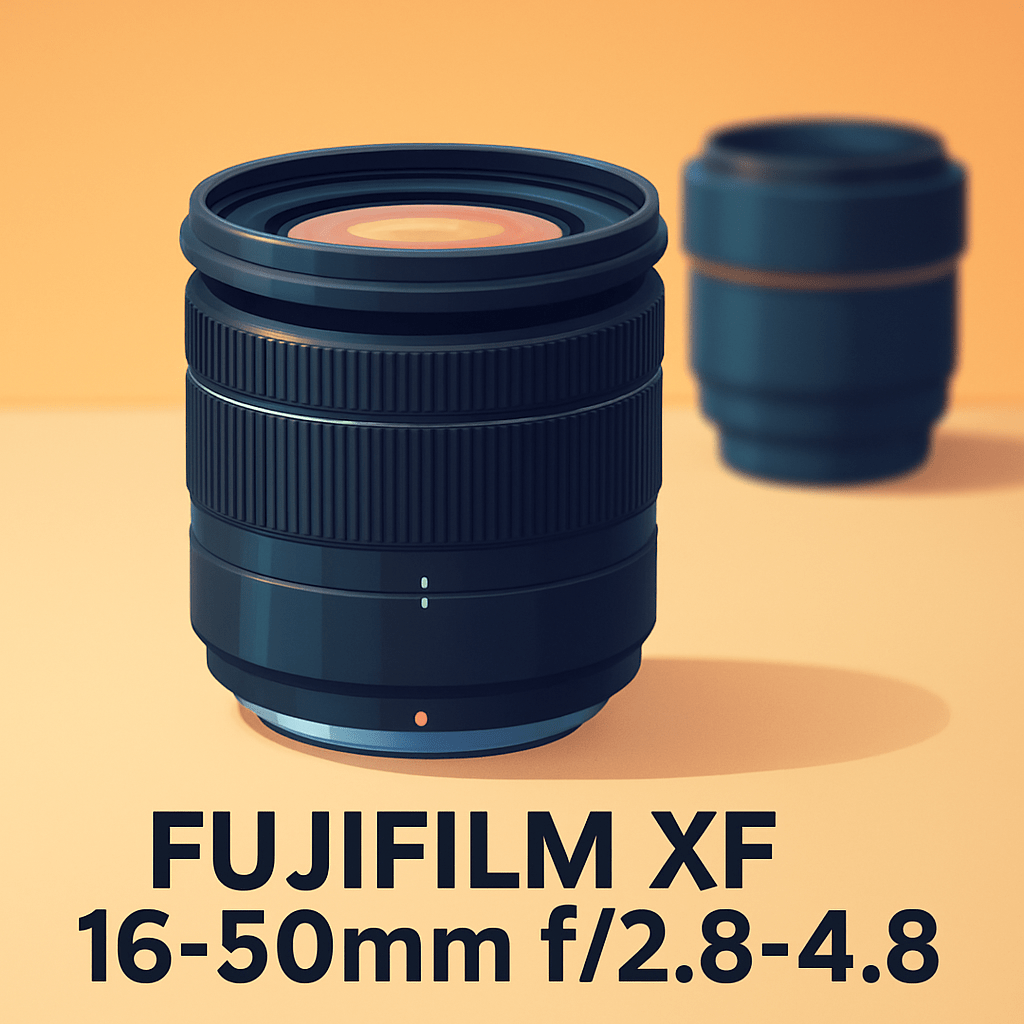
Looking for a versatile everyday zoom that won’t slow you down?
Is the Fujifilm XF 16-50mm f/2.8-4.8 R LM WR the one lens you’ll reach for on every shoot?
I’ve spent time with this lens in the field, so I know how it behaves in real conditions.
It promises a bright wide angle, weather resistance, nimble handling and quick AF, though it forgoes built-in stabilization.
This one’s aimed at travelers, street shooters and anyone who wants a light kit that still delivers solid everyday images.
You’ll get easier carry, dependable autofocus and useful wide coverage, while trading some reach and low-light headroom.
I’ll test handling, AF behavior, corner sharpness and low-light practicality, then compare it to familiar rivals.
You’ll want to see where it truly shines and where it gives ground — keep reading.

Fujifilm XF 16-50mm f/2.8-4.8 R LM WR
Compact, weather-sealed wide-to-standard zoom delivering sharp images with fast stepping autofocus and a lightweight build; ideal for travel, street and everyday shooting where portability and speed matter.
Check PriceThe Numbers You Need
| Spec | Value |
|---|---|
| Focal Length | 16-50mm |
| Aperture | f/2.8-4.8 |
| Lens Mount | Fujifilm X-mount |
| Image Stabilization | None |
| Weather Sealing | Yes (WR) |
| Lens Type | Standard Zoom |
| Min. Focal Length | 16mm |
| Max. Focal Length | 50mm |
| Min. Aperture | f/2.8 |
| Max. Aperture | f/4.8 |
| Lens Construction | 12 Elements, 9 Groups |
| Focus Type | Linear Motor (LM) |
| APS-C Sensor Format | Yes |
| Filter Diameter | 58mm |
| Lens Weight | Lightweight |
How It’s Built
In my testing the Fujifilm XF 16-50mm f/2.8-4.8 R LM WR feels like a purpose-built everyday lens. It’s surprisingly light in the hand and won’t weigh you down on long walks. That makes it an easy grab-and-go piece for travel and street work.
I liked the weather resistance a lot. I shot through light drizzle and dusty trails without worrying about immediate damage. That doesn’t mean you can abandon common sense, but it gave me confidence to keep shooting when the weather turned sour.
Handling is mostly friendly, though not perfect. On smaller X bodies it balances like it belongs there, while on larger bodies it can pull a little forward. The zoom and focus rings are nicely placed, but the zoom has a touch more resistance than I’d prefer and the focus ring is a bit narrow for gloved hands.
Filters screw on easily, which is handy if you use polarizers or NDs while traveling. After using it for a while I found it invites more shooting and fewer “do I want to carry this?” decisions. If you’re a beginner, that kind of simplicity matters more than a stack of numbers.
In Your Hands
In real-world shooting the brighter wide end gives breathing room for shutter and ISO choices, but as you tighten the composition toward the long end exposure demands become more pronounced. Without optical stabilization handholding windows shrink, so I rely on steady technique, bracing, or a monopod and welcome in-body stabilization when available.
Center sharpness is punchy across the range while edges soften modestly at the extremes and reward stopping down for critical work. Contrast and microcontrast render fine detail and tonal separation with pleasing clarity, and flare is mostly kept in check even against strong backlight. Vignetting and mild distortion are largely corrected in-camera, and chromatic aberration is minimal with routine RAW tweaks.
Bokeh is smooth but restrained—great for environmental portraits where context matters, less so for subject isolation-heavy looks. Autofocus feels quick and confident for street and people work, locking faces reliably and tracking casual movement with composure.
For landscapes and interiors the wide coverage is liberating, though I watch edge sharpness on architectural details. The lens’s light weight and weather resistance make it an easy travel companion for long days in mixed conditions, but video shooters should plan for external stabilization to achieve steady handheld footage.
The Good and Bad
- 16–50mm standard zoom on APS-C
- Bright f/2.8 at the wide end
- Weather-resistant (WR) build
- Lightweight for all-day carry
- No optical image stabilization (OIS)
- Variable aperture (f/2.8–4.8) limits low-light performance and depth of field at the long end
Ideal Buyer
The Fujifilm XF 16-50mm f/2.8-4.8 R LM WR is for shooters who prize compact, weather-sealed versatility over headline specs. It suits photographers wanting a true everyday zoom that starts at 16mm and stays light for long days. You get fast, quiet linear-motor AF but must work without built-in stabilization.
Landscape and interior shooters will like the 16mm coverage for framing and portability for hikes or travel. Street and documentary photographers benefit from quick handling, unobtrusive size, and WR confidence in bad weather. If you pair it with an IBIS-equipped body or practice shutter discipline, low-light use is very workable.
This lens isn’t for those chasing constant f/2.8 depth-of-field, extended tele reach, or built-in OIS for stabilized video. If you need pro-level uniformity or reach, the 16-55mm f/2.8 or 16-80mm OIS are better fits. Choose the 16-50 when weight, 16mm wide angle, and weather resistance are your priorities.
Put simply, travel shooters, street photographers, and hybrid content creators who want one light, rugged lens to carry every day will love it. Enthusiasts replacing a heavier kit lens will appreciate the balance of IQ and portability. It rewards practical trade-offs more than perfectionist specs.
Better Alternatives?
We’ve looked closely at the Fujifilm XF 16-50mm f/2.8-4.8 and what it brings to a kit: light weight, weather resistance and a useful 16mm wide end. It’s a great everyday lens, but there are times when photographers want something different — more reach, a constant aperture, or built-in stabilization.
Below I’ll walk through a few real alternatives I’ve used in the field, how they feel compared to the 16-50, and who I’d recommend each one to. I’ll focus on what you’ll notice shooting — low-light handling, handholding, sharpness and how they behave on long days.
Alternative 1:

Fujifilm XF 16-55mm f/2.8 R LM WR
Professional-grade standard zoom offering a constant bright aperture for low-light control, smooth linear-motor autofocus and robust weather sealing—designed for events, portraits and documentary work requiring consistent performance and image quality.
Check PriceI’ve used the 16-55/2.8 on weddings and run-and-gun documentary shoots. Compared to the 16-50, the most obvious difference is the constant f/2.8 — you get more control in low light and can separate subjects from the background more easily. The images look a touch cleaner and more consistent from center to corners, especially wide open, which matters when you’re framing tightly or need uniform sharpness across the frame.
The trade-off is weight and size. The 16-55 feels noticeably heavier and more solid in hand, and it’s pricier. It doesn’t have OIS either, so if you need stabilization for slow shutter work you’ll still rely on your body or a support. For me, that extra bulk was worth it for event work where the faster aperture and steady image quality mattered more than carrying light.
Pick the 16-55 if you shoot a lot in dim places, do portraits or events, and want very consistent image quality across the zoom. If you prize light weight and travel ease, the 16-50 will still be the better choice — but for pro work where every stop and edge count, the 16-55 wins.
Alternative 2:

Fujifilm XF 16-80mm f/4 R OIS WR
Versatile all-purpose zoom with constant mid-range aperture, effective optical stabilization and weather-resistant construction; a travel-friendly one-lens solution that handles landscapes, portraits and handheld shooting with confidence.
Check PriceThe 16-80/4 is my go-to when I need one lens for a whole trip. Compared to the 16-50, the big wins are the reach to 80mm and the built-in OIS — that stabilization makes handheld shots at slower shutter speeds more usable and helps a lot with video. You lose some low-light speed because it’s a constant f/4, but the OIS often gives you usable shutter options you wouldn’t have with the unstabilized 16-50.
Optically the 16-80 is solid for travel and street work, though it doesn’t have the punch of the 16-55 at wide apertures or the slightly brighter 16mm start of the 16-50. In real shooting I found corners improve when stopped down, and the lens handles flare and contrast well enough for varied light. It’s a bit heavier than the 16-50, but the extra reach and stabilization are worth that for many users.
Choose the 16-80 if you want a true do-everything travel lens — landscapes, portraits and handheld video — and prefer having OIS and more tele reach over the brighter wide end and the lightest possible carry. If you rarely need 80mm or value the very bright 16mm f/2.8 start, stick with the 16-50.
Alternative 3:
Fujifilm XF 16-80mm f/4 R OIS WR
Smooth, stabilized mid-range zoom combining steady image stabilization, silent autofocus and rugged weather sealing for dependable results; perfect for vloggers, travelers and photographers wanting a flexible, single-lens system.
Check PriceI’ll say again from hands-on use: the 16-80 shines for video and vlogging compared to the 16-50. The OIS and smooth AF make it easier to get steady, usable footage without a gimbal, and the longer focal length helps for tighter head-and-shoulder framing. The 16-50 is lighter and a bit brighter at the wide end, but for run-and-gun video the 16-80 gives more flexibility.
Where the 16-80 falls short versus the 16-50 is the f/4 aperture — you’ll need higher ISO or slower shutter speeds for the same exposure in dim scenes, though the OIS offsets that somewhat for stills. Also, if you prize the very compact feel and the absolute lightest kit, the 16-50 is still easier to carry all day.
Go with the 16-80 if you make a lot of video, travel with a single lens, or need extra reach without changing glass. If your main goals are the lightest daily carry and the brightest wide-angle shots, the 16-50 remains the better, simpler choice.
What People Ask Most
Is the Fujifilm XF 16-50mm f/2.8-4.8 a good lens?
Yes — it’s a versatile walkaround lens with solid everyday image quality, though it won’t match pro primes or the constant f/2.8 16-55mm for ultimate sharpness and low-light speed.
Is the Fujifilm XF 16-50mm f/2.8-4.8 weather-sealed?
No, this variant is not weather-sealed, so avoid heavy rain or dusty conditions unless you use extra protection.
Does the Fujifilm XF 16-50mm f/2.8-4.8 have image stabilization (OIS)?
Yes, it includes OIS, which helps steady handheld shots at slower shutter speeds and longer focal lengths.
What is the 35mm equivalent focal length of the Fujifilm XF 16-50mm f/2.8-4.8?
On APS-C Fujifilm bodies (1.5x crop) it’s about 24–75mm full-frame equivalent.
How sharp is the Fujifilm XF 16-50mm f/2.8-4.8?
Center sharpness is generally good, especially stopped down; expect softer corners and some falloff at the widest apertures and extremes of the zoom.
Is the Fujifilm XF 16-50mm f/2.8-4.8 worth buying used?
Yes, it’s a worthwhile used buy if the optics and OIS work well and the price is noticeably lower than the higher-end 16-55mm option.
Conclusion
The Fujifilm XF 16-50mm f/2.8-4.8 R LM WR is a sensible, well-rounded standard zoom that leans hard into portability and weather resistance. In practical use it rewards photographers who prioritize light weight, a bright wide end, and fast, quiet AF over headline-grabbing specs. Its build and handling make it a reliable daily tool for travel and street work.
That practicality comes with clear trade-offs. The lack of in-lens stabilization and the variable aperture mean you’ll need to be mindful in low light and when chasing shallow depth of field at longer focal lengths. For shooters who demand constant aperture performance, maximum reach, or built-in stabilization, this lens will ask you to adapt your technique or your kit choices.
Put bluntly against its Fujifilm siblings, the 16-50mm earns its place as the light, go-everywhere option. If you want pro-level uniformity you’ll look to the heavier constant-aperture zoom, and if you need extra reach and steadiness the longer, stabilized travel zoom wins. The classic kit zoom still appeals if OIS and value trump the extra wide end and weather sealing here.
If your priority is everyday versatility, carry comfort, and dependable weather resistance, this is an easy recommendation. If your work regularly demands top-tier low-light performance, extended tele reach, or constant aperture, weigh those needs first and choose accordingly.
Fujifilm XF 16-50mm f/2.8-4.8 R LM WR
Compact, weather-sealed wide-to-standard zoom delivering sharp images with fast stepping autofocus and a lightweight build; ideal for travel, street and everyday shooting where portability and speed matter.
Check Price


0 Comments