
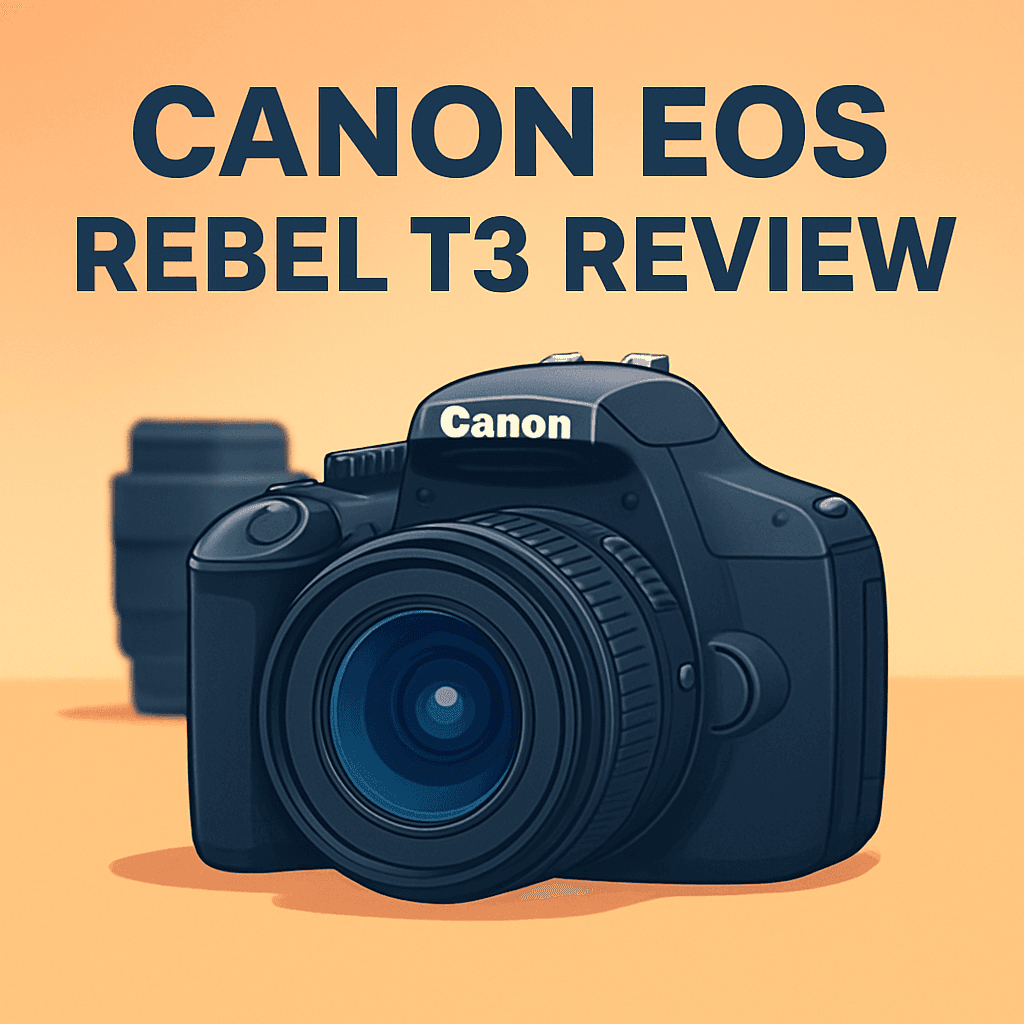
canon eos rebel t3 review — wondering if this budget DSLR can actually upgrade your photos?
I’ll evaluate the Canon EOS Rebel T3 Camera as a 12.2MP APS‑C DSLR with DIGIC 4 — stills‑first AF and 720p video — after field‑testing it in real shoots.
If you’re a first‑time DSLR buyer or want access to EF/EF‑S lenses, this review’s for you. Make sure to read the entire review as I dig into handling, image quality and practical trade‑offs — keep reading.

Canon EOS Rebel T3 Camera
Compact, entry-level DSLR delivering reliable image quality and intuitive controls for new photographers; optical viewfinder, comfortable grip, and compatibility with EF lenses make it an affordable way to learn photography fundamentals.
Check PriceThe Numbers You Need
| Spec | Value |
|---|---|
| Sensor | 12.2 MP APS-C |
| Processor | DIGIC 4 |
| Video Resolution | 720p |
| Max Shutter Speed | 1/4000 sec |
| ISO Range | 100–6400 |
| Continuous Shooting | 3 fps |
| AF Points | Basic Autofocus |
| Focus Modes | Manual / Auto |
| Live View | Yes |
| Viewfinder | Optical |
| LCD Size | 2.7 inches |
| Storage | SD / SDHC / SDXC |
| Lens Mount | EF / EF-S |
| Weight | Approximately 495 g |
| Image Stabilization | No built-in |
How It’s Built
In my testing the Canon EOS Rebel T3 feels pleasantly light in the hand and easy to carry for a day of shooting. With a small prime it’s almost effortless to tuck into a bag, while a kit zoom makes it feel a bit front-heavy on long walks. I really liked the optical viewfinder — it gives a clear, real‑time view that’s handy in bright sunlight.
The rear screen is on the small side, so menu navigation and image review take a little more patience. I found thumbnails aren’t great for judging fine sharpness, which nudges you to trust the viewfinder for critical framing. That means awkward angles are best handled by moving the camera rather than relying on the screen.
The EF/EF‑S mount is a real plus for beginners — I loved having easy access to Canon’s lenses as I upgraded. Storage uses common SD cards, so managing capacity is simple: carry a spare card and you’ll be fine. One thing that could be better is the lack of built‑in image stabilization, so stabilization depends on your lens choice and how steady you hold the camera.
Buttons and grip are straightforward and friendly for newcomers; menus felt logical in real use. Fit and finish are solid, not flashy, which makes it a dependable starter body. After using it for a while I’d say it’s forgiving for learners but shows its age in a few everyday conveniences.
In Your Hands
Out in the field the Canon EOS Rebel T3 Camera feels familiar and straightforward: menus respond without fuss and the camera settles between shots in a way that reminds you it’s built for learning rather than speed demons. The older processing keeps things smooth for everyday use, but don’t expect race‑car reflexes when you’re juggling mode changes or rapid framing shifts. In practical terms it’s steady and predictable, which is exactly what beginners will appreciate.
The autofocus is basic but honest — solid for posed portraits, tabletop still lifes, and mildly active scenes, yet it can hesitate on quick, erratic movement. Chasing kids or skittish pets highlights that limitation, where the burst behavior means you’ll sort through more frames to find the keeper. For deliberate shooting, however, it rewards patience with pleasing, well‑focused results.
Exposure flexibility is generous in good light, so freezing a candid or using a wide aperture for subject isolation is entirely feasible; in lower contrast or dim interiors you’ll reach for manual focus through the optical viewfinder, which feels tactile and reliable for careful work. Live View is handy for awkward angles but is noticeably less nimble than composing through the viewfinder, and video is best kept to simple family clips and short highlights rather than ambitious projects.
Workflow is friendly — modest file sizes speed card swaps and editing, and moving up the lens ladder (fast primes or an all‑around zoom) unlocks the camera’s best images. On a park portrait walk the T3 delivered warm tones and easy handling, while a Sunday evening family gathering exposed the AF and burst limits but still produced plenty of usable memories when paired with steady technique.
The Good and Bad
- 12.2 MP APS-C sensor
- EF/EF-S lens mount compatibility
- Optical viewfinder for real-time framing
- Lightweight body (~495 g)
- No built-in image stabilization
- Basic autofocus system
Ideal Buyer
The Canon EOS Rebel T3 Camera is best for someone buying their first DSLR who cares mostly about stills and learning the craft. Its optical viewfinder, lightweight body and access to Canon’s EF/EF-S lens lineup make it a friendly, hands-on classroom. You’ll appreciate the tactile controls and simple menu when shooting portraits, travel and family moments.
Photographers who want to practice exposure, try primes and step up lenses will get the most mileage out of the T3. The camera’s 12.2MP sensor, DIGIC 4 responsiveness and Live View make everyday learning straightforward, while 720p video handles casual clips and sharing. Expect solid results with good light and careful technique.
Don’t choose it if your priority is fast action, advanced AF tracking or high‑resolution video. The basic autofocus and 3 fps burst limit keep it from being ideal for sports, wildlife or fast kids and pets in motion. Likewise, the 720p cap, lack of in‑body stabilization and modest 2.7‑inch screen make it a poor fit for serious videography or vlogging.
If you’re on a budget and want a true DSLR learning platform with room to grow via EF/EF‑S glass, the Rebel T3 is a sensible starter. If you foresee needing better AF, higher frame rates or sharper video, consider newer entry‑level bodies instead. The T3’s strengths are simplicity, ergonomics and a low-cost path into interchangeable lenses.
Better Alternatives?
In this canon eos rebel t3 review we’ve gone through the T3’s strengths and limits — its solid stills performance, basic autofocus, and simple video. If you like the T3 but want more modern features, there are a few clear alternatives to consider that change the day-to-day shooting experience more than the raw spec sheet suggests.
Below are three cameras I’ve used in real shooting situations and how they compare to the T3. I’ll point out what each one does better and where it’s weaker, and who will get the most from each choice.
Alternative 1:

Canon EOS 2000D Camera
High-resolution 24MP sensor captures detailed photos while built-in Wi‑Fi and NFC simplify sharing. Beginner-friendly guides, Full HD video, and broad lens compatibility help grow your photographic skills.
Check PriceHaving shot with the EOS 2000D (T7) on walks and family events, the biggest real-world win over the T3 is image detail and cleaner files at higher ISOs. You’ll notice sharper photos straight out of the camera and fewer noisy shadows when shooting indoors — so it makes low-light keepers easier than the older T3.
What it doesn’t change much is autofocus speed or burst shooting. In practical terms it’s still an entry-level AF system, so if you try to chase fast kids or pets you won’t suddenly get pro-level tracking. Also, the higher-resolution files mean larger photos to store and edit; if you shoot a lot, plan on more memory and longer import times.
Pick the 2000D if you want a simple, familiar upgrade from the T3: better image quality, Wi‑Fi transfers for quick phone sharing, and the same easy handling. Avoid it if your priority is fast action shooting or advanced video features — it improves photos but stays conservative on AF and speed.
Alternative 2:

Canon EOS 250D Camera
Exceptionally lightweight with a vari-angle touchscreen and fast Dual Pixel autofocus for smooth subject tracking; 4K time-lapse and intuitive controls make it ideal for travel, vlogs, and everyday shooting.
Check PriceThe EOS 250D (SL3) is the most modern-feeling of the three in hand. I used it for video and travel shots and its vari-angle touchscreen plus Dual Pixel AF make composing, vlogging, and live-view portraits much easier than the T3’s small fixed screen and basic live-view focus. Autofocus in video and live view is noticeably faster and more reliable.
On the downside, the 250D’s 4K mode is not a miracle — it carries a crop and the AF there is not as smooth as in Full HD — so for most users the real advantage is Full HD with great continuous AF. It’s also a smaller, slightly pricier camera, so you trade a bit of simplicity for modern conveniences and slightly higher cost.
Choose the 250D if you want a compact, travel-friendly body that helps with video and live-view shooting — vloggers and travelers will love the flip screen and smooth AF. If you only shoot stills and want to save money, the extra video features may not be worth the price.
Alternative 3:
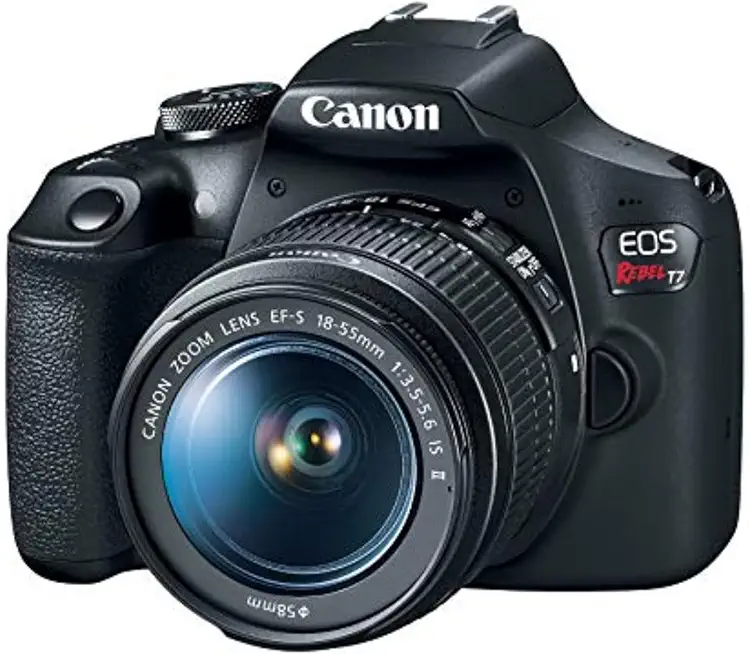
Canon EOS Rebel T7 Camera
Budget-friendly DSLR combining a high-resolution sensor with easy-to-use shooting modes and optical viewfinder; dependable autofocus and long battery life support learning photographers through everyday portraits, landscapes, and video recording.
Check PriceThe Rebel T7 is another straightforward step up from the T3 that I’ve used for portraits and casual shoots. Compared to the T3 it gives you higher resolution files and generally cleaner images in normal light, and the handling feels almost the same so there’s little new to learn when you switch.
Where it doesn’t outshine the T3 is in autofocus sophistication and burst speed — while images look better, AF tracking and continuous shooting remain geared to casual subjects. Battery life and usability are often a bit better in real trips, but you shouldn’t expect a huge leap in action performance.
Go for the Rebel T7 if you want a no-fuss, budget-friendly camera that delivers better everyday pictures than the T3 without changing your shooting style. If you need stronger autofocus or advanced video, look toward bodies with Dual Pixel AF or faster continuous shooting instead.
What People Ask Most
Is the Canon EOS Rebel T3 a good camera?
It’s a basic entry-level DSLR that delivers solid still-image quality for daylight shooting, but its sensor and features are outdated compared with modern cameras.
Is the Canon EOS Rebel T3 worth buying today?
Only if you can get one very cheap for learning or as a backup; otherwise newer used DSLRs or budget mirrorless cameras offer better value and features.
Is the Canon EOS Rebel T3 good for beginners?
Yes—it’s simple to use and teaches core DSLR skills, though you’ll likely outgrow its limits like low-light performance and slow autofocus.
What are the pros and cons of the Canon EOS Rebel T3?
Pros: affordable, sturdy image quality in good light, compatible with many Canon lenses; Cons: low-res LCD, no advanced Live View AF, weaker high-ISO performance and slower AF.
How does the Canon EOS Rebel T3 compare to the Canon EOS Rebel T3i?
The T3i is a clear step up with a higher-resolution sensor, articulating screen, improved Live View autofocus and better ISO performance, making it the better buy if available at a reasonable price.
What lenses are compatible with the Canon EOS Rebel T3?
It accepts Canon EF and EF-S lenses, giving you access to a wide selection of kit zooms, primes, and telephoto options.
Conclusion
The Canon EOS Rebel T3 Camera is a straightforward, stills‑first entry DSLR built around a 12.2MP APS‑C sensor and DIGIC 4 processing. Its basic autofocus, modest continuous speed and 720p video underline the camera’s teaching‑tool ethos rather than pro performance. Lightweight handling, an optical viewfinder and compatibility with Canon’s EF/EF‑S lens lineup make it an easy platform to learn on.
Strengths are clear: predictable image quality in good light, solid ergonomics for beginners and a broad lens ecosystem to grow into. Weaknesses are equally obvious — no in‑body stabilization, limited AF and burst ability, modest video and a small rear screen — all of which show up when you chase fast action, low‑light shots or modern video work. In everyday family, travel and portrait use these trade‑offs are manageable; for anything more ambitious they aren’t.
My verdict: as a first DSLR the T3 offers honest value if your priority is learning optics and nailing stills without spending much. If you plan to shoot toddlers in motion, dimly lit events or modern social video, the camera’s limits will frustrate you quickly. Treat it as a stepping stone rather than a long‑term all‑rounder.
If you want improved image quality and modern conveniences, the Rebel T7 is the logical step up. For better live‑view AF, a touchscreen and a more video‑friendly workflow the SL3 is the practical upgrade, while the Nikon D3500 shines for battery life and handling. Buy the T3 for low cost and simple controls plus access to Canon glass — otherwise invest a bit more for a newer entry model.
Canon EOS Rebel T3 Camera
Compact, entry-level DSLR delivering reliable image quality and intuitive controls for new photographers; optical viewfinder, comfortable grip, and compatibility with EF lenses make it an affordable way to learn photography fundamentals.
Check Price

0 Comments