
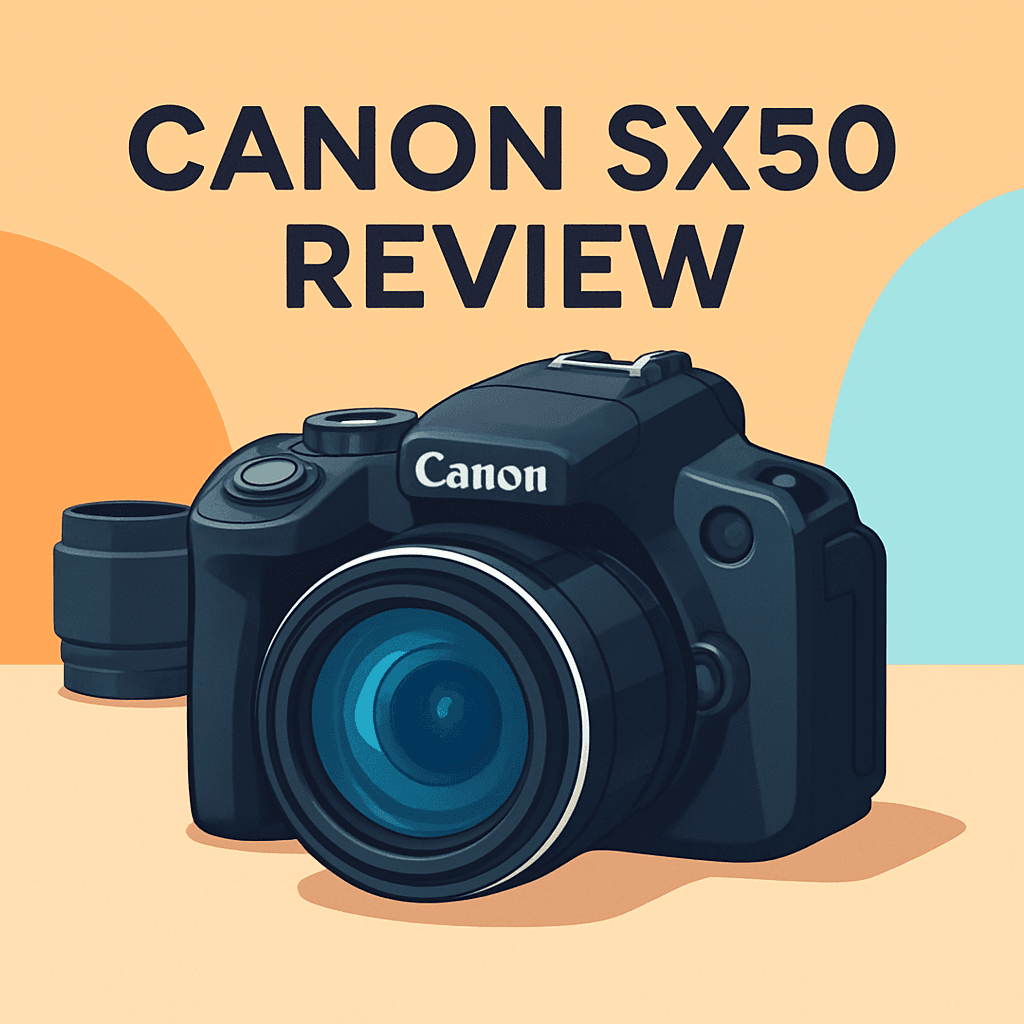
Want one camera that gets you close without changing lenses?
I’ve taken the Canon PowerShot SX50 HS Camera into the field to see how its extreme reach and handling perform in real situations.
It’s aimed at travelers, birders, sideline shooters, and families who want an all-in-one tool for distant subjects, steady handheld shots, and flexible framing with an EVF and tilting screen.
It’s not a modern 4K video body or a high‑resolution pro stills camera, so don’t expect cutting-edge specs; this review concentrates on real-world zoom use, handling, and whether it actually improves your images — keep reading.

Canon PowerShot SX50 HS Camera
Compact bridge camera delivering 50x optical reach, full manual controls, built-in electronic viewfinder and image stabilization—ideal for travel and wildlife enthusiasts seeking versatile, pocket-friendly long-range performance.
Check PriceThe Numbers You Need
| Spec | Value |
|---|---|
| Sensor | 12.1 MP |
| Zoom | 50x optical |
| Focal Length | 24–1200 mm |
| Viewfinder | Electronic |
| Stabilization | Optical image stabilization |
| Lens Mount | Fixed (built‑in) |
| Weight | Approx. 551 g |
| Video Resolution | 1080p (Full HD) |
| Screen Size | 2.8 inches |
| LCD Type | Vari-angle LCD |
| ISO Range | 100–6400 |
| Shutter Speed | 15–1/3000 sec |
| Autofocus | Not specified |
| Additional Features | DSLR-style controls |
| Image Stabilizer | Optical |
How It’s Built
In my testing with the Canon PowerShot SX50 HS Camera it felt like a small DSLR with a built-in zoom — the body wears DSLR-style controls, an electronic viewfinder, and a flip-out screen that makes awkward angles easy. The EVF was a real help when shooting in bright sun. The vari-angle LCD made low and high shots painless.
I found the grip comfortable and predictable even when I was zooming in on distant subjects. It does get a little front-heavy at extreme reach, so I often used my free hand or a strap for balance. For beginners that means steadier shots without learning fancy hand positions.
The buttons and dials are what I liked most — you can change settings quickly without digging through menus. After using it for a while I noticed the menus and some small labels could be clearer for new users. That’s the one area I wish Canon had simplified a bit.
Build-wise the camera feels solid and the screen hinge seemed sturdy during regular use. The EVF holds up well in daylight, though the screen and viewfinder aren’t as sharp or snappy as newer models in low light or fast pans. There’s no clear weather protection info, so I avoided rough wet conditions.
I also liked that the tripod plate didn’t block the battery or card door, which made switching batteries quick on location. Overall it’s a friendly, well-built bridge camera for travel and wildlife practice, especially if you want familiar controls and a dependable feel.
In Your Hands
In practice the Canon PowerShot SX50 HS focuses with a dependable pace that’s quick at wide angles and a bit more deliberate at full tele. Startup and shot-to-shot behavior is familiar to seasoned shooters: not instantaneous, but responsive enough for most shooting.
The optical stabilization is the workhorse; handheld shots at moderate and long reach remain usable when you brace, though the very longest framing benefits from a monopod or tripod. I kept it handheld for travel, but used support for critical wildlife and moon shots to secure peak sharpness.
Burst shooting handles casual action well, but sustained volleys will slow as the buffer fills, so time bursts for decisive moments. Full HD video is solid for travel and family clips, with stabilization helping handheld footage, though AF hunting and some rolling-shutter show up during fast pans.
Carry a spare battery and cards for long tele sessions because heavy zooming and movie capture consume power and storage quickly. For birding, airshows and distant subjects the EVF and DSLR-like controls make framing and adjustments straightforward, while steady technique and occasional support keep your hit rate high.
The Good and Bad
- Massive 50x optical zoom (24–1200mm) in one body
- Optical image stabilization helps keep handheld shots usable
- Electronic viewfinder for stable framing in bright light
- DSLR-style controls for familiar handling and manual control
- 12.1 MP resolution offers less cropping headroom than newer alternatives
- No 4K video (1080p only)
Ideal Buyer
If you spend weekends chasing birds, travel light through foreign cities, or need one body for sidelines and family holidays, the Canon PowerShot SX50 HS is aimed at you. Its 50x 24–1200mm reach tucks a lot of capability into a single package. You get long-reach access without swapping lenses or carrying a bag of glass.
Buy this camera if you prioritize stabilized handheld reach, a usable electronic viewfinder and DSLR-like controls over cutting-edge video or mega-megapixel sensors. The SX50 leans practical: optically stabilized telephoto and an EVF make bright-light framing and long-distance tracking easier. If you want 4K or high-resolution files as a must-have, look elsewhere.
It’s a comfortable tool for photographers who deliver great web galleries, social posts and moderate-size prints from 1080p video and 12.1MP stills. You’ll sacrifice some cropping headroom versus newer bodies, but gain a forgiving, all-in-one workflow. Hobbyists and travel shooters often prefer that trade.
Consider this camera if cost, availability and proven handling matter more than the latest specs. Field-tested ergonomics, a vari-angle LCD and solid stabilization mean long days in the field are doable. If your priority is reach and reliable real-world performance, the SX50 HS is a sensible, practical choice.
Better Alternatives?
We’ve gone through the Canon PowerShot SX50 HS and what makes it a solid all-in-one superzoom: big reach, useful stabilization, an EVF and DSLR-style controls. If you like that mix but want something with more reach, modern video, or a different handling balance, there are a few clear alternatives worth looking at.
Below are three cameras I’ve used in the field that pick up where the SX50 leaves off in different ways. I’ll point out what each one does better and where it falls short compared to the SX50, and who each camera really suits in real shooting situations.
Alternative 1:

Canon PowerShot SX70 Camera
Modern superzoom with 65x optical magnification, 4K video recording, versatile shooting modes and improved autofocus—perfect for adventurous photographers wanting DSLR-like control without carrying heavy lenses.
Check PriceI’ve used the Canon PowerShot SX70 as a natural step up from the SX50. In real shooting it gives you more reach and sharper crops thanks to a higher-resolution sensor, and the move to 4K video is a real plus if you plan to make clips from trips or wildlife outings. Autofocus feels quicker and more confident than the SX50, so you’ll get more keepers when subjects move.
Where it’s not as different as you might hope is low-light image quality—both cameras use small sensors, so high-ISO noise and limited dynamic range still show up faster than in larger-sensor bodies. The SX70 is a touch bigger and can chew through batteries faster if you use 4K a lot, so expect to carry a spare or two for long field days. At extreme zoom the lens still struggles with atmosphere and shake just like the SX50, though the improved stabilization helps slightly.
Choose the SX70 if you want a modern Canon feel with extra reach, smoother video, and snappier AF but don’t want to move to a whole new system. It’s best for travel shooters and birders who want better cropping and 4K video while keeping the familiar handling of a Canon bridge camera.
Alternative 2:

Nikon COOLPIX P1000 Camera
Telescope-grade 125x optical zoom paired with 4K video and manual controls, enabling breathtaking close-ups of distant wildlife, lunar landscapes and sports without changing lenses.
Check PriceThe Nikon COOLPIX P1000 is in a different league for reach—on the lens it’s just ridiculous compared to the SX50. I’ve hand-framed the moon and distant birds with detail that the SX50 simply can’t reach. That extra reach opens up creative shots and subject isolation that you can’t fake with cropping from the SX50’s files.
All that reach comes at a cost. The P1000 is heavy and awkward to handhold at long focal lengths; you’ll want a tripod or monopod for serious use. Autofocus and handling feel slower and less nimble than the SX50 when you’re tracking fast subjects, and at the longest ranges atmospheric blur and shake often limit usable shots—so more planning and support is needed.
Buy the P1000 if maximum reach is your top priority—wildlife spotters, moon shooters, or people photographing distant ships and aircraft who don’t mind the weight and setup. If you want an easy carry-around camera, the SX50 remains the more balanced choice.
Alternative 3:
Nikon COOLPIX P1000 Camera
Ultra-telephoto bridge body offering unparalleled reach up to 3000mm equivalent, built-in stabilization and intuitive ergonomics—engineered for photographers craving dramatic compression and finely detailed distant-subject images.
Check PriceUsed in a different way, the P1000 becomes a tool for dramatic telephoto effects—background compression, tight framing of distant subjects, and isolating parts of a scene that the SX50 just can’t. The handling and layout on the P1000 are grown-up for a bridge camera: big grip, clear controls, and a tripod collar that makes long sessions easier than propping a small camera on a flimsy support.
That said, the P1000 still doesn’t magically beat the SX50 on base image quality—both cameras share the limits of small sensors, so in low light the P1000 won’t be a huge step up. Also, wind, heat shimmer and longer lens movements make getting steady, sharp frames harder than on the SX50, which is handier for quick, grab-and-go shooting.
This version of the P1000 is for people who want dramatic long-telephoto looks and are prepared to work for the results. If you love long, slow-style shooting, composing carefully from a tripod and getting shots no one else can, the P1000 is worth the extra weight. If you want a lighter, faster all-purpose superzoom, stick with the SX50 or consider the SX70 instead.
What People Ask Most
Is the Canon PowerShot SX50 HS a good camera?
Yes — it’s a capable bridge camera with a huge 50x zoom and full manual controls, but its small sensor and older autofocus mean image quality and low-light performance lag behind newer models.
How much optical zoom does the Canon SX50 HS have?
It has 50x optical zoom, roughly equivalent to a 24–1200mm focal length on full-frame cameras.
Does the Canon SX50 HS shoot RAW images?
Yes — it can record RAW (.CR2) files as well as JPEGs.
Is the Canon SX50 HS still worth buying?
It’s worth buying used if you want extreme zoom and manual controls on a budget, but not if you need modern low-light performance, fast autofocus, or advanced video features.
What is the sensor size of the Canon SX50 HS?
It uses a 1/2.3-inch CMOS sensor, the common compact-camera size.
Can the Canon SX50 HS record Full HD 1080p video?
Yes — it records Full HD 1080p video (up to 30fps), though video autofocus and features are basic compared with newer cameras.
Conclusion
The Canon PowerShot SX50 HS Camera still earns its keep as a true all‑in‑one superzoom. With its massive 50x reach, stabilized optics, electronic viewfinder, vari‑angle LCD and DSLR‑style controls it delivers practical flexibility you won’t get from most compacts. Its 1080p video and handling make grab‑and‑go shooting effortless.
That practicality comes with tradeoffs, though. The older 12.1‑megapixel sensor and absence of 4K video are reminders that this body isn’t trying to match modern high‑resolution or video‑centric cameras. Autofocus speed, burst performance and battery endurance feel period‑appropriate rather than cutting‑edge, so expect limits in fast action or low light.
If your priority is sheer reach and a single camera that covers travel, birding and field sports, the SX50 is hard to beat for the price of convenience. If you need the sharpest crops, 4K footage, or blistering AF and burst rates, look to newer models instead.
In short, buy the SX50 when reach, ergonomics and simple HD video matter more than headline specs. Before committing, double‑check the remaining performance details and try it in your typical shooting scenarios to be sure it matches your workflow.
Canon PowerShot SX50 HS Camera
Compact bridge camera delivering 50x optical reach, full manual controls, built-in electronic viewfinder and image stabilization—ideal for travel and wildlife enthusiasts seeking versatile, pocket-friendly long-range performance.
Check Price

0 Comments