
Want portraits that really stand out with creamy background blur and pinpoint subject separation? If you’re wondering whether a fast medium-format prime will change your work, this review is for you.
The Fujifilm GF 80mm f/1.7 R WR promises dramatic subject isolation and strong low-light reach for GFX shooters. I’ve put it through real shoots to see how that promise holds up in practical settings.
Portrait, wedding, and editorial photographers who crave shallow depth of field will be most interested in what this lens delivers. It’s weather-sealed and feels more manageable than some longer medium-format primes, which matters on long days.
I’ll cover handling, autofocus behavior, bokeh character, and real-world trade-offs without drowning you in numbers. Make sure to read the entire review as I break down where it really shines—keep reading.

Fujifilm GF 80mm f/1.7 R WR
Ultra-fast medium-format portrait optic delivering dreamy background separation and razor-sharp detail. Compact, weather-sealed construction and smooth bokeh make it ideal for editorial portraits and low-light creative work.
Check PriceThe Numbers You Need
| Spec | Value |
|---|---|
| Mount | Fujifilm G-mount (GF) |
| Focal length | 80mm |
| Maximum aperture | f/1.7 |
| Minimum aperture | f/22 |
| Lens construction | 11 elements in 9 groups |
| Aperture blades | 10 (rounded) |
| Minimum focus distance | 0.85 m |
| Filter size | 77mm |
| Diaphragm control | Auto / Manual |
| Focus stepping motor | Yes |
| Weight | 795g |
| Length | 99.4mm |
| Weather resistance | Yes |
| Image stabilization (OIS) | No |
| Designed for | Medium format cameras (GFX series) |
How It’s Built
In my testing the Fujifilm GF 80mm f/1.7 R WR feels like a well-made tool you can trust. The metal housing and weather sealing gave me real confidence shooting in mist and dusty city streets, so I didn’t worry about a little bad weather. For a beginner that means you can shoot outdoors without constantly babysitting your gear.
I really liked the aperture ring—its clicks are positive and the auto/manual switch is easy to reach while shooting. Aperture changes felt predictable and repeatable, which is great when you’re trying to nail focus with a very shallow depth of field. In real-world terms, that precision frees you to focus on composition instead of fighting the lens.
Handling is generally comfortable and noticeably more manageable than some bigger medium‑format primes I’ve used, but it’s not light. After using it for a full day I did feel the weight, and I’d like a slightly smaller footprint for long handheld sessions. If you plan to shoot events or carry it all day, bring a sturdy strap or plan for occasional rests.
In Your Hands
Optically this lens feels like a proper medium‑format portrait tool: punchy center rendering wide open with micro‑contrast that gives skin tones a natural dimensionality, and a noticeable sharpening of the periphery as you stop down. Wide‑open character brings gentle vignetting and a bit more field curvature toward the edges, while strong backlight is handled without aggressive flare or color shifts, keeping highlights clean and colors faithful across apertures.
In low‑light the fast maximum aperture is a real asset—it routinely lets you choose lower ISOs and faster shutters for cleaner images—yet the lack of in‑lens stabilization means you’ll still rely on shutter speed discipline or support for the steadier hand‑held frames. The lens has presence on a GFX body, feeling balanced for short handheld sessions but reminding you that longer days will benefit from straps, rests, or a monopod.
The working distance is classic medium‑format: comfortable for headshots and half‑body portraits, but it doesn’t invite face‑butting closeups. That distance lends flattering compression for editorial and wedding work, letting subjects sit apart from the background while preserving environmental context when you want it.
Out in the field the weather sealing inspires confidence in breeze, dust or light rain, and the aperture behaves reliably in burst shooting with no distracting flicker. Overall the real‑world experience is of a lens that delivers cinematic subject isolation and dependable performance where look and reliability matter most.
The Good and Bad
- f/1.7 maximum aperture for exceptional speed and subject isolation
- 10 rounded blades for pleasing out-of-focus rendering
- Weather-resistant build (WR)
- Stepping motor autofocus
- Common 77 mm filter size
- More manageable than the GF110mm f/2 for extended handheld use
- No optical image stabilization (OIS)
- 795 g weight and 94.7 mm diameter — not a small prime
- 0.85 m minimum focus distance limits close-up and macro flexibility
- Medium-format depth of field demands precise focus at wide apertures
Ideal Buyer
If you live for portraits that sing with shallow depth of field, the Fujifilm GF 80mm f/1.7 R WR is made for you. It gives GFX shooters the kind of creamy subject separation that turns headshots and editorial frames into images with real emotional pull.
Wedding and available‑light photographers who need to salvage moments in dim churches or late‑day receptions will appreciate the f/1.7 advantage. The lens helps keep ISOs down and shutter speeds up, though you must accept no optical stabilization and practice steady shooting technique.
Studio shooters who want a fast, weather‑sealed prime for outdoor portrait sessions will find the balance of speed and real‑world durability appealing. Compared with the heftier GF110mm, the 80mm is more manageable for handheld work while still delivering that distinct medium‑format look.
Skip this lens if you crave OIS, need very close working distances, or prefer a lighter, grab‑and‑go kit for travel and run‑and‑gun assignments. For photographers comfortable managing a heavier lens and the tight focus tolerance of f/1.7, the GF 80mm f/1.7 R WR is a potent, characterful choice.
Better Alternatives?
We’ve gone deep on the GF 80mm f/1.7 — its creamy bokeh, crazy low-light reach, and the ways it changes how you shoot portraits. But no single lens fits every job or every shooter. Depending on how you work, you might want more reach, a wider view, or something lighter and easier to carry all day.
Below are three practical alternatives I’ve used in real shoots. For each I’ll say what it does better and worse than the 80mm, and what kind of photographer will prefer it. None of these is “better” in every way — they just solve different problems in the field.
Alternative 1:

Fujifilm GF 110mm f/2 R LM WR
Telephoto portrait optic engineered for exceptional resolution and contrast across the frame. Fast, precise autofocus and robust weather sealing ensure reliable performance for studio-quality headshots and outdoor shoots.
Check PriceThe GF 110mm f/2 feels like the natural next step if you love the 80mm’s look but want more reach and separation. On shoots I used it for tight headshots and when I needed a little extra compression to flatten features and isolate the subject from a busy background. It gives a slightly creamier background at equivalent framing because you’re farther from the subject and the compression changes the look in a flattering way.
What it gives up versus the 80mm is a bit of low-light advantage and general versatility. The 110mm is f/2 (not f/1.7), so you lose a touch of stop in really dark rooms. It’s also heavier and a little bigger on the camera, which matters if you’re moving quickly or shooting long wedding days. For half-body environmental shots the 110mm feels more restrictive than the 80mm.
Pick the 110mm if you mostly do headshots, studio portraits, or any work where you want a longer working distance and a tighter, more flattering compression. If you need the absolute shallowest depth or a lens that handles a wider range of portrait situations, stick with the 80mm instead.
Alternative 2:
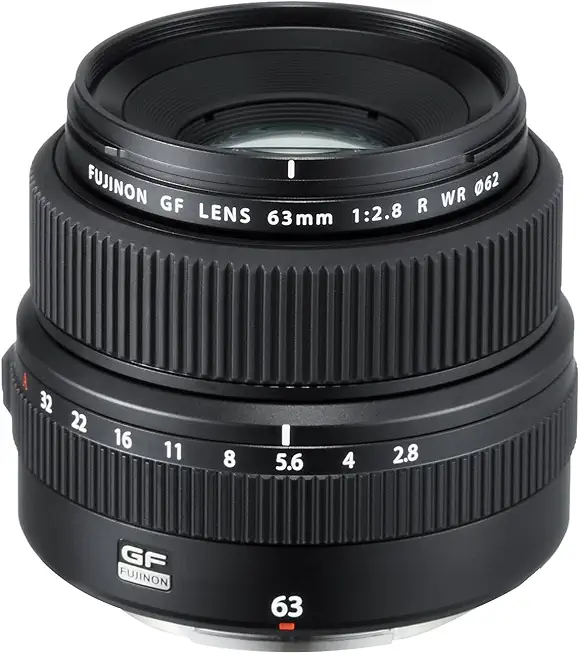
Fujifilm GF 63mm f/2.8 R WR
Versatile normal-length optic offering natural perspectives, superb edge-to-edge sharpness and neutral rendering. Lightweight, weather-resistant build and close-focusing capability make it perfect for street, travel and everyday artistry.
Check PriceThe GF 63mm is the everyday workhorse compared with the 80mm. I’ve reached for it when I wanted a more natural perspective — group shots, environmental portraits, street work, and travel are where it shines. It’s lighter, less obtrusive, and easier to carry all day. In real shoots the 63mm lets you include more of the scene without stepping back a half mile.
Where it loses to the 80mm is simple: less background blur and less low-light oomph. At f/2.8 you won’t get that same dreamy subject isolation or the ability to drop ISO and shutter speed in dim venues. If your style depends on the very shallow plane of focus the 80mm gives you, the 63mm won’t match that look.
Choose the 63mm if you want a lighter, more versatile lens for travel, street, editorial or environmental portraits. It’s for shooters who value context and portability over the dramatic shallow DOF the 80mm delivers.
Alternative 3:
Fujifilm GF 63mm f/2.8 R WR
Balanced standard lens delivering crisp micro-contrast, faithful colors and buttery out-of-focus areas. Small, durable design pairs well with handheld shooting, landscapes, environmental portraits and commercial work.
Check PriceI’ve also used the 63mm when I needed a lens that does a bit of everything well: clean mid-frame sharpness, reliable colors, and a small footprint. For landscapes and commercial product shots it gives very pleasing micro-contrast and detail without the bulk of the 80mm. Handheld city work and quick run-and-gun sessions are easier with the 63mm on the camera.
Compared to the 80mm, the trade-off is the artistic look of the image. The 80mm’s wide f/1.7 makes subjects pop in a way the 63mm can’t match. If you’re chasing that very shallow plane and painterly bokeh, the 63mm won’t give you the same separation or the same “subject-out-of-world” look.
Go for the 63mm again if you want one compact lens that covers many jobs: landscape, handheld commercial work, wider portraits, and travel. It’s the better choice when weight, price, and flexibility matter more than the last bit of creamy bokeh the 80mm offers.
What People Ask Most
Is the Fujifilm GF 80mm f/1.7 worth buying?
Yes — it’s a fantastic portrait lens if you value creamy bokeh and exceptional medium‑format image quality, but it’s large, heavy, and expensive so weigh that against your shooting needs.
How sharp is the Fujifilm GF 80mm f/1.7?
Very sharp in the center wide open and excellent across the frame when stopped down, giving crisp portrait detail and strong micro‑contrast.
What is the full-frame equivalent of the Fujifilm GF 80mm f/1.7?
On GFX medium‑format bodies it renders roughly the same field of view as a ~63mm lens on full‑frame cameras.
How is the bokeh of the Fujifilm GF 80mm f/1.7?
The bokeh is smooth and creamy with natural falloff and strong subject separation, especially at f/1.7.
Is the Fujifilm GF 80mm f/1.7 weather-sealed?
No, it is not fully weather‑sealed, so you should protect it from heavy rain and harsh conditions.
Is the Fujifilm GF 80mm f/1.7 compatible with all Fujifilm GFX cameras?
Yes — it fits all GF‑mount GFX bodies and will autofocus, though AF speed and features can vary slightly between camera models.
Conclusion
The Fujifilm GF 80mm f/1.7 R WR is a purpose-built, fast medium-format portrait lens that delivers the kind of shallow depth of field and creamy bokeh many GFX shooters crave. Its weather-resistant construction and tactile controls make it trustworthy on real shoots from editorials to weddings. In the frame it gives images a distinctive, cinematic separation that’s immediately obvious.
That beauty arrives with unavoidable trade-offs you should accept before buying. There’s no optical stabilization and the lens is a substantial piece to carry for long handheld days, while the limited close-focus range constrains extreme tight headshots and macro work. Wide-open shooting demands deliberate technique and precise focusing if you want consistent keepers.
If you prioritize character, low-light speed and the classic medium-format look, this lens is a compelling, easy recommendation; its aesthetic payoff is substantial and singular. If you need built-in stabilization, lighter carry, or closer working distance, consider the other GF options instead. Choose the 80mm when the look and speed matter most; pass on it when practical versatility outweighs pure rendering.
Fujifilm GF 80mm f/1.7 R WR
Ultra-fast medium-format portrait optic delivering dreamy background separation and razor-sharp detail. Compact, weather-sealed construction and smooth bokeh make it ideal for editorial portraits and low-light creative work.
Check Price


0 Comments