
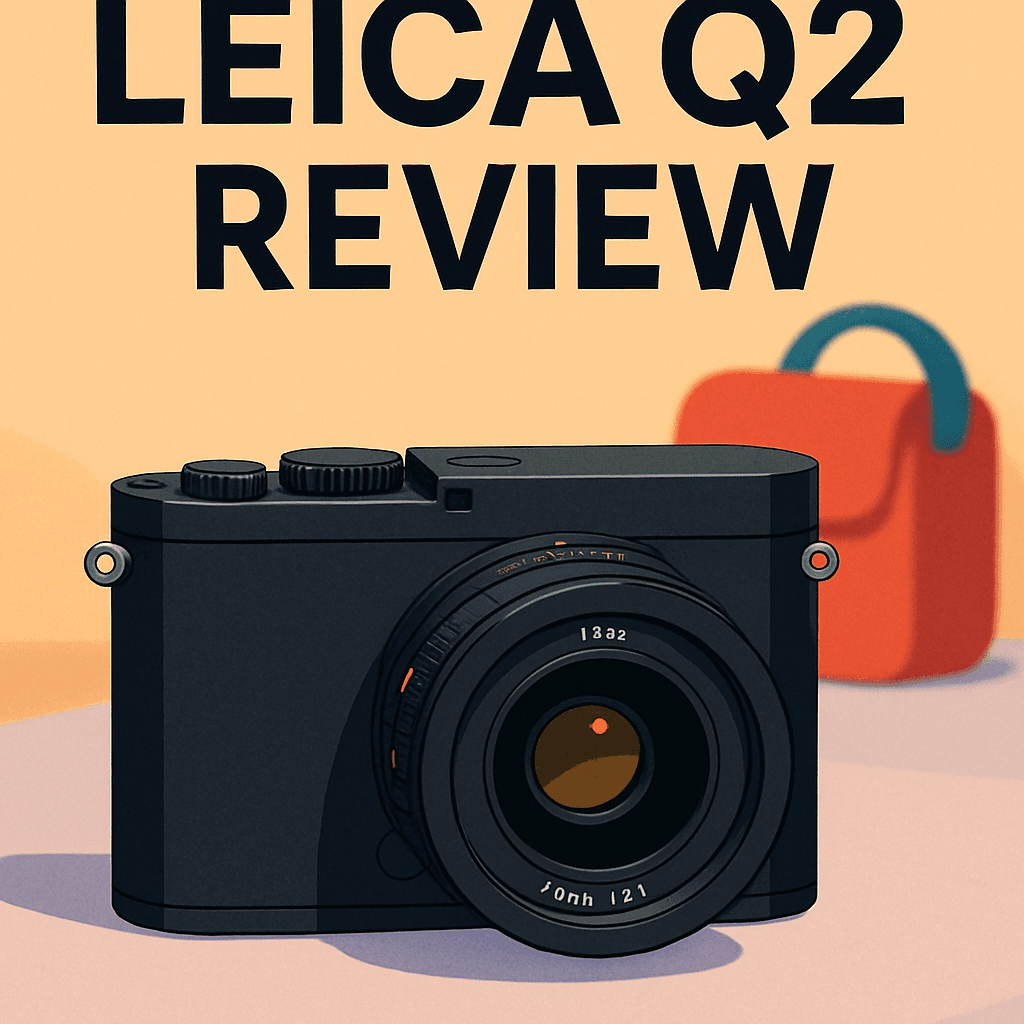
Want your street photos to feel raw, honest, and unforgettable? I’ve personally field-tested the Leica Q2 Monochrom Camera and compared it with a couple of close rivals.
It’s aimed at street and travel shooters who want high-resolution black-and-white images without swapping lenses. If you care about crisp detail and a compact setup, you’ll like this camera.
The real pull’s image quality—huge tonal range and clean, sculpted shadows. A fast prime lens plus weather sealing keeps you shooting in low light and bad weather.
Shooting feels deliberate and focused; manual controls reward photographers who know how to craft a frame. In practice you’ll get more keeper shots and images that print beautifully.
Trade-off: a small burst buffer interrupts long action runs. That’ll matter if you shoot long sequences or sports.
I uncovered one field trick that really surprised me badly. Keep reading as I’ll reveal something shocking about the Leica Q2 Monochrom Camera that might change your photo quality drastically.
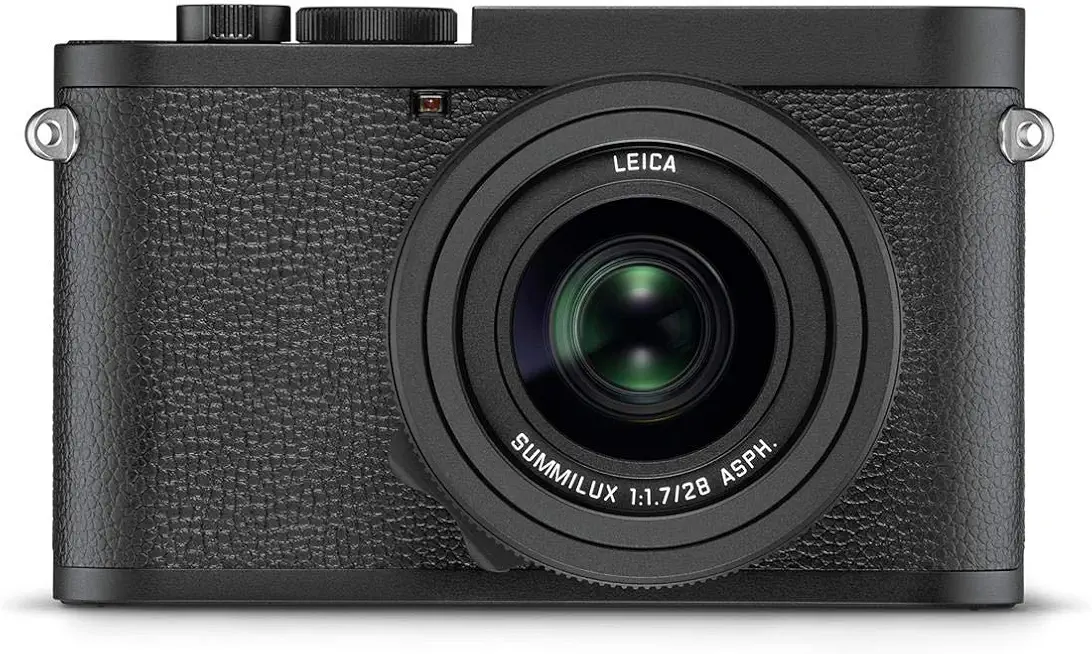
Leica Q2 Monochrom Camera
47.3MP monochrome full-frame sensor delivers unparalleled black-and-white detail and dynamic range, paired with a fast wide-angle lens and minimalist controls for a pure, tactile photographic experience and whisper-quiet operation.
Check PriceThe Numbers You Need
| Spec | Value |
|---|---|
| Sensor | 47.3MP full-frame CMOS sensor |
| Lens | 28mm f/1.7 Summilux fixed prime |
| Digital Crop Modes | 35mm, 50mm, and 75mm equivalents (in-camera crop) |
| ISO Range | 50–50,000 |
| Shutter Speed | Mechanical up to 1/2,000s; electronic up to 1/40,000s |
| Video Recording | DCI 4K and UHD 4K |
| Autofocus Modes | Spot, Field, Tracking, Face Detection, Multi-Field |
| Viewfinder | 3.68MP OLED electronic viewfinder |
| Burst Shooting | Up to 10 frames per second |
| Storage | SD / SDHC / SDXC card compatible |
| Weather Sealing | IP52-rated dust and water resistance |
| Weight | 734 g (1.62 lb) |
| Dimensions | 130 x 80 x 92 mm |
| File Formats | RAW and JPEG image capture |
| Macro Mode | Built-in macro mode for close-up shooting |
How It’s Built
In my testing the Leica Q2 Monochrom Camera feels compact and solid in the hand, with a finish that makes it look and feel like a precision tool. The body is made from high-quality materials and has weather protection so you don’t worry about a little rain or dust when you’re out shooting. That peace of mind really changes how freely you move on the street.
I found the balance and weight are pleasing, with the fixed lens and body sitting naturally against my palm no matter how long I carried it. The simple three-button layout is a joy — after a few minutes I was changing key settings without digging into menus. I loved the tactile shutter and dials; they give you clear feedback so you can work quickly and confidently.
One thing that could be better is the modest grip and tight button spacing for big hands, which can make long handheld sessions a little fatiguing. After using it for a while my thumb wanted a bit more room and occasionally pressed a nearby control by accident. A slightly larger thumb rest or reworked button spacing would fix that without changing the camera’s compact charm.
For beginners this design is forgiving and straightforward, so you can focus on framing rather than fighting controls. In real-world travel and street work it encouraged me to shoot more often, because it simply behaved and felt durable. If you want a straightforward, well-made monochrome camera that feels ready for daily use, the Q2 Monochrom’s build is hard to beat.
In Your Hands
On the street the Leica Q2 Monochrom feels like an extension of your eye, responding with a calm, assured personality that encourages decisive shooting. Autofocus is quick and reliable in most scenarios, and the responsive shutter combined with a discreet silhouette makes it easy to capture fleeting gestures without drawing attention. The fixed prime nudges you toward a focused, deliberate style that rewards anticipation and composition.
The build tolerates rain and grit better than many compact cameras, so it keeps working when conditions turn gritty or damp. The viewfinder is clear and the controls are thoughtfully pared back, making exposure and focus tweaks fast and instinctive on the fly. The lens delivers strong low-light capability and a pleasing shallow depth of field that isolates subjects beautifully in busy scenes.
Image quality is where the camera really sings; RAW files offer broad tonal range and subtle gradations, while JPEGs are generally clean even if some shooters wish for more in-camera rendering tweaks. Macro mode is surprisingly precise, letting you explore close-up details with confidence, and the manual-focus feel is satisfyingly tactile for critical work. If you push for long, sustained burst sequences the system favors image quality over endless speed, but for most real-world use it strikes a compelling balance between finesse and reliability.
The Good and Bad
- High sensor resolution for detailed images
- Fast f/1.7 Summilux lens for low-light and shallow depth of field
- Weather-sealed construction for use in adverse conditions
- Offers a strong manual-focus experience
- Buffer limitations under sustained burst shooting
- JPEG optimization is limited according to some users
Ideal Buyer
This camera is for photographers who make image quality their north star. The 47.3MP full-frame monochrome sensor rewards careful exposure and thoughtful composition with resolution and tonal depth that single-shot shooters, fine-art printers, and gallery photographers will appreciate. If you prefer using a fast, fixed prime and relish manual controls, the Leica Q2 Monochrom is built for your workflow and excels at low-light, shallow depth-of-field shooting.
Street and travel shooters who value discretion, speed, and weather resistance will find the Q2 Monochrom ideal. The compact 28mm Summilux, quiet handling and IP52 sealing let you keep shooting through crowds, dim alleys, and rain. Digital crop modes give practical reach without swapping lenses, keeping you nimble on the move and preserving the full-frame advantages of the sensor.
This camera suits advanced enthusiasts and professionals who accept the trade-offs of a fixed-lens design for uncompromised black-and-white imaging in street, documentary, and portrait work. It’s less well suited to photographers who need interchangeable optics, long burst buffers, or heavily tuned JPEGs straight from camera, and to shooters who prioritize maximum framing flexibility. Buy it if you want a purpose-built, high-resolution monochrome tool that rewards discipline, speed, and a prime-lens mindset, and if you appreciate a camera that simplifies choices so you can concentrate on seeing and making images.
Better Alternatives?
We’ve already walked through what makes the Leica Q2 Monochrom special: a beautiful fixed 28mm fast lens, a big full-frame sensor tuned for black-and-white, and a compact body that’s built to last. If that sounds perfect, great — but not everyone wants an all-monochrome camera or a single fixed focal length.
Below are a few real-world alternatives I’ve shot with, and how each one stacks up against the Q2 Monochrom. I’ll point out what they do better, where they fall short, and the kind of shooter who’d pick each one over the Leica.
Alternative 1:

Fujifilm X100V Camera
Classic compact body with hybrid optical/electronic viewfinder, sharp 23mm fast lens, and advanced color profiles for outstanding JPEGs straight out of camera—ideal for street, travel, and everyday creative shooting.
Check PriceThe X100V is a joy to carry and shoot with — it gives you that classic rangefinder feel plus a hybrid viewfinder that lets you switch between optical and electronic views. Compared to the Leica Q2 Monochrom, the X100V wins on color and JPEG look: Fujifilm’s film simulations give you beautiful straight-out-of-camera images, which is great if you don’t want to spend a lot of time editing. The flip side is that the X100V’s sensor is smaller and the lens is a touch slower than the Leica’s Summilux, so in very low light the Q2 Monochrom will hold up better and give shallower depth of field.
In real shooting I found the X100V’s autofocus to be very reliable for street work, and its tilting screen helps with low or high-angle shots — things the Leica doesn’t do as flexibly. That said, the Leica feels more rugged and weatherproof in rough conditions, so if you’re shooting in rain or dust often the Q2 has the edge. The X100V also costs a lot less, so you get a similar compact experience for less money.
Pick the X100V if you want a compact, beautiful all-in-one camera that shoots great color JPEGs, enjoys a classic look, and is a little kinder on your wallet. Choose the Leica Q2 Monochrom if you need top-tier black-and-white image quality, better low-light reach, and a more weatherproof build.
Alternative 2:
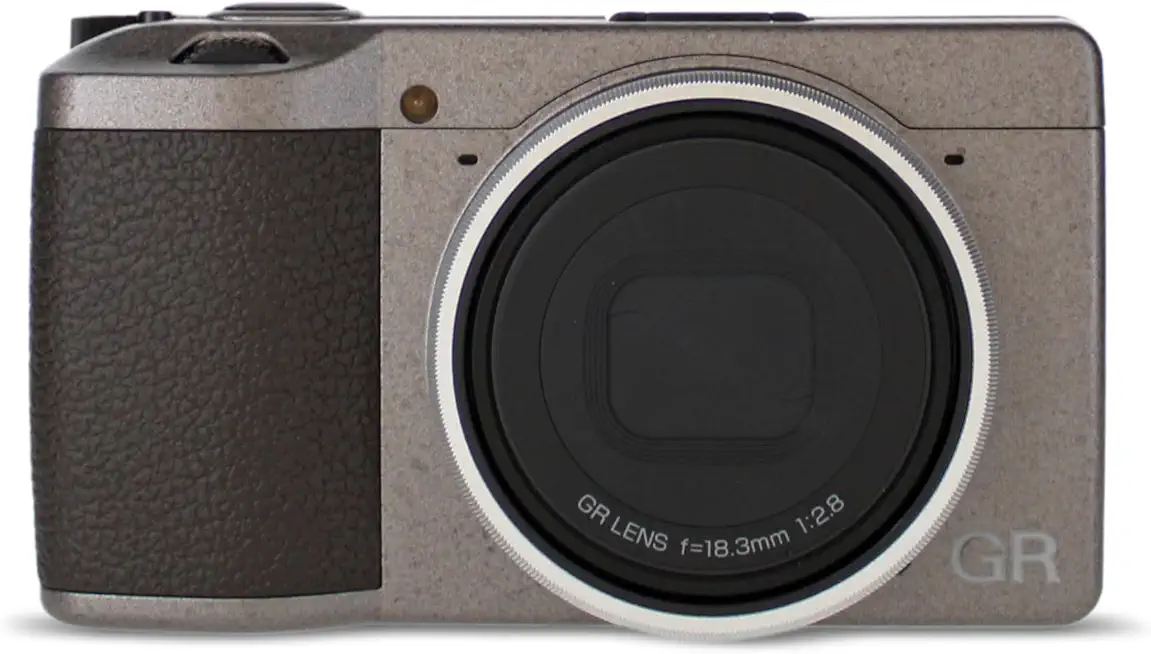
Ricoh GR III Camera
Pocket-sized powerhouse featuring a 24MP APS-C sensor, razor-sharp 28mm-equivalent lens, fast autofocus and in-body stabilization, with customizable controls and intuitive handling for rapid, discreet street photography.
Check PriceThe Ricoh GR III is all about being invisible in your hands. It literally slips into a pocket, wakes fast, and lets you grab decisive moments without notice. Compared to the Leica Q2 Monochrom, the GR III gives you more stealth and speed for street shooting but less ultimate image quality — the smaller sensor and slower lens mean you won’t get the same low-light performance or the same creamy background blur the Leica can deliver.
In real use the GR III’s handling is a photographer’s dream for quick snapshots: one-handed operation, instant access to settings, and very sharp JPGs from the lens. What you trade away is viewfinder convenience (there’s none built in) and weather toughness — the Leica feels much more solid in wet or dusty conditions. Also, longer sessions can show the GR’s limits in battery life and buffer when you push continuous shooting.
Choose the Ricoh GR III if your priority is ultimate pocketability and pure street discretion — it’s perfect for urban shooters who want to move fast and keep a low profile. Go with the Leica Q2 Monochrom if you want the best black-and-white files, stronger low-light ability, and a more robust camera body for rough weather.
Alternative 3:
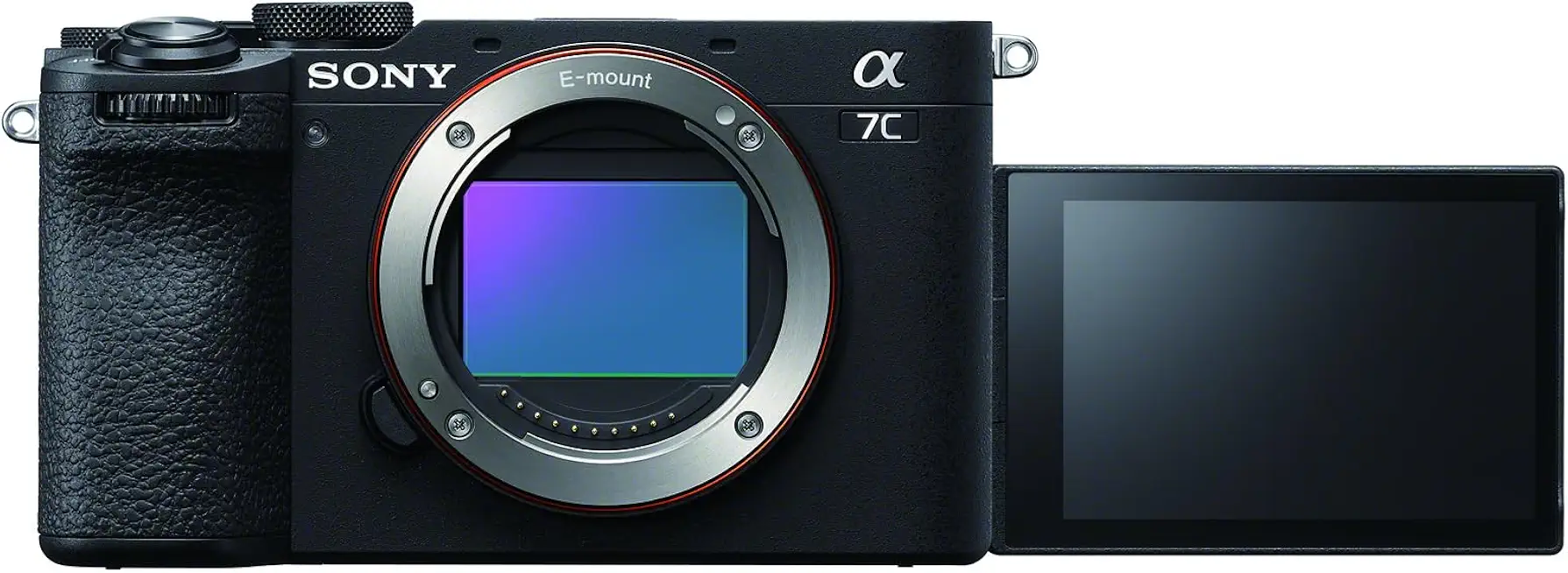
Sony Alpha 7C II Camera
Compact full-frame mirrorless offering high-resolution imaging, five-axis stabilization, and blazing AI-driven autofocus, plus 4K video and a portable, travel-friendly body—perfect for hybrid shooters who demand image quality in a small package.
Check PriceThe Sony A7C II is a very different kind of alternative: it’s a small full-frame system camera rather than a fixed-lens compact. What it does better than the Leica Q2 Monochrom is flexibility — you can change lenses, get different focal lengths, and use modern video and autofocus tools that are excellent for moving subjects. It also has strong in-body stabilization and video features, which the Leica isn’t focused on.
On the downside, the A7C II is a system that invites more gear. With a lens attached it’s bulkier than the Q2’s single-package convenience, and you’ll need to think about which glass to carry to match the Leica’s simple 28mm workflow. In hands-on shoots I appreciated the Sony’s tracking and autofocus for people and events, but I missed the Q2’s pared-down street shooting simplicity and the very specific black-and-white output the Monochrom gives you.
Pick the Sony A7C II if you want full-frame quality with the freedom to change lenses, shoot video, and rely on top-tier autofocus — it’s great for hybrid shooters who do a bit of everything. Stick with the Leica Q2 Monochrom if you prefer a single, beautifully tuned black-and-white tool that stays compact and always feels ready for street and travel work.
What People Ask Most
What is the sensor resolution of the Leica Q2?
It has a 47.3MP full-frame CMOS sensor.
Is the Leica Q2 weather-sealed?
Yes — it’s IP52-rated for dust and water resistance.
What is the maximum frame rate for continuous shooting?
Up to 10 frames per second.
Can the Leica Q2 record 4K video?
Yes, it records both DCI and UHD 4K.
What types of autofocus modes does the Leica Q2 offer?
It offers Spot, Field, Tracking, Face Detection, and Multi-Field autofocus modes.
Does the Leica Q2 have a built-in flash?
No — there’s no built-in flash, but it supports external flash with sync speeds up to 1/2,000s.
Conclusion
The Leica Q2 Monochrom Camera is a rare, focused tool that produces exceptional black-and-white images with tonal subtlety and a feel that rewards craft-minded shooters. Its rendering, dependable autofocus and solid, weather-minded construction make it a confident companion for street and travel work where discretion and quality matter. Use it as a creative instrument, and it will frequently outperform more generalist cameras at the one task it was built for.
That single-mindedness brings clear compromises: the fixed-lens workflow narrows framing options and puts a premium on deliberate technique. You’ll also contend with processing choices and sustained-burst behavior that emphasize image fidelity over convenience, which may frustrate those who want effortless, out-of-camera JPEGs or long action sequences. Consider these trade-offs honestly; they are design decisions, not defects.
In short, the Leica Q2 Monochrom Camera is a luxury tool with genuine creative payoff for photographers who prize monochrome image-making, tactile controls, and a truly distinctive visual signature that stands apart in a crowded field. If that matches your priorities, it’s worth the investment; if you need versatility and automated convenience, better options exist.
Leica Q2 Monochrom Camera
47.3MP monochrome full-frame sensor delivers unparalleled black-and-white detail and dynamic range, paired with a fast wide-angle lens and minimalist controls for a pure, tactile photographic experience and whisper-quiet operation.
Check Price



0 Comments