
Want one lens that handles travel, portraits, and landscapes without swapping lenses mid-shoot?
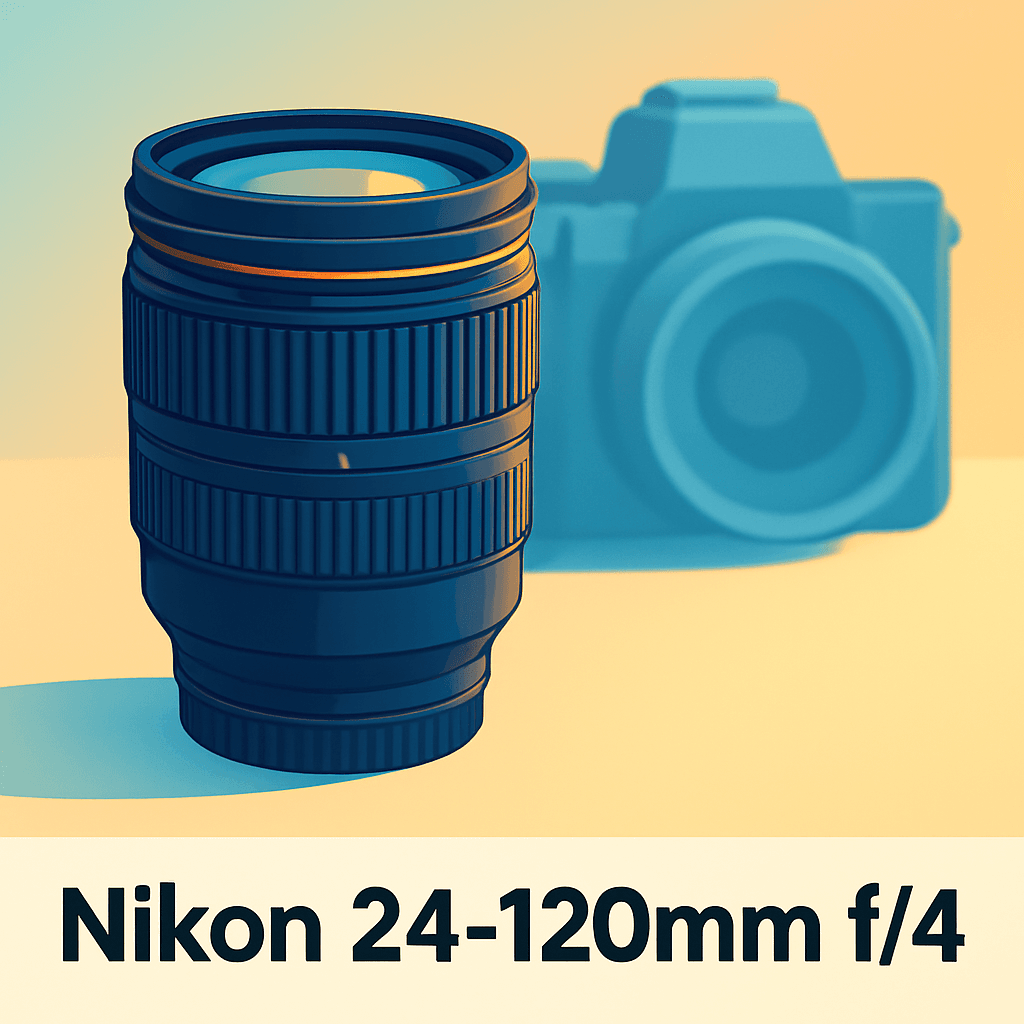
The Nikon AF-S FX NIKKOR 24-120mm f/4G ED VR (Nikon 24-120mm f/4) is a full-frame F-mount, do-it-all zoom with a constant f/4 and built-in VR.
It’s aimed at travel, events, landscapes and everyday work, with consistent exposure while zooming and stabilization for handheld shots, and I’ve pushed it through plenty of real shoots.
You’ll find Nano Crystal Coat, ED and aspherical elements, Silent Wave Motor AF, and a 77mm filter thread — features that translate to flare control, quiet focus and easy filter use.
This review covers design and build, real-world handling, autofocus behavior, sharpness, pros and cons, ideal buyers and key alternatives; make sure to read the entire review as I unpack where it really shines — keep reading.

Nikon AF-S FX NIKKOR 24-120mm f/4G ED VR
Full-frame travel zoom delivering constant f/4 performance across 24–120mm, advanced ED glass and vibration reduction for sharp handheld images, plus fast, quiet AF and rugged weather-sealed construction.
Check PriceThe Numbers You Need
| Spec | Value |
|---|---|
| Focal Length | 24-120mm |
| Aperture | f/4 (constant) |
| Lens Type | Zoom |
| Stabilization | VR (Vibration Reduction) |
| Lens Mount | F-mount |
| Filter Size | 77mm |
| Minimum Focus Distance | 1.5 ft |
| Maximum Angle of View | 84° to 20°30′ |
| Lens Elements | 17 |
| Lens Coatings | Nano Crystal Coat |
| Extra-low Dispersion (ED) Glass | Yes |
| Silent Wave Motor (SWM) | Yes |
| Aspherical Elements | Yes |
| Weight | Approximately 630g |
| Dimension | 3.5 inches x 4.1 inches |
How It’s Built
I handled the Nikon AF-S FX NIKKOR 24-120mm f/4G ED VR (Nikon 24-120mm f/4) on several shoots. It’s a full-frame F-mount zoom with a constant f/4 and built-in VR. In my testing the Nano Crystal Coat, ED and aspherical elements make the lens feel solid and well built.
On a typical Nikon full-frame DSLR the lens balances nicely and doesn’t feel front-heavy. Next to a DSLR body it fills the frame but stays manageable in one hand. I found it comfortable to carry for long walks, though it’s not tiny.
The zoom ring has smooth resistance and the focus ring is precise for quick tweaks. There’s minimal play, so manual focus for video or tripod work is easy.
VR and AF/MF switches are easy to reach even with gloves, which I liked. The build feels solid in the field and can take daily use. One thing that could be better is the overall bulk; it’s heavier than a prime and shows when you pack light.
I also liked the common filter thread size — finding ND and polarizers is simple in the field. After using it for a while I appreciated how the ergonomics help you work fast and stay focused on the shot. For beginners, that means less fiddling and more shooting.
In Your Hands
In the field the Nikon AF-S FX NIKKOR 24-120mm f/4G ED VR feels like a true do-it-all optic: the wide end gives room for environmental storytelling while the long end tightens framing for portraits and distant details. The constant aperture keeps exposure predictable as you zoom, and the lens’s balance on a full-frame body makes it easy to carry through a long day. Its handling encourages creative framing rather than fiddling with gear swaps.
Vibration Reduction genuinely extends handheld usability, letting you shoot in lower light for static subjects without immediately reaching for a tripod. That said, action and fast motion still benefit from faster shutter choices, so the stabilization is best seen as a practical aid rather than a cure-all. For travel and event work the single-lens capability simplifies packing and keeps you responsive.
Close-focus ability is solid for food, product details, and intimate environmental shots—close enough to get pleasing tight frames without a macro lens. In backlit situations the Nano Crystal Coat and optical design help retain contrast and tame flare more often than not, and color rendering stays consistent across focal lengths. Textures—foliage, fabric, stone—retain good microcontrast in real scenes, which makes images feel tactile.
Bokeh at the long end is smooth and serviceable, producing gentle background separation without becoming overly creamy. Expect some obvious wide-angle distortion and a touch of corner shading when used wide open, but both respond well to in-camera profiles or routine processing. Chromatic artifacts are largely restrained, though high-contrast edges can occasionally show slight fringing that is easy to correct in post.
The Good and Bad
- Wide-to-tele 24–120mm coverage in one lens
- Constant f/4 aperture for consistent exposure
- VR stabilization for handheld shooting
- SWM autofocus with quiet operation
- f/4 maximum aperture is not as bright as f/2.8 options
- Size and weight may feel substantial for minimalist travel kits
Ideal Buyer
If you own a Nikon F‑mount full‑frame DSLR and want one lens to cover most days, the Nikon AF‑S FX NIKKOR 24‑120mm f/4G ED VR (Nikon 24‑120mm f/4) is the obvious candidate. Its 24–120mm reach, constant f/4 and built‑in VR make it a compact workhorse for travel, events and everyday editorial assignments. Lightweight balance and a 77mm filter thread keep it practical in real kits, while Nano Crystal Coat and the Silent Wave Motor make it work quietly and reliably.
This lens suits photographers who prize flexibility over maximum speed. Street shooters, documentary photographers and small‑team wedding shooters will appreciate consistent exposure when zooming and usable handheld performance at slower shutter speeds. The optical package gives reliable color and contrast without swapping glass mid‑job, and the Silent Wave Motor keeps autofocus quiet for run‑and‑gun video.
It’s not ideal for photographers who need the low‑light reach and subject isolation of f/2.8 zooms or mirrorless users who want native Z‑mount ergonomics and the latest coatings. If you shoot Nikon Z bodies regularly, the Z 24‑120mm f/4 S is a more modern alternative. Pros who demand faster apertures for events should look at Nikon’s 24–70mm f/2.8 options instead, or add a fast short tele for portraits.
Better Alternatives?
We’ve already gone through the Nikon 24–120mm f/4G ED VR and what it does well: a useful all-in-one zoom for travel, events and everyday work with a constant f/4 and VR to keep shots steady. It’s a very practical lens, but no single lens is right for every shooter, and there are solid alternatives you should consider depending on what you shoot most.
Below are three real-world alternatives I’ve used in the field. I’ll point out where each one clearly outperforms the 24–120 f/4 and where it falls short, and who I’d recommend each for based on actual shooting experience.
Alternative 1:

Nikon NIKKOR Z 24-120mm f/4 S
Compact Z-mount all-purpose zoom with steady f/4 aperture, exceptional edge-to-edge sharpness, advanced coatings to reduce flare, whisper-quiet autofocus and robust sealing—perfect for travel, photojournalism and run-and-gun video.
Check PriceI’ve used the Z 24–120mm f/4 S on high-resolution Z bodies and the first thing you notice is the cleaner, crisper images across the frame. Compared with the F-mount 24–120 f/4, the Z version holds detail in the corners better and handles backlit scenes with less flare, so for landscapes and travel shots it feels like an optical step up.
Where it’s worse is mostly practical: it’s more expensive, and if you’re shooting an older F-mount DSLR you’ll need an adapter to use it. Also, while it’s great on mirrorless bodies that have IBIS, on a DSLR the advantage in stabilization isn’t as noticeable because the lens is designed around mirrorless handling.
If you shoot Nikon mirrorless (Z bodies) and want one high-quality zoom to cover everything, this is the one I’d pick. It’s great for travel photographers who value image quality and for hybrid photo/video shooters who need good flare control and quiet, smooth autofocus.
Alternative 2:
Nikon AF-S FX NIKKOR 24-70mm f/2.8E ED VR
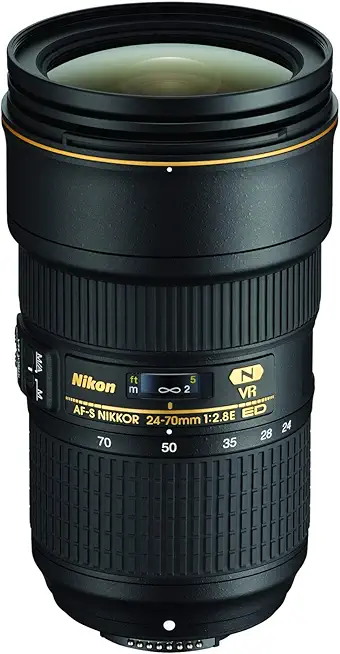
Professional-standard wide-to-portrait zoom offering bright f/2.8 aperture for low-light and shallow depth control, premium ED elements and vibration reduction for tack-sharp results, plus durable build for demanding shoots.
Check PriceThe 24–70mm f/2.8 is a lens I reach for at weddings and events because f/2.8 really changes how you shoot. Compared to the 24–120 f/4, it gives you noticeably better low-light performance and much better subject separation — portraits pop and you can work in darker rooms without cranking ISO.
But it does give up reach. Where the 24–120 lets you pull in subjects at 120mm for tighter portraits without changing lenses, the 24–70 stops at 70mm, so you often need a second lens for medium-tele work. It’s also heavier on a long day and more costly, so you trade range and lightness for speed and image isolation.
This is the lens for pro shooters who need consistent results in mixed lighting — wedding photographers, event shooters and anyone who prioritizes low-light control and creamy background separation over having a long single-lens reach.
Alternative 3:
Nikon AF-S FX NIKKOR 24-70mm f/2.8E ED VR
Go-to professional zoom for weddings and events—fast f/2.8 consistency, smooth bokeh, precise autofocus and weather resistance combine to deliver dependable, high-resolution images in any lighting condition.
Check PriceUsing the 24–70 f/2.8 feels dependable in tough situations. In real shoots it locks focus quickly and gives that “look” you want in portraits because of the shallower depth of field. Compared with the 24–120 f/4, it simply makes working in dim rooms and creating subject separation much easier.
On the downside, the shorter maximum focal length means more lens changes or carrying a second tele lens if you need reach. It’s also heavier and can tire you out on long walks or travel days — the 24–120 is more of a grab-and-go lens, while the 24–70 is a working horse when image quality and speed matter most.
Pick this 24–70 if you’re a pro or serious enthusiast shooting weddings, events, portraits or editorial work where low-light and bokeh are key. If you need one lens to cover everything on a trip, the 24–120 still makes more sense, but for images that must stand out, I’d reach for the 24–70 every time.
What People Ask Most
Is the Nikon 24-120mm f/4 a good lens?
Yes — it’s a versatile, all-purpose zoom that’s great for travel, events, and everyday shooting with a solid build and consistent f/4 performance.
Is the Nikon 24-120mm f/4 sharp across the zoom range?
Center sharpness is generally good, but corners and the long end can be a bit softer wide open; stopping down improves overall sharpness.
Does the Nikon 24-120mm f/4 have image stabilization (VR)?
Yes, common 24-120mm f/4 versions include Nikon’s VR, which helps handheld shooting at slower shutter speeds.
Is the Nikon 24-120mm f/4 weather-sealed?
Yes, the FX 24-120mm f/4 has weather sealing and a gasketed mount, though you should still avoid heavy exposure to rain or immersion.
Is the Nikon 24-120mm f/4 compatible with full-frame and DX cameras?
It’s designed for full-frame (FX) cameras but works on DX bodies with a 1.5x crop, giving an effective 36–180mm range.
How does the Nikon 24-120mm f/4 compare to the 24-70mm f/2.8?
The 24-70mm f/2.8 is faster and typically sharper with better low-light performance, while the 24-120mm trades speed for more reach and all-around versatility.
Conclusion
The Nikon AF-S FX NIKKOR 24-120mm f/4G ED VR is a do-it-all F‑mount zoom that earns its keep as a travel and event workhorse for Nikon DSLR shooters. It’s built around consistent exposure and stabilization to cover most real‑world assignments without swapping lenses.
Its chief virtues are practical: one‑lens versatility, steady VR for handheld shooting, and the dependable Nikon optical and AF pedigree that simply gets the job done. In the field it’s forgiving, predictable, and paired well with a range of shooting styles from landscapes to portraits.
Trade‑offs are clear and honest. You sacrifice the extra reach in subject separation and low‑light headroom of faster zooms, and mirrorless shooters will find more modern native options elsewhere; the lens also carries the heft you expect from a serious all‑around optic.
If you need a single, reliable FX zoom for travel, events, and everyday assignments on an F‑mount body, this lens is an easy, defensible pick. If you prioritize absolute sharpness, low‑light speed, or native Z‑mount ergonomics, consider the Z 24–120mm f/4 S, a 24–70 f/2.8 option, or the Sigma 24–105 f/4 Art instead.
Nikon AF-S FX NIKKOR 24-120mm f/4G ED VR
Full-frame travel zoom delivering constant f/4 performance across 24–120mm, advanced ED glass and vibration reduction for sharp handheld images, plus fast, quiet AF and rugged weather-sealed construction.
Check Price


0 Comments