
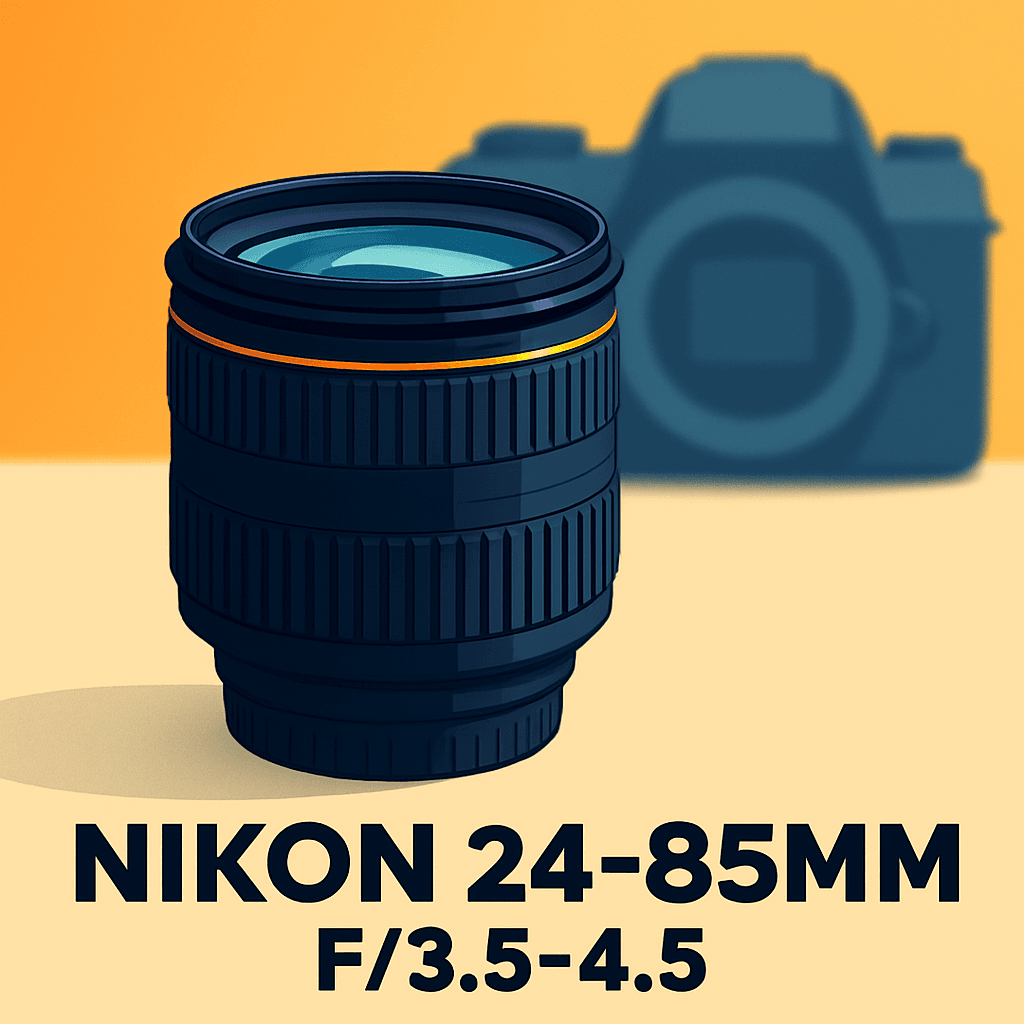
Looking for a single, go-to lens that handles travel, street and family photos without weighing you down?
The Nikon AF-S NIKKOR 24-85mm f/3.5-4.5G ED VR is exactly that kind of versatile zoom, and after taking it on real shoots I’ve seen how it behaves in everyday situations.
If you’re a Nikon F-mount shooter who values portability, stabilization and quiet focusing, this lens might be your best compromise between convenience and image quality.
I’ll walk through real-world handling, optics, VR and autofocus, plus who should buy it and which alternatives matter — Make sure to read the entire review as I unpack what this lens really delivers in the field.

Nikon AF-S NIKKOR 24-85mm f/3.5-4.5G ED VR
Compact, versatile wide-to-portrait zoom built for everyday shooting. Vibration reduction and advanced glass deliver sharpness and color, while fast, quiet autofocus ensures reliable results for travel and family photos.
Check PriceThe Numbers You Need
| Spec | Value |
|---|---|
| Focal length | 24–85mm |
| Maximum aperture | f/3.5–4.5 |
| Lens mount | Nikon F-mount |
| Image stabilization | Vibration Reduction (VR) |
| Lens construction | 15 elements in 12 groups |
| Minimum focus distance | 0.38 m (1.25 ft) |
| Filter size | 67 mm |
| Aperture blades | 7, rounded |
| Autofocus motor | Silent Wave Motor (SWM) |
| Weight | approx. 470 g (1.04 lbs) |
| Maximum reproduction ratio | 1:3.9 |
| Dimensions (diameter × length) | approx. 73 × 85.5 mm |
| Format compatibility | Full frame (FX) and APS-C (DX) |
| ED glass elements | Includes ED elements for chromatic aberration reduction |
| Focus | Internal focusing system |
How It’s Built
In my testing with the Nikon AF-S NIKKOR 24-85mm f/3.5-4.5G ED VR the first thing that stands out is how nicely it balances on a typical Nikon body. It’s compact and light enough to forget on a strap during long walks, yet it never feels flimsy when I’m shooting handheld. That balance makes it an easy grab-and-go lens for beginners and travel shooters.
The lens uses internal focusing, so the front element doesn’t spin or extend as you focus. That’s a real practical win if you use polarizers or graduated ND filters because you can set them and not worry about them turning. In my day-to-day work that saved me time and headaches with landscape setups.
The zoom and focus rings feel smooth with reasonable resistance, not loose or gummy. The AF/MF and VR switches are placed where you can reach them without hunting, which is handy when the light is changing quickly. After using it for a while the controls felt intuitive and reliable.
Optically the ED glass helps keep color fringing under control on high-contrast edges, which I appreciated shooting backlit scenes. One thing I really liked was the non-rotating front and overall compactness; one thing that could be better is the build isn’t fully weather-sealed and feels more consumer-grade than pro-level.
For a beginner that means a forgiving, well-behaved lens that’s easy to carry and use in the field. If you want pro-level toughness or a faster aperture you’ll notice the trade-offs, but for everyday shooting this design makes life simpler.
In Your Hands
The Nikon AF-S NIKKOR 24-85mm f/3.5-4.5G ED VR proves its worth as a do-it-all optic: the wide end frames sweeping landscapes and interiors with believable perspective, the midrange is ideal for environmental portraits and street work, and the short-tele lets you tighten compositions without changing lenses. The zoom’s balance and predictable field of view make it easy to switch genres on the fly.
The variable maximum aperture is practical but noticeable—exposure shifts as you zoom and the lens doesn’t deliver the same shallow depth-of-field you’d get from a faster pro zoom. In everyday shooting I often accepted slightly higher ISO or a steadier stance rather than swap glass, especially when paired with VR.
Out in the field the center detail is consistently pleasing and benefits from stopping down, while the edges improve but don’t quite match the central punch of faster glass. Color and contrast are natural and resilient under mixed light, flare is controlled with cautious sun placement, and vignetting is most apparent at the widest angles when shot wide open. Distortion behaves like a classic general-purpose zoom—barreling at the widest view and a touch of pincushion toward longer focal lengths—while ED glass helps keep color fringing in check.
Close-up work is entirely usable for food and product detail, though it won’t replace a dedicated macro for tiny subjects. On crop bodies the lens becomes even more handy for tighter framing, and the non-rotating front with a common filter thread makes polarizers and ND workflows straightforward.
Mounted for a day of travel or reportage the lens’s compact profile and reassuring build encourage keeping it on the camera as a go-to; it balances well on Nikon bodies and rarely feels intrusive during long walks. Overall the real-world experience is of a versatile, reliable partner that favors practicality and portability over headline-grabbing speed.
The Good and Bad
- Versatile 24–85mm focal range for general-purpose shooting
- Vibration Reduction (VR) for steadier handheld work
- Compact and lightweight for an FX zoom (approx. 470 g; 73 x 85.5 mm)
- Silent Wave Motor (SWM), internal focusing, and a non-rotating front
- Variable f/3.5–4.5 aperture limits low-light capability and shallow depth of field
- Tele end stops at 85mm, offering less reach than 24–120mm alternatives
Ideal Buyer
If you shoot Nikon F-mount and want one compact, do-it-all full-frame zoom, this is your lens. The Nikon AF-S NIKKOR 24-85mm f/3.5-4.5G ED VR is built for photographers who prize versatility and steadiness over brute force optics.
Travel and walkaround shooters will love the balance of reach and weight. At roughly 470 g it stays comfortable on a day-long shoot, and the 24–85mm range covers landscapes, street scenes and portraits without swapping glass.
Enthusiasts who value quiet, reliable autofocus and practical filter workflows will appreciate the internal focusing and non-rotating 67 mm front. The built-in VR and useful close-focus distance make it a solid step up from kit zooms for casual product, food and environmental detail work.
This is for FX or DX shooters who want a single-lens solution for varied subjects without hauling pro-sized kit. If you need a constant f/2.8 aperture, extra tele reach, or maximum optical rigor for paid work, look at the faster, heavier alternatives instead.
Better Alternatives?
We’ve talked through how the Nikon 24-85mm f/3.5-4.5 behaves in the field — its size, VR, and where it shines as a light, useful walkaround zoom. If you still need more reach, a faster aperture, or a more rugged pro-grade option, there are a few natural steps up to consider.
Below are three lenses I’ve used in real shooting situations that I’d reach for instead of the 24–85 in specific cases. I’ll point out what each one actually does better or worse in the field, and who will benefit most from making the swap.
Alternative 1:

Nikon AF-S FX NIKKOR 24-120mm f/4G ED VR
Long-range, travel-ready zoom with a constant aperture, optical stabilization and extra-low-dispersion elements for consistent sharpness across the frame. Ideal for landscapes, portraits and extended event coverage.
Check PriceI’ve used the 24–120mm a lot on trips where I wanted one lens to cover everything. Compared to the 24–85, it gives you noticeably more reach at the long end so you can grab tighter portraits or distant details without changing lenses. The constant f/4 is handy when you need a steady exposure across the zoom range, and the VR feels as usable as the 24–85 in handheld shots.
Where it’s worse than the 24–85 is in size and weight — the 24–120 is bulkier in your bag and slightly more tiring on long walks. It’s also not a fast aperture lens, so if your priority is the shallowest background blur or the very best low-light performance, it still won’t match a f/2.8 zoom.
If you travel a lot or want a true one-lens solution that reaches farther than 85mm, pick the 24–120. It’s the choice for someone who values framing flexibility and dislikes swapping lenses, but who doesn’t need pro-level speed or the lightest kit.
Alternative 2:
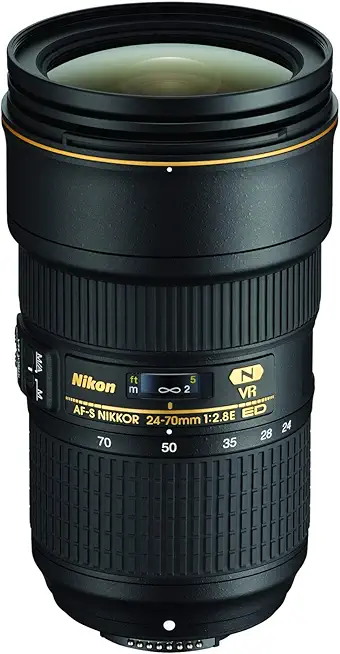
Nikon AF-S FX NIKKOR 24-70mm f/2.8E ED VR
Professional-grade standard zoom offering bright f/2.8 performance, advanced vibration control and premium optical elements for exceptional edge-to-edge clarity. Rugged, weather-sealed construction makes it a go-to choice for pros.
Check PriceThe 24–70 f/2.8E is a night-and-day difference in low light and subject isolation. I’ve shot weddings and indoor events with it and the f/2.8 aperture made focusing and keeping ISO down much easier than the 24–85. Images look crisper and the out-of-focus areas are smoother, which matters for portraits and pro work.
On the downside, it stops at 70mm, so you lose the extra reach the 24–85 gives you at 85mm. It’s also heavier and more expensive, and you feel that build in your bag. If you’re not shooting a lot in dim places or you often need the extra tele end, that shorter reach can be a real limitation.
Choose the 24–70 f/2.8 if you’re a pro or enthusiast who needs better low-light performance, nicer background separation, and tougher build. It’s ideal for wedding shooters, event photographers, and anyone who prioritizes image quality and speed over compactness and reach.
Alternative 3:
Nikon AF-S FX NIKKOR 24-70mm f/2.8E ED VR
Fast-aperture pro zoom combining responsive autofocus, stabilization and superior chromatic-aberration correction for crisp images in low light. Smooth bokeh and durable build suit weddings, portraits and commercial shoots.
Check PriceOn a different shoot I used the same 24–70 f/2.8E for portraits and product work and the build quality and focus response stood out. Autofocus felt firmer and more predictable under pressure than the 24–85, and the lens handled highlight contrast and micro-detail better — you see that in tighter crops and client work.
That said, the 24–70’s advantages come at a cost in comfort and reach. For travel days when I wanted something light and flexible, the 24–85’s smaller size won out. Also, if you often need to compress scenes with a longer focal length, the lack of an 85mm or 120mm option means more lens swapping or stepping back to reframe.
In short, pick this 24–70 if you shoot assignments where image quality and speed matter more than carrying weight or tele reach. If you need the lightest carry or want that extra 85–120mm on hand, the 24–85 or the 24–120 remain better travel buddies.
What People Ask Most
Is the Nikon 24-85mm f/3.5-4.5 a full-frame (FX) lens?
Yes — it was made for Nikon FX/full-frame cameras and also works on DX bodies with the 1.5x crop factor.
Does the Nikon 24-85mm f/3.5-4.5 have vibration reduction (VR)?
No, this lens does not include VR or image stabilization.
Is the Nikon 24-85mm f/3.5-4.5 compatible with DX Nikon cameras like the D3500?
It physically mounts and meters on DX bodies, but many versions rely on a camera body AF motor, so the D3500 (which lacks that motor) will require manual focus.
How sharp is the Nikon 24-85mm f/3.5-4.5 across the focal range?
Center sharpness is acceptable, especially stopped down, but corners can be soft wide open and it’s not as sharp as modern lenses.
Is the Nikon 24-85mm f/3.5-4.5 good for portraits, landscapes, and travel photography?
It’s a useful, versatile travel lens that works well for landscapes and casual portraits, but the slow variable aperture limits low-light performance and background separation.
Is it worth buying the Nikon 24-85mm f/3.5-4.5 used?
Yes if you find a good price and don’t need VR or fast AF — it’s a solid budget walkaround, but avoid paying full price for an older optic.
Conclusion
The Nikon AF-S NIKKOR 24-85mm f/3.5-4.5G ED VR is a practical, no-nonsense standard zoom that earns its keep as a travel and everyday lens. It combines a useful focal range with image stabilization and quiet, internal autofocus. For shooters who value versatility and low carry weight, it’s an easy lens to recommend.
In the field it balances well on Nikon bodies and feels built for long days of shooting. Autofocus is unobtrusive and reliable for general use, and stabilization lets you squeeze usable shots in slower light. Image character leans toward pleasing color and contrast rather than headline-grabbing sharpness, which suits travel and documentary work.
The trade-offs are clear and honest. The variable maximum aperture limits low-light reach and control over shallow depth of field, and the tele end won’t replace longer travel zooms. It’s also not a macro tool and stopped-down rendering can show more mechanical bokeh character than premium optics.
If you want a single, light, stabilized lens for everyday FX or DX use, this is a smart, economical choice. If your priorities are extended reach or pro-level low-light performance, consider a longer or faster alternative instead. For many photographers the Nikon AF-S NIKKOR 24-85mm f/3.5-4.5G ED VR hits the sweet spot between capability and convenience.
Nikon AF-S NIKKOR 24-85mm f/3.5-4.5G ED VR
Compact, versatile wide-to-portrait zoom built for everyday shooting. Vibration reduction and advanced glass deliver sharpness and color, while fast, quiet autofocus ensures reliable results for travel and family photos.
Check Price



0 Comments