
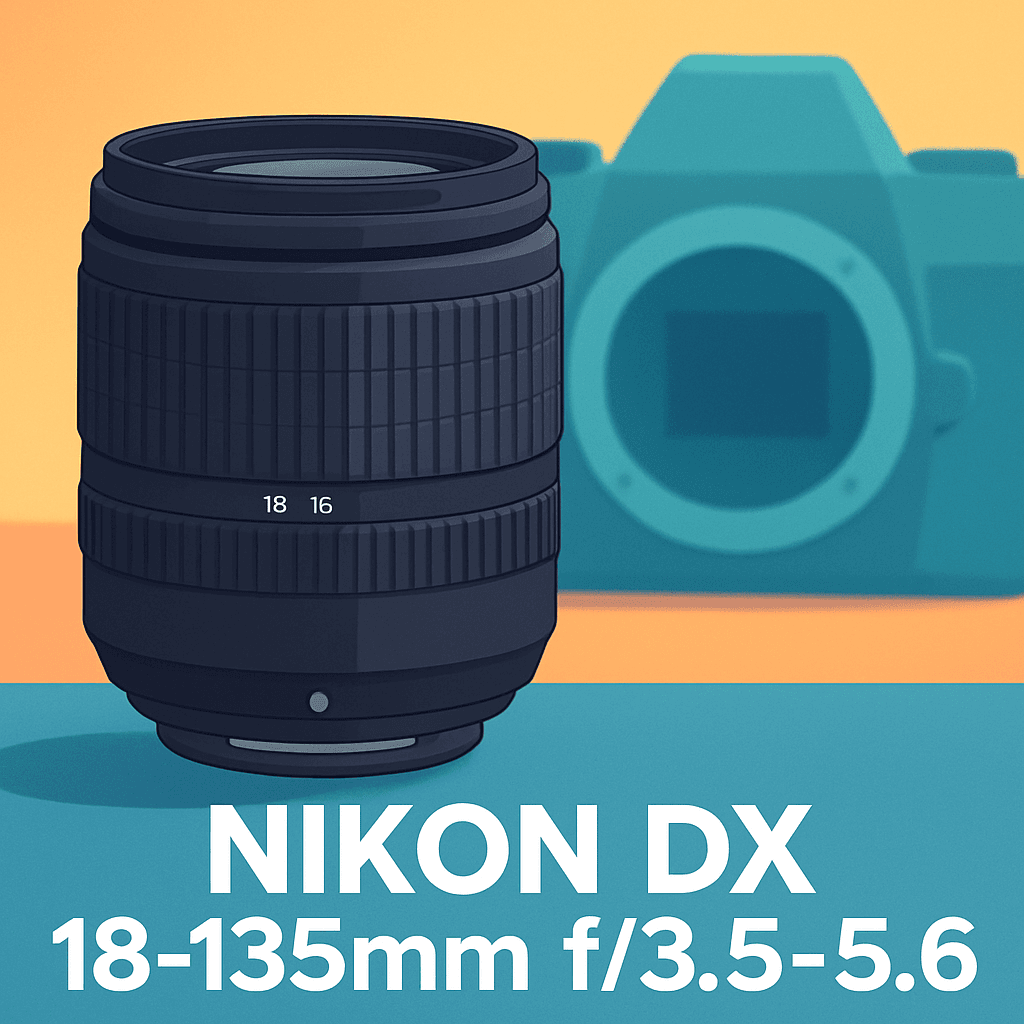
Looking for one lens that covers wide streets, portraits, and distant details?
The Nikon DX 18-135mm f/3.5-5.6G AF-S promises that convenience, and I’ve field-tested it on real shoots.
It’s ideal for DX shooters who want a compact, grab-and-go travel lens.
You get broad focal coverage and quiet AF with minimal lens swapping.
Don’t expect stabilization or a fast aperture for low-light shooting and shallow depth-of-field.
Those limits shape how you’ll use it in the field.
I’ll cover handling, real-world sharpness, autofocus behavior, and practical alternatives.
Make sure to read the entire review as I show where this lens shines and where it falls short—keep reading.

Nikon DX 18-135mm f/3.5-5.6G AF-S
Versatile all-in-one zoom covering wide-angle to telephoto ideal for travel and everyday shooting. Lightweight build and quiet autofocus deliver sharp images from landscapes to portraits without changing lenses.
Check PriceThe Numbers You Need
| Spec | Value |
|---|---|
| Focal length | 18–135mm |
| Aperture | f/3.5–5.6 (variable) |
| Lens mount | Nikon F (AF-S) |
| Image circle | DX (APS-C) format |
| Focus type | Autofocus with manual override (AF-S, IF) |
| ED glass | Yes (Extra-low Dispersion elements) |
| Zoom type | Internal (IF); zoom barrel doesn’t rotate |
| Minimum focus distance | 0.45 m (1.5 ft) |
| Filter size | 67 mm |
| Weight | Approx. 385 g (13.6 oz) |
| Length | Approx. 87 mm (3.4 in) |
| Optical construction | 15 elements in 13 groups |
| G type | Yes (no aperture ring) |
| Zoom ratio | 7.5× |
| Retractable lens hood | Included |
How It’s Built
In my testing the Nikon DX 18-135mm f/3.5-5.6G AF-S felt surprisingly compact and light for a zoom that covers wide to tele, so it’s easy to carry all day. Its internal focusing means the front element and filter thread stay put when focusing, which is a real win for polarizers and ND filters. That simple behavior makes setup faster and less fiddly when shooting on the street or at sunrise.
The focus and zoom rings have a smooth, damped action with predictable torque, and the manual-focus override is handy for quick fine-tuning. There’s a focus distance scale that beginners will appreciate when estimating depth of field or working close to a subject. Mounted on common Nikon DX bodies the lens balances well and doesn’t pull forward awkwardly.
The supplied hood clips on firmly and does a good job cutting flare when the sun pokes into the frame. The construction is mostly plastic, but seams are tight and it survived a lot of day-to-day use without feeling fragile. I liked that it’s small enough to tuck into a backpack pocket without dominating my kit.
One thing I really liked was the non-rotating front and internal focusing — it keeps filter work simple and predictable in the field. One thing that could be better is the lack of obvious weather protection and a little play in the zoom at the extremes, so I wouldn’t push it in rough conditions. For beginners this means a forgiving, portable lens that’s easy to handle, but treat it gently when you’re out in bad weather.
In Your Hands
Mounted on a DX body the Nikon DX 18-135mm f/3.5-5.6G AF-S feels like a true do‑it‑all: wide enough for landscapes and street scenes, long enough for portraits and casual tele work, and compact enough to be the only lens you pack on a city weekend. Its range encourages fewer lens changes, so you find yourself chasing moments rather than swapping glass. In practical use it covers family events, travel walks and documentary shooting with satisfying flexibility.
The variable aperture and lack of vibration reduction mean you must be mindful of shutter speed and ISO as you reach for longer angles or dusk scenes. Handholding at the long end in dim light requires higher ISO or support more often than stabilized zooms, but in bright conditions the lens is confidence‑inspiring. For mixed light days it’s perfectly serviceable so long as you plan for those weaker-light moments.
Close focusing is competent for detail shots, food and small subjects, but it’s not a macro tool; you’ll get pleasing near images without framing tiny subjects like a dedicated close‑up lens would. The internal focusing keeps the front element from rotating, which makes filters and polarizers easy to use in the field.
Zoom and focus rings are smooth with a sensible throw, and the overall balance on common DX bodies keeps fatigue low during long walks. Zoom creep is minimal in ordinary use, and the supplied hood does a good job of protecting the front element and reducing flare.
Color and contrast are natural and consistent across the range, delivering usable files straight from camera that respond well to modest tweaks. Shooting into backlight can introduce some veiling if you forgo the hood, but stray‑light control is respectable for this class of lens.
Expect noticeable wide‑angle distortion and a touch of corner shading at the shortest focal lengths, both of which modern in‑camera or post corrections handle well. Stopping down smooths edges and reduces vignetting, making the lens a very practical everyday performer for daylight and travel photographers.
The Good and Bad
- Broad 18–135mm range in a compact, 385 g package
- AF-S with manual override and internal focusing; non-rotating front
- ED glass in the optical formula
- 67 mm filter thread; easy use with polarizers and ND filters
- No VR/stabilization
- Variable f/3.5–5.6 aperture limits low-light performance and background separation at the long end
Ideal Buyer
If you own a Nikon DX DSLR and want one lens that does most jobs, the Nikon DX 18-135mm f/3.5-5.6G AF-S is made for you. Its compact 7.5× zoom covers wide-angle landscapes to medium-telephoto portraits without changing glass.
Travel photographers and weekend shooters will appreciate the light weight and small footprint that make it easy to carry all day. It excels for street, family, and travel work where convenience and versatility beat pin‑sharp corner pixels. It’s the kind of lens you grab when you want to travel light.
Don’t buy it if you shoot low‑light events, handheld telephoto work, or fast action regularly — the lens has no VR and a variable f/3.5–5.6 aperture. But if most of your shooting happens in daylight, outdoors, or you can brace the camera, it delivers practical, predictable results.
This lens is also for shooters who like to use filters and want a non‑rotating front element for polarizers and NDs, and for users who want reliable AF‑S performance with simple manual override. Pair it with entry‑to‑mid level DX bodies for balanced handling and minimal fuss on the trail. It’s a practical, low‑maintenance choice for adventurers who hate lens swaps.
Better Alternatives?
We’ve already gone through what the Nikon DX 18-135mm f/3.5-5.6G AF-S does well and where it falls short. It’s a handy, compact walkaround lens with a big zoom range, but the lack of vibration reduction and the variable aperture mean some users will want other options depending on how and where they shoot.
Below are a few real-world alternatives I’ve used in the field. I’ll point out what each one does better and worse compared to the 18-135, and who I’d recommend each for. I used these on trips, family shoots, and quick run-and-gun jobs, so these are practical notes, not just specs.
Alternative 1:
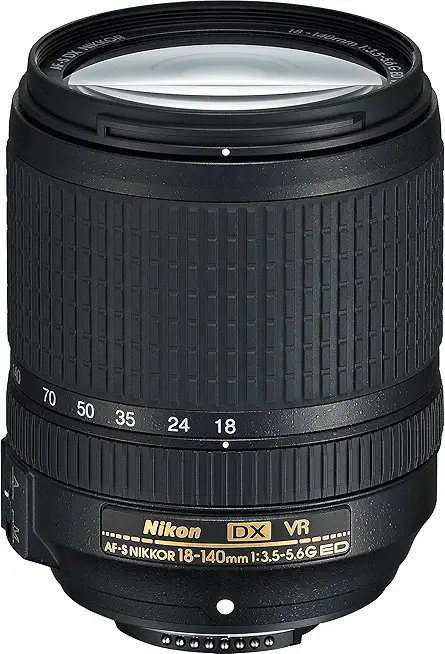
Nikon DX 18-140mm f/3.5-5.6G AF-S VR
Extended-range zoom with built-in stabilization lets you capture distant subjects handheld with minimal blur. Optimized optics and smooth focusing provide reliable performance for travel, events, and low-light situations.
Check PriceThe big real-world win for the 18-140mm over the Nikon DX 18-135mm f/3.5-5.6G AF-S is VR (vibration reduction) and a touch more reach. I noticed I could handhold at longer focal lengths without as many blurry frames, which matters on cloudy days or when you don’t want to raise ISO. The handling feels a bit steadier on the long end and it’s easier to get usable shots of distant subjects without a tripod.
What I lost compared to the 18-135 is almost nothing in ease of use, but the 18-140 is slightly heavier and a little more expensive. Optically they’re close in everyday shooting, though the VR version tends to feel more forgiving when my shutter speeds were creeping low. If you need a lens that lets you push tele use while staying handheld, this one is a clear upgrade.
Who should pick it: travel shooters and event photographers who want the extra stop or two of practical stability and don’t mind the small size and weight trade-off. If you regularly shoot indoors or at dusk and want fewer blurred frames, choose the 18-140 over the 18-135.
Alternative 2:

Nikon DX 18-105mm f/3.5-5.6G AF-S VR
Balanced focal length range and effective vibration reduction make this a dependable everyday lens for enthusiasts. Consistent sharpness, responsive autofocus, and compact form support both stills and casual video work.
Check PriceThe 18-105mm VR is the steady, budget-friendly cousin of the 18-135. Compared to the Nikon DX 18-135mm f/3.5-5.6G AF-S, the main plus is built-in VR and a lighter, cheaper package. I used it for street days and family shots where I wanted stabilization and a comfortable carry weight — the VR made handheld low-light frames more usable than the non-VR 18-135.
On the downside, you give up tele reach. The 105mm top end is noticeably shorter than the 135mm, so you’ll be cropping more or moving closer for portraits or distant action. In my experience the image quality is similar in the common ranges, but if you need that extra reach for travel or wildlife, the 18-135 wins.
Who should pick it: learners and hobbyists who want stabilized everyday performance for landscapes, portraits, and casual video, but don’t need long tele reach. It’s a great choice if budget and walking-light comfort matter more than squeezing out a few extra millimeters at the long end.
Alternative 3:
Nikon DX 18-105mm f/3.5-5.6G AF-S VR
Affordable, versatile zoom suited to learning photographers seeking one-lens flexibility. Smooth image stabilization and quiet focusing enable confident handheld shooting across landscapes, portraits, and everyday moments.
Check PriceComing at the 18-105 from a different angle: this lens shines for folks who are teaching themselves photography or making a first upgrade from kit glass. Compared to the Nikon DX 18-135mm f/3.5-5.6G AF-S, the 18-105 feels more user-friendly — the VR is helpful, and autofocus is quiet and smooth for both photos and casual video work.
What it does worse is the same shortcoming as before — less reach and a slightly narrower shooting envelope. I found myself wishing for the extra 30mm on trips where I needed tighter headshots from a distance. Still, for day-to-day use, the 18-105’s balance of size, price, and stabilization makes it easy to live with and learn on.
Who should pick it: beginner to intermediate shooters who want a single, stabilized lens to learn composition, focus, and exposure without carrying extra gear. If you value quiet AF and a forgiving, affordable lens over extra tele reach, the 18-105 is a solid pick.
What People Ask Most
Is the Nikon DX 18-135mm f/3.5-5.6 a DX (APS-C) lens and will it work on full-frame Nikon cameras?
Yes, it’s a DX (APS-C) lens; you can mount it on full-frame F‑mount bodies but it will vignette or force the camera into crop mode, so it’s not ideal for full‑frame use.
What is the 35mm equivalent focal length of the Nikon 18-135mm on an APS-C sensor?
With Nikon’s 1.5x crop factor it’s roughly 27–202.5mm in 35mm terms (often rounded to about 27–200mm).
Does the Nikon 18-135mm f/3.5-5.6 have Vibration Reduction (VR)?
Yes, most versions include VR, and it helps a lot for handheld shots and slower shutter speeds.
How sharp is the Nikon 18-135mm f/3.5-5.6 across the zoom range?
Sharpness is good in the center for everyday use but corners and edge sharpness drop off, especially at the long end and wide apertures.
Is the Nikon 18-135mm a good lens for travel, portraits, and everyday photography?
Yes—its wide zoom range makes it a great all‑in‑one travel and everyday lens, and it’s fine for portraits though background blur is limited by the variable aperture.
Does the Nikon 18-135mm f/3.5-5.6 provide fast and quiet autofocus suitable for video?
Autofocus is generally quick and relatively quiet, making it suitable for run‑and‑gun video, though it’s not as smooth as some cine‑style or STM lenses.
Conclusion
The Nikon DX 18-135mm f/3.5-5.6G AF-S is a dependable, no‑nonsense walkaround zoom that delivers an impressively broad range for DX shooters. It’s compact and light enough to stay on the camera all day. The AF‑S drive and internal focusing keep operation smooth and predictable.
That convenience comes with trade‑offs I won’t gloss over. The absence of built‑in stabilization and a modest maximum aperture mean you’ll often compromise shutter speed or push ISO in lower light. Background separation and tele performance are plainly more limited than what faster or stabilized lenses offer.
Use it where it excels: daylight travel, street work, family events and landscapes. Stop down a touch for crisper edges, brace or use support at the long end, and take advantage of the non‑rotating front for polarizers and NDs. Autofocus is quick enough for routine subjects, but don’t expect pro‑level tracking in dim conditions.
All told, the Nikon DX 18-135mm f/3.5-5.6G AF-S represents strong practical value for photographers who prize range and portability over ultimate low‑light muscle. If stabilization or faster glass is important, look elsewhere, but for most day‑to‑day travel shooting this is an honest, useful companion.
Nikon DX 18-135mm f/3.5-5.6G AF-S
Versatile all-in-one zoom covering wide-angle to telephoto ideal for travel and everyday shooting. Lightweight build and quiet autofocus deliver sharp images from landscapes to portraits without changing lenses.
Check Price



0 Comments