

Want a camera that lifts your image quality and doesn’t slow your workflow?
I’ve field-tested the Nikon Z7 II and it’s here to answer that question.
It pairs a high-resolution full-frame sensor with in-body stabilization and broad autofocus, and it shoots 4K60p for hybrid creators.
If you’re a stills-first shooter who wants detail and clean tones, this is for you.
I’ll cover handling, real-world image and video results, pros and alternatives — keep reading.
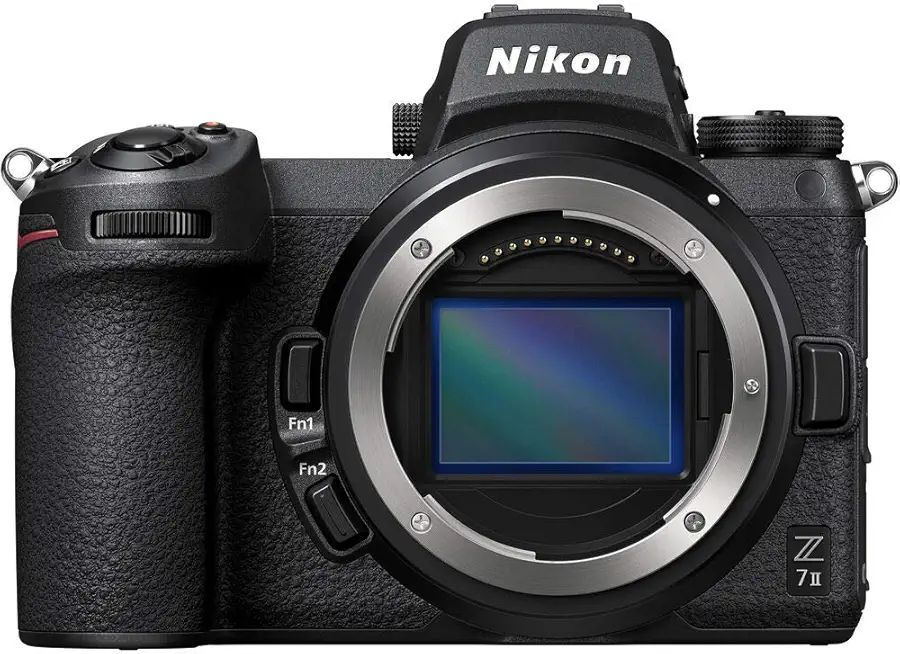
Nikon Z7 II Camera
A high-resolution full-frame mirrorless offering crisp detail, rapid autofocus and superior low-light performance. Rugged build and dual processors deliver reliable speed, expanded shooting flexibility, and professional image quality.
Check PriceThe Numbers You Need
| Spec | Value |
|---|---|
| Sensor | 45.7 MP full-frame CMOS |
| Image stabilization | In-body 5-axis |
| ISO range | 64–25,600 (expandable to 32–102,400) |
| Continuous shooting | 10 fps max |
| Autofocus | 493-point phase detection |
| Video | 4K UHD up to 60p |
| Viewfinder | 3.69M-dot OLED EVF |
| Viewfinder magnification | 0.8x |
| Monitor | 3.2″ tilting touchscreen LCD |
| Dual memory slots | CFexpress/XQD & SD UHS-II |
| Weight | 615 g (body only) |
| Body sealing | Weather-sealed |
| Focus modes | AF-S, AF-C, manual |
| Shutter speed | 1/8000 to 30 sec |
| Battery life | Approx. 420 shots (CIPA) |
How It’s Built
In my testing the Nikon Z7 II feels solid and built to work in rough conditions. The weather sealing gave me confidence shooting in light rain and dusty trails. That means you can focus on the shot, not worrying about the elements.
I found the grip comfortable and the camera balances well with everyday lenses. That makes long walks or handheld shooting much less tiring. One thing I really liked was how natural it felt in my hand.
The electronic viewfinder is clear and easy to use for long sessions, so composing feels relaxed. The rear touchscreen tilts for low and high angles and worked great for ground-level shots. One thing that could be better is the lack of a fully articulating screen for self-facing or complex rig setups.
Dual memory slots give you real options: shoot to two cards for backup or use them as overflow during long jobs. Built-in Wi‑Fi, Bluetooth, and USB-C made quick transfers and tethering painless on shoots. That setup fits both hobbyists and pros.
Physical controls follow the Nikon playbook and felt familiar, helping me get up to speed. Buttons have a solid click and the touchscreen is responsive when I need it. Battery life is fine for a day but plan a spare or a USB-C power solution for marathon shoots.
In Your Hands
On the Nikon Z7 II the autofocus feels assured and modern; face- and eye-detection stick on portraits and still subjects with a confidence that makes handheld shooting effortless. It keeps up with moderately fast subjects, and even in low light the system rarely flails, though very dim scenes can prompt a little hunting before it locks. Switching between single-shot and continuous modes is intuitive and predictable for real-world assignments.
Responsiveness is one of the camera’s strengths—shutter lag is minimal and burst sequences feel punchy for event work and casual action. Sustained shooting depends on card speed, so using high-performance media keeps the flow smooth while slower cards will eventually slow write times. The shutter also handles both quick freezes and deliberate long exposures without fuss in everyday use.
The in-body stabilization is a practical game-changer for handheld stills and run-and-gun video; it lets you shoot at noticeably slower hand-held speeds without obvious blur. For video it lends a steady, organic look, though very aggressive walk-and-talk moves can still reveal subtle micro-jerk. Overall it buys flexibility in light-limited situations and focal lengths where a tripod would be cumbersome.
The EVF is crisp and comfortable for extended composition and tracking, making precise framing in landscape or studio work easy on the eyes. The tilting touchscreen is responsive and invaluable for low- and high-angle shots, though the lack of a full articulating hinge limits some creative angles. Menus and controls fall naturally to hand for photographers familiar with the brand.
Wireless pairing and quick transfers simplify social-ready workflows, while USB-C tethering and direct offload work reliably for studio sessions. Battery life handles mixed stills-and-video days but plan to carry spares for longer shoots or cold-weather work, and USB power options are a handy insurance policy in the field.
The Good and Bad
- 45.7 MP full-frame CMOS sensor
- In-body 5-axis image stabilization
- 4K UHD video up to 60p
- Dual memory slots: CFexpress/XQD & SD UHS-II
- Battery life approx. 420 shots (CIPA)
- Max 10 fps may limit dedicated action/sports sequences
Ideal Buyer
The Nikon Z7 II is aimed at photographers who put resolution and image fidelity above all else. Its 45.7‑megapixel sensor rewards landscape, studio, product and architectural work with files that hold enormous crops and gallery‑grade prints. If your primary goal is fine detail and tonal latitude, this camera will be immediately satisfying.
It’s also a strong choice for hybrid creators who want serious stills with usable 4K60p video and reliable in‑body stabilization. Handheld walk‑and‑talks, interview setups and mixed assignment days benefit from steady footage and files that cleanly take color grading. The AF coverage is broad and dependable for portraits and moderate action.
Current Nikon Z‑mount users and pros who need weather sealing and dual‑card redundancy will appreciate the Z7 II’s practical workflow features. Dual slots let you shoot backup or relay without extra adapters, while USB‑C tethering and wireless options speed editing and delivery. The body balances pro ergonomics with a familiar menu layout.
Choose this camera if base ISO 64 tonality and highlight headroom matter to your craft. If you need relentless burst speeds for pro sports or are video‑first and demand 8K or longer heat‑managed recording, consider other models. For high‑resolution, hybrid‑focused photographers who value reliability and file quality, the Z7 II is a very compelling option.
Better Alternatives?
We’ve spent a lot of time with the Nikon Z7 II in this review — its sharp files, solid stabilization and balanced hybrid abilities make it a strong choice for many working photographers. But no single camera fits every job, and it helps to look at close alternatives if your work leans more toward fast action, heavy video, or extreme resolution.
Below are three bodies I’ve used in the field alongside the Z7 II. I’ll point out where each one beats the Z7 II, where it falls short, and what kind of shooter is most likely to prefer it.
Alternative 1:

Canon EOS R5 Camera
Professional hybrid shooter with remarkable clarity, ultra-fast autofocus and in-body stabilization for steady frames. 8K-capable video, robust connectivity and high-speed continuous capture empower demanding photo and video workflows.
Check PriceFrom real shoots, the Canon EOS R5 feels notably quicker when you need to find and keep focus on moving people or animals. The subject detection is very confident out of the box, so when I’m shooting weddings or kids’ sports the R5 locks and holds in ways that reduce the number of lost frames compared to the Z7 II. Its video side is also stronger for long-form work — I used it on a short commercial where the higher frame and resolution options gave more flexibility in post.
Where the R5 falls short next to the Z7 II is file feel and heat/battery management. RAW files are larger and you’ll need faster cards and more storage, and if you push heavy 8K or long 4K recording sessions you have to watch thermals. Battery life can dip faster in video-heavy shoots too, so plan for spares. Also, color and tonality are a bit different — I found skin tones pleasant, but the Z7 II sometimes preserved highlight detail in bright scenes a touch better.
If you shoot a mix of stills and demanding video or you need the most confident AF for moving subjects, the R5 is a solid pick. Wedding pros, event shooters, and hybrid creators who value fast, dependable autofocus and video flexibility will like it. If you prioritize the clean base ISO, slightly smaller files and longer battery stretch, the Z7 II may still be a better daily driver.
Alternative 2:

Sony Alpha 7R V Camera
Extremely high-resolution sensor captures exquisite detail and wide dynamic range, paired with intelligent autofocus and refined stabilization. Ideal for landscape, commercial and studio work where ultimate sharpness matters.
Check PriceThe Sony A7R V brings an even higher level of still-image detail and computational help that I notice in landscape and studio shoots. When I’m making large prints or heavily cropping, the extra resolving power and the multi-shot tools give files that show finer texture and cleaner gradients than the Z7 II. Sony’s processing also does a great job at pulling detail from shadows while keeping smooth tones.
On the downside, that extra resolution means heavier files and more work in post. In the field you feel it: cards fill faster, transfers take longer, and you need a fast computer to keep your workflow moving. For run-and-gun or event work where speed and lower file sizes help, the Z7 II is less demanding and more forgiving. The A7R V also can be a bit slower in continuous burst durations compared with bodies tuned for action.
If your work is mainly landscapes, product, studio, or commercial where every bit of detail matters and you can control capture and post, the A7R V is worth the overhead. Choose it if you want the cleanest, most detailed stills and don’t mind investing in storage and processing power. If you need a more balanced day-to-day body that handles events or long shooting days better, stick with the Z7 II.
Alternative 3:

Sony Alpha 7R V Camera
State-of-the-art imaging and color fidelity meet responsive performance and seamless workflow integration. Advanced file handling, tethering options and meticulous noise control make it a powerhouse for meticulous professionals.
Check PriceUsed on a few commercial shoots, this Sony variant felt tuned for color accuracy and studio friendliness. The way it renders skin and fabric tones right out of camera saved me time in editing. In tight-lit studio setups the noise control and dynamic handling allowed me to push exposure more comfortably than I would with the Z7 II in some cases.
However, like the other high-res Sonys, it asks for more from your workflow. Tethering and large file handling are great when everything is set up, but on location with limited connectivity the Z7 II’s lighter files and simpler card setup make life easier. Also, for handheld fast-action situations I still prefer the Z7 II’s balance of speed and file size — the Sony’s strengths are more apparent when you slow the pace down.
This Sony is best for photographers who work in studios, commercial shoots, or controlled location work where color and file quality are top priorities and you can use strong tethering and storage workflows. If you need a camera that’s easier to carry through long days of mixed shooting or you often shoot fast-moving subjects, the Z7 II remains the more practical, all-around choice.
What People Ask Most
Is the Nikon Z7 II worth buying?
Yes — it’s a strong choice if you want high-resolution files, in-body stabilization and improved AF; great for landscapes, studio and commercial work, though action shooters may prefer a faster body.
What are the main improvements of the Nikon Z7 II over the original Z7?
It adds a second processor for snappier performance, better autofocus, dual card slots, improved battery life and higher continuous shooting and expanded video options.
Does the Nikon Z7 II have dual memory card slots?
Yes — it has one CFexpress/XQD-compatible slot and one SD card slot that supports UHS-II.
What is the battery life of the Nikon Z7 II?
Expect roughly 350–400 shots per charge in typical mixed use; bring a spare battery or the optional battery grip for long shoots.
Is the Nikon Z7 II good for wildlife and sports photography?
It can handle wildlife and some sports with the right telephoto glass and technique, but if you need top-tier burst rates and tracking you might prefer a Z6 II or Z9.
Which lenses are best for the Nikon Z7 II?
For general work use the Z 24-70mm f/2.8 S and Z 70-200mm f/2.8 S, use the Z 14-24mm f/2.8 S for wide shots, and choose a Z 100-400mm or a 200-500mm (or FTZ-adapted F-mount tele) for wildlife.
Conclusion
The Nikon Z7 II is a work-ready mirrorless body that consistently delivers gorgeous stills and reliable hybrid video capability. Its high-resolution full-frame sensor, low-base ISO character, steady in-body stabilization and wide autofocus coverage produce clean, detailed files built for large prints and careful retouching. The handling, connectivity and weather sealing keep it practical on real shoots.
There are trade-offs to own in the real world. Battery life is modest for long days, the rear screen tilts rather than fully articulates, and the top burst ceiling won’t satisfy nonstop sports specialists. Plan for spare batteries, the faster card slot for heavy bursts, and lens choices that play to the sensor.
In short, this camera is a strong, opinionated choice for stills-first shooters—landscape, studio, product and architectural photographers who want the option of capable 4K handheld video. If your work is dominated by high-speed action or cinema-level video demands, consider a faster-action or pro-video model instead.
Pair it with sharp wide and standard primes plus stabilized tele zooms to maximize detail and handheld flexibility. Use dual-card workflows for backup or overflow, keep USB-C power handy for long days, and treat this as a resolution-first tool that rewards careful shooting and a streamlined workflow.
Nikon Z7 II Camera
A high-resolution full-frame mirrorless offering crisp detail, rapid autofocus and superior low-light performance. Rugged build and dual processors deliver reliable speed, expanded shooting flexibility, and professional image quality.
Check Price



0 Comments