
Want a quick posing guide diy boudoir photography ideas to feel confident and look stunning?
This article shows simple poses, phone settings, lighting tips and step-by-step DIY setups you can do at home. It promises easy cues and fast setups so you get flattering results without a pro studio.
You’ll find phone-friendly workflows, seven high-return poses, body-type variations, outfit and prop ideas, plus a reproducible shot list. Downloadable cheat sheets and privacy checks are included so you can plan and shoot with confidence.
How to Take Your Own Boudoir Photos on Your Phone
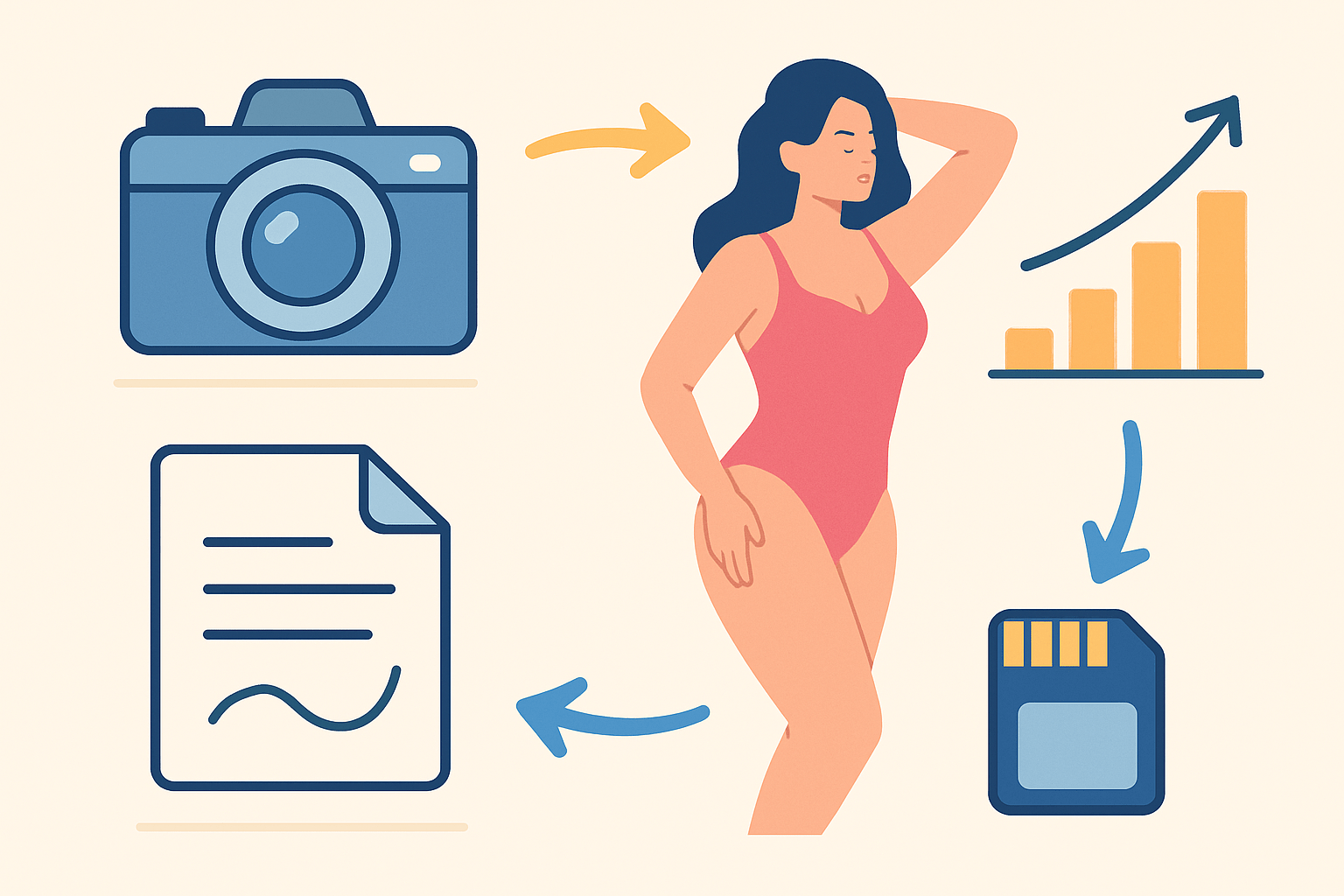
Your phone can deliver dreamy boudoir images when you slow down, set the scene, and guide yourself with intention. Think of this as your friendly, practical map through posing guide diy boudoir photography ideas that are simple and flattering. You will be director, model, and editor, one calm step at a time.
Start with a quick setup sweep so you can focus on posing and expression. Mount your phone on a tripod or clamp, pair Earbuds, AirPods, or a Bluetooth remote to trigger the shutter, wipe the lens, lock the door for privacy, and put on music that helps you relax. Keep water nearby, and lay out two outfits so you can switch without breaking the creative flow.
Open your camera and turn on the grid so composition stays clean. Use Portrait mode for subtle background blur, or a manual app like ProCam, FiLMiC, or Camera+ to control exposure, then lock focus and exposure on your eye, set the highest resolution or RAW if available, and disable flash for softer skin. Use a 3–10 second timer or your remote so you can breathe into the pose.
Compose with intention by choosing waist-up, three-quarter, or full-body framing before you pose. Place your face toward the light and angle your body slightly away to carve shape, use rule of thirds to place your eyes, and tilt the camera a touch for a dynamic line. Go vertical for phone sharing and intimacy, and horizontal for full-body shape, negative space, and storytelling.
Build a solo workflow you can repeat: pick an outfit, set the scene, test three exposures and angles, shoot a timed burst, review, tweak, and repeat small variations. Think of your remote selfie as a coach that lets you nudge your chin, adjust a strap, or refine your arch without walking back and forth. Capture movement with a gentle sway, hair toss, or shoulder roll to keep images alive.
Use continuous burst to catch micro-expressions while you exhale. Only add a small clip-on lens if you truly need wider framing; otherwise step back and crop for the cleanest look, and bounce light with a white sheet or poster board to brighten shadows. If you need more inspiration, skim these posing tips and then bring them back to your mirror for five-minute practice before shooting.
Protect your privacy by using a locked phone, a hidden album, or a secure folder, and back up to an encrypted drive if you want to keep the set long-term. If a partner is helping, get clear verbal consent for what is captured, where it lives, and who can view it. Safety first means you can relax into the moment and let the camera see your confidence.
Lighting Tips for DIY Boudoir Photography
Natural light is your best friend because it is soft and forgiving. Place yourself by a window at roughly forty-five degrees so light wraps your face and torso, then diffuse it with a sheer curtain to erase harsh lines, and dim overheads so the window becomes the hero source. At golden hour, stand with light behind you for a warm edge glow and turn your face slightly back toward it.
Shape the light to shape your body. Soft side-light defines curves, and a source slightly above eye level sculpts cheekbones and cleavage without creating deep eye sockets, while a small rim light or bright window behind you separates hair and shoulders from the background. If you want drama, move deeper into shadow and let one cheek catch the light.
Artificial options are simple and affordable. Place a ring light just above eye level and angle it down for a glam look, or position an LED panel or small softbox two to three feet from you to bathe full-body shots in softness, and if you own a flash, bounce it off a wall or ceiling for a natural, window-like wash. Keep lights slightly to the side rather than flat on to avoid a flat, passport look.
Use repeatable setups so you can focus on posing. For soft romantic vibes, use window light from the side and a white reflector opposite; for moody drama, try a single side light and a darker backdrop; for even flattering light, put a softbox or bright window in front and add a low rim behind you. Build each set once, then shoot standing, sitting, and lying without moving the lights.
Check exposure with your histogram and protect highlights in the face and chest. Choose the lowest usable ISO to keep files clean, and bracket exposures one stop darker and lighter when unsure so you can pick the best later. If you are using a DSLR or mirrorless, start at 50–85mm, f/1.8–2.8, 1/125–1/200, ISO 100–800, and shoot RAW for easy color and skin adjustments.
Posing Guide for DIY Boudoir Photography
Great posing starts with a few universal rules you can do in seconds. Elongate your neck and tuck your chin slightly, angle the shoulder farthest from camera toward the lens, arch the pelvis, bend the knee closest to camera, and point your toes to lengthen lines. Keep hands soft with fingers separated just a touch, and give them a job like touching hair, fabric, or jewelry.
Standing sultry is your high-return starter: place weight on the back foot, pop the hip, one hand in hair, and shoot a waist-up and a full-length variation. Come-to-bed is the classic: lie on your stomach, elbows under shoulders, look back over your shoulder, add a gentle leg lift, and grab a close crop on the face and a three-quarter for the curve.
Use a chair to create levels and angles. Kneel on the seat facing camera, then turn to profile so the seat frames your waist, and add a robe or open button-down to frame the torso and give your hands a task. Lying on your side, bring the top leg forward with a bend, rest a hand near your face, and capture both a three-quarter crop and a full-body line.
For dramatic lines, arch on your back or stomach and press toes away to lengthen calves, then sweep hands through hair to shape a curve from wrist to hip. Try an over-the-shoulder mirror shot with your face turned away and a glance back for a privacy-friendly image that still feels intimate. Finish with a waist-up lean, torso angled toward camera, shoulders down, and hands near the collarbone for an emotive close-up.
Create flow rather than isolated pictures. Start standing, move to sitting on the bed or a chair, lie on your side and then your back, finish with details of hands, lips, lace, or stockings, and add a mirror selfie to close the set. Shift eyes direct to camera, then down, then away every three to five frames, and breathe out gently on the shutter for relaxed lips and softness.
If you want more shape ideas, browse classic boudoir poses and translate them to your space and light. Keep your focus on simple, repeatable cues so your mind stays calm and your body looks natural, which is the heart of posing guide diy boudoir photography ideas that actually work for beginners.
Here is a reproducible shot list you can tick off as you shoot: Standing sultry, waist-up, side window; Standing full-length, hip pop, soft rim; Come-to-bed over shoulder, 3/4 crop, reflector fill; Come-to-bed face close-up, eyes down, soft hair light; Chair kneel front, window side, hands clutch robe; Chair profile, torso twist, negative space at waist; Lying on side, top leg forward, hand at face; Lying on side full-body, toes pointed, low angle; Arch on back, hands in hair, moody side light; Arch on stomach, toes pressed, golden rim; Mirror over-shoulder faceless, backlit glow; Waist-up lean, collarbone hands, front soft light; Hands and jewelry detail, side light carve; Lace and stockings detail, shadow play for privacy. Shoot two quick faceless variations for comfort and sharing control.
Coach yourself out loud with short cues like breathe, lengthen, soften hands, chin down, shoulder back, hip away, and hold it. Quick fixes solve most issues fast: if you look stiff, exhale and drop shoulders; if arms look wide, float elbows off your torso; if waist disappears, rotate hips and create a gap; if skin shines, blot or powder T-zone; if the pose feels flat, angle your body and step the feet into a stagger.
Posing for Different Body Types
If you are petite, think length. Shoot slightly from above, elongate the neck and legs, reach the near arm forward to stretch lines, favor vertical framing, and pick high-waist pieces that visually lengthen. Try standing sultry with extra toe point, chair kneel with long shin toward camera, and lying on side with the top leg extended and ankle pointed.
If you are curvy or plus-size, think separation and S-curve. Angle hips away, place weight on the back leg to narrow the camera-side hip, keep a sliver of space between arms and torso, and choose supportive lingerie that lifts and smooths without hiding you. Try a waist-up lean with hands near the collarbone, chair profile with a twist at the waist to carve negative space, and come-to-bed with one knee lifted to shape the lower back.
If you are athletic, add softness and curves. Twist the torso, arch the back, bend one knee, and let fabric like a robe or sheet add motion and an organic line across angles. Try arch on back with hair spread and toes pressed, standing with a robe wrapped loosely and one shoulder slid down, and lying on side with a hand feathering the jawline for a gentle finish.
When a single area bothers you, use micro-adjustments. Rotate shoulders toward the light to soften bone lines, tilt the pelvis and bend a knee to shape the hips, float the elbows to create air around the arms, and arch slightly while engaging the core for a smooth stomach line. Tiny changes stacked together make the biggest difference in-camera.
Crop with intention if you want privacy or variety without changing the pose. A three-quarter crop keeps curves and removes distractions, a chin-to-collarbone frame feels intimate without being explicit, and mirror angles let you hide your face while still telling the story. Keep repeating small cues and you will build a gallery that feels like you, not a copy of someone else.
Setups, Props & Outfits for Studio-Style Results at Home
Limit each set to one strong surface so the eye rests on you. A made bed with crisp sheets, a velvet couch, a simple wall, a staircase, or even a bathtub or a milk-bath setup can look editorial when lit cleanly and styled with intention. Move your body through standing, sitting, and lying on the same surface to maximize variety without resetting the room.
Props give your hands purpose and add elegance. A robe or oversized button-down frames the torso, a veil or sheer scarf adds motion, jewelry and a mirror catch light, and pillows or a throw blanket help shape your body while adding texture. Fairy lights can glow in the background for romance, or be draped softly across sheets for foreground sparkle.
Choose outfits that support your pose plan and your confidence. Bralettes, bodysuits, corsets or bustiers, and high-waist bottoms cover most styles, and color can follow your undertone with warm earth and jewel tones or cool jewel and neutral palettes, then layer a sheer robe for movement and coverage. If you are choosing shapes for every body type, match support where you want lift and transparency where you want softness.
Style fast with a focus on one feature. Pick either eyes or lips to emphasize, powder shine on the T-zone, smooth flyaways, and place a small pillow under the hips when lying to increase the arch, then use fashion tape or clips to tidy straps and fabric. Tiny refinements upfront save time later in editing.
Home hacks can mimic a studio. Use a white foam-board as a reflector, hang a sheer curtain to diffuse window light, pull sheets tight with binder clips out of frame, and mirror your phone screen to a tablet or laptop so you can preview poses from across the room. A ring light, a small LED, and a stable tripod form a compact, reliable kit.
For technical polish, keep phone settings simple with Portrait mode, timer or remote, and locked focus on the eye; for cameras, start at 50–85mm, f/1.8–2.8, 1/125–1/200, ISO 100–800, and RAW. In retouching, do gentle dodge and burn to shape light, warm the white balance slightly for skin, and sharpen just the eyes and lashes rather than the whole face. Print the one-page pose cheat sheet and the phone camera settings cheat sheet so you can keep your head up and your flow smooth.
Build your assets so every shoot gets easier. Keep three lighting diagrams for soft romantic, moody drama, and even flattering light; seven pose diagrams with a before and after to show the small fixes; six to ten example images that span body types and outfit variations; and a few behind-the-scenes setup photos to remind you how you placed lights and reflectors. This living library turns today’s successful session into tomorrow’s repeatable win.
Respect privacy and consent throughout your process. Store images in a secure folder, rename sets without personal info, and if a partner is involved, get explicit agreement on what is captured and shared before you press the shutter. Round it out with a tiny self-coaching script on a sticky note and a gear list from budget to pro, and you will have a complete system rooted in posing guide diy boudoir photography ideas that feel personal, safe, and beautiful.
What People Ask Most
What is a posing guide diy boudoir photography ideas?
A posing guide diy boudoir photography ideas helps beginners learn flattering poses, simple lighting, and styling for at-home shoots. It breaks steps into easy actions you can try right away.
How do I get started with DIY boudoir posing at home?
Start by choosing soft natural light, a simple backdrop, and three go-to poses to practice. Use a mirror or timer and take several test shots to find your best angles.
What are a few easy beginner poses I can try?
Try a seated pose with one leg forward, a reclined pose on a bed, and an over-the-shoulder look while relaxing your face. Keep hands soft and change small details to vary the shots.
How can I look confident and relaxed in photos?
Stand or sit with good posture, breathe slowly, and move gently between poses to avoid stiffness. Think of a happy memory or use simple prompts to get natural expressions.
What common mistakes should I avoid when doing DIY boudoir photos?
Avoid harsh overhead light, frozen poses, and ignoring small things like hair or creases in clothing. Take time to check your angles and adjust lighting before shooting.
Do I need special gear to use a posing guide for DIY boudoir photography ideas?
No, a smartphone or basic camera, a window for light, and a few simple props are enough to get flattering results. Good poses and comfortable styling matter more than expensive gear.
How do I make a DIY boudoir session feel safe and comfortable?
Set clear boundaries, play music you like, and take breaks if you feel tense or unsure. Communicate what you want in the images and keep a trusted friend nearby if it helps.
Final Thoughts on How to Take Your Own Boudoir Photos on Your Phone
You can get studio-style boudoir with just your phone — the 270 checklist and step-by-step workflow make it feel doable, even when you’re working alone. The real win here is control: you’ll shape light, pose, and privacy to create flattering, honest images without a big crew. This approach suits self-shooters, beginners, and anyone wanting intimate portraits on a budget.
One realistic caution is lighting and exposure — phones can struggle in extreme contrast, so bracket exposures and watch the histogram. We walked through window angles, soft diffusion, simple artificial lights, and phone settings so you’ll know which fixes work in the moment. The shot list, pose diagrams, and quick hacks answer the opener’s question about whether you can pull off a studio look at home by giving you a clear, repeatable plan.
Start small: test three exposures, try a short pose flow, and tweak between frames so you build confidence and better images quickly. Enjoy the process — you’re learning skills that’ll pay off every time you pick up your phone.


0 Comments