
Want to get closer to distant birds, planes, or field sports without lugging a giant rig?
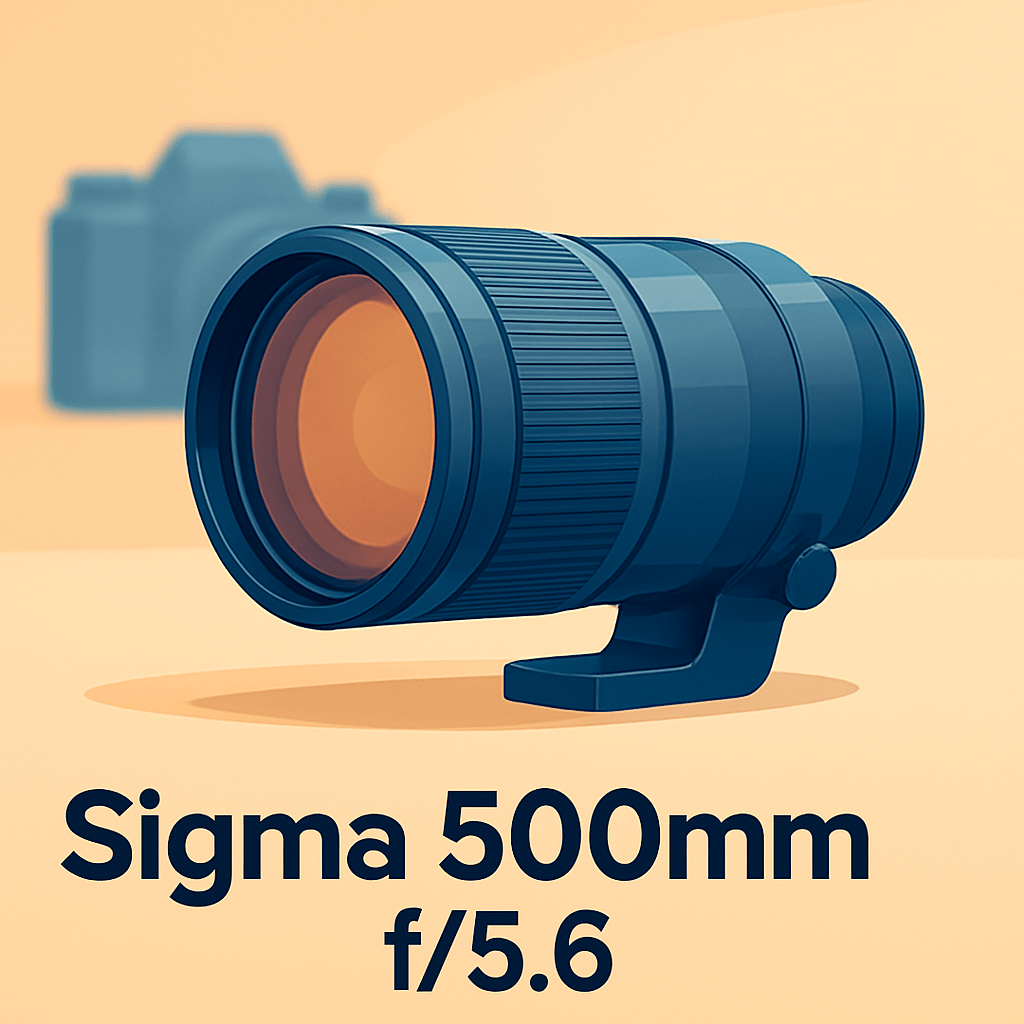
The Sigma 500mm f/5.6 DG DN OS Sony E is a stabilized 500mm prime made for mirrorless bodies. It’s built to marry long reach with native autofocus and optical stabilization.
Birders, wildlife shooters and aviation photographers will be most interested in what that reach delivers. I’ve spent days in blinds and on airstrips with Sony bodies, putting it through real-world use.
This review walks through handling, stabilization, autofocus, image quality and teleconverter behavior on Sony E mounts, and we’re separating marketing from field results—keep reading.

Sigma 500mm f/5.6 DG DN OS Sony E
Compact, super-telephoto prime built for mirrorless systems, delivering razor-sharp images, dependable optical stabilization, and surprisingly portable handling - ideal for wildlife and sports photographers seeking reach without bulk.
Check PriceThe Numbers You Need
| Spec | Value |
|---|---|
| Focal Length | 500mm |
| Maximum Aperture | f/5.6 |
| Lens Mount | Sigma L‑Mount and Sony E‑Mount (DG DN versions) |
| Optical Image Stabilization | Yes (OS) |
| Minimum Focus Distance | Approx. 3.0 m (9.8 ft) |
| Lens Construction | 17 elements in 12 groups |
| Angle of View | Approx. 4.9° (diagonal) |
| Filter Size | 95mm |
| Dimensions (Diameter × Length) | Approx. 103mm × 324mm |
| Weight | Approx. 1,630 g (1.63 kg) |
| Autofocus | Yes, optimized for mirrorless systems |
| Aperture Blades | 9 rounded blades |
| Weather Sealing | Yes (dust and splash resistant) |
| Image Stabilizer Effectiveness | Up to 4 stops |
| Compatible with Teleconverters | Yes (e.g., 1.4× and 2.0×) |
How It’s Built
In my testing the Sigma 500mm f/5.6 DG DN OS Sony E felt like a thoughtfully made tool rather than a toy. It has a solid, reassuring heft and a clean finish that stood up to rough handling in the field. On mirrorless bodies it balances surprisingly well, but you’ll still want support for long shoots.
I really liked the weather protection and build confidence it gives. After using it in mist and light rain I never worried about a spot of moisture or dust; the sealing around the mount and controls kept things working. For anyone shooting outdoors this means fewer aborted sessions and more keepers.
The controls are simple and sensible—smooth focus and control rings with well-placed OS switches that you can flip without digging in your bag. One thing that could be better is the filter situation; the front thread is large and filters are bulky and pricey, which makes packing more of a pain for beginners on a budget.
The tripod foot and collar feel sturdy and lock up tightly, which matters when you add a teleconverter or a gimbal head. In real use I relied on a monopod for long hikes and a solid tripod for flats; beginners should plan to try both to see what keeps them shooting longer without fatigue.
In Your Hands
In the field the Sigma 500mm f/5.6 DG DN OS feels like a reassuringly steady partner rather than a fragile super-tele: its optical stabilization noticeably tightens the viewfinder at slower shutter speeds and raises keeper rates when shooting handheld. On monopods and tripods it settles into a calm, usable balance that makes extended sessions far less fatiguing than you might expect from a lens of this reach.
Mounted to a compact mirrorless body the pairing is nimble enough for hikes and quick stakeouts, though you do feel the mass during all-day outings and benefit from a handgrip or monopod for long stints. A larger, gripped body improves ergonomics and control, nudging fatigue into the background and letting you focus on framing instead of balancing the rig.
Perched birds, distant wildlife and aircraft are where this lens sings — subjects feel reachable and detail-rich when you can hold steady or lean into a monopod. Birds-in-flight and erratic sports action remain challenging, but autofocus integration and stabilization combine to give you improved acquisition and higher rates of keepers than with unstabilized long primes.
The minimum focus distance limits very close-up work, yet it’s forgiving enough for environmental portraits of wildlife, hides and zoo shooting where a bit of separation helps storytelling. In tight quarters you’ll need to think about background compression and step back to let the lens render subject isolation.
Adding teleconverters extends reach but changes the experience: viewfinder brightness drops, autofocus becomes a touch more deliberate and stabilization feels slightly less authoritative. Pairing the lens with an IBIS-equipped body and using continuous AF with short bursts makes subject acquisition and reframing at long reach far more manageable in real-world shoots.
The Good and Bad
- 500mm reach in a mirrorless-native prime
- Optical Stabilizer with up to 4 stops of effectiveness (spec)
- Weather sealing (dust and splash resistant)
- Teleconverter compatibility (1.4x and 2.0x)
- Maximum aperture f/5.6—exposure and DOF considerations in low light
- Minimum focus distance approx. 3.0 m—limits close-up framing
Ideal Buyer
The Sigma 500mm f/5.6 DG DN OS is ideal for photographers who need true 500mm reach on Sony E or Sigma L mirrorless bodies. Wildlife shooters, birders, aviation spotters and distant field-sports photographers will appreciate the native AF integration and built-in stabilization that makes tight framing more reliable in the field.
It suits shooters comfortable working at f/5.6 and with a roughly 3.0 m minimum focus distance where reach and resolution trump close-focus flexibility. Photographers planning to extend reach with 1.4x or 2.0x teleconverters will find a system-friendly option that stays firmly in the mirrorless workflow.
Outdoor and travel shooters who value dust and splash resistance plus a relatively light 1.63 kg package will like the balance between portability and long reach. The lens pairs especially well with compact mirrorless bodies and IBIS-equipped cameras for long days afield.
Serious enthusiasts stepping up from DSLR-era glass will appreciate the mirrorless-optimized AF and steadier viewfinder framing, while professionals needing the very fastest apertures or closer working distances may prefer larger primes. Ultimately, this Sigma is for photographers who prioritize reach, reliability, and a lightweight, stabilized long lens in the Sony/L ecosystems.
Better Alternatives?
We’ve gone through the Sigma 500mm f/5.6 in depth — how it handles on mirrorless bodies, its stabilization, and what it’s like to shoot birds, wildlife, and distant action with a native 500mm prime. That lens is a sweet spot for Sony and L-mount users who want a lightweight, stabilized long-reach prime, but it’s not the only way to get long glass in the field.
Below are a few real-world alternatives I’ve used. For each one I’ll point out where it shines compared to the Sigma 500mm f/5.6 DG DN OS (Sony E), where it falls short, and what kind of shooter would pick it.
Alternative 1:

Nikon 500mm f/5.6E PF AF-S VR F
Phase-Fresnel design reduces weight and size while preserving long-reach performance; built-in vibration reduction and swift autofocus make it a go-to for handheld wildlife and action shooting in the field.
Check PriceThe Nikon 500mm PF is the closest feeling alternative in reach and size. In the field it’s remarkably light and compact for a 500mm, so I could hike longer and swing it on a monopod without tiring as fast as with traditional big primes. Compared to the Sigma on a Sony body, the Nikon wins for sheer packability and the pleasing weight balance on a DSLR body.
What it gives up versus the Sigma is native mirrorless integration. On Sony bodies you’ll need an adapter, and that changes how autofocus and stabilization feel together. The Nikon’s VR is very usable for handholding, but I found the Sigma’s OS on Sony bodies worked a little more smoothly with Sony’s AF and in-body stabilization when tracking birds in flight.
Pick the Nikon if you’re a Nikon DSLR shooter who wants a true 500mm that’s easy to carry, or if you want the smallest-feeling 500mm prime for hikes and long days. If you’re on Sony mirrorless and value plug-and-play AF/OS behavior, the Sigma will still be the nicer out-of-box experience.
Alternative 2:

Canon 400mm f/5.6L USM EF
Pro-level telephoto offering exceptional sharpness and fast ultrasonic focusing, with robust weather-sealed construction and excellent value for wildlife and sports shooters who need reliable, lightweight reach.
Check PriceThe Canon 400mm f/5.6L is one I’ve reached for when I needed something very light and sharp without spending big money. It’s smaller than the Sigma 500 and easy to carry all day; on a crop body it gives similar framing to a 500mm on full-frame, which is handy for birders on a budget. The USM AF is quick and reliable on Canon bodies.
Where it’s weaker than the Sigma is obvious: you lose physical reach (400mm vs 500mm) and there’s no built-in optical stabilization. That matters if you handhold a lot on bodies without strong IBIS, or if you want the extra stop or two of reach the Sigma plus teleconverter can give. In low light the Sigma’s constant f/5.6 and OS usually keep me with higher keeper rates.
Choose the Canon 400mm if you want a lightweight, very sharp lens for travel or for pairing with Canon bodies and you don’t need a full 500mm on a full-frame body. It’s a great pick for travel birding or sports where portability and price are king, but if you need native stabilization and that extra 20% reach the Sigma is the better match.
Alternative 3:

Canon RF 100-400mm f/5.6-8 IS USM
Versatile long-range zoom for travel and wildlife, combining compact portability with extended reach, image stabilization, and quick, quiet autofocus - perfect for photographers who prioritize flexibility over fixed-aperture speed.
Check PriceThe Canon RF 100-400mm is a completely different tool: a compact zoom that gives you framing options from wide-ish to long reach in one lens. On trips where I needed flexibility — hiking, safari, or unpredictable subjects — this beat the Sigma for convenience. Its built-in IS and fast AF on RF bodies make it easy to grab keepers without swapping glass.
That flexibility comes at a cost compared to the Sigma 500mm. The zoom has a variable maximum aperture that narrows at the long end, so it feels darker wide open and won’t hold the same depth-of-field control or low-light punch as the Sigma’s constant f/5.6 prime. Also, even at 400mm it’s short of the Sigma’s 500mm unless you crop or use a teleconverter, and image tightness and fine-detail rendition at extreme range usually favor the Sigma prime.
Go with the RF 100-400mm if you shoot travel, general wildlife, or events where packing light and staying versatile matters more than extracting the last bit of reach or prime-level sharpness. If you’re already deep in the Canon RF ecosystem and want one lens that does most jobs well, it’s a practical trade-off; for pure long-reach birding or pixel-level detail at 500mm, the Sigma will usually deliver more.
What People Ask Most
Is the Sigma 500mm f/5.6 good for bird and wildlife photography?
Yes — its long reach and good sharpness make it a popular choice for birds and wildlife in good light. The f/5.6 aperture can struggle in low light and gives less background blur than faster lenses.
How sharp is the Sigma 500mm f/5.6?
Very sharp in the center at f/5.6, and stopping down improves edge-to-edge performance, though newer f/4 primes can resolve more fine detail.
Does the Sigma 500mm f/5.6 have image stabilization?
No — the classic 500mm f/5.6 lacks optical stabilization, so use a fast shutter, tripod/monopod, or good technique to avoid blur.
Can you use teleconverters with the Sigma 500mm f/5.6?
Yes — 1.4x and 2x teleconverters can be used, but expect some loss of sharpness and reduced autofocus reliability with a 2x; 1.4x is the safer option.
Is the Sigma 500mm f/5.6 compatible with Canon or Nikon cameras?
Sigma made versions for Canon EF and Nikon F mounts, so check the lens mount before buying and verify autofocus compatibility with your body.
Is the Sigma 500mm f/5.6 worth buying used?
Often yes — it’s good value used if the glass is clean and the focus works; always inspect for fungus, haze, and play in the tripod collar before purchase.
Conclusion
The Sigma 500mm f/5.6 DG DN OS Sony E is a mirrorless‑native long‑reach prime that nails a rare balance of reach, handling and stabilization. In the field it behaves like a tool built for wildlife and aviation shooters rather than a trophy lens for specs. It brings practical usefulness to everyday long‑reach work in a way few heavier super‑teles do.
Its native autofocus pairing and effective optical stabilization make subject acquisition and keeper rates noticeably better on modern mirrorless bodies. Weather resistance and teleconverter support extend its utility across varied conditions and missions. Contrast and micro‑contrast deliver a natural, workmanlike rendering that rewards good technique.
Those strengths do come with trade‑offs. The modest maximum aperture and limited close‑focusing range make low‑light and very intimate framing more challenging than with faster or macro‑capable glass. Filters are large and it still demands support and planning for long days afield, and high‑contrast scenes can expose fringing or flare that needs attention.
If you shoot birds, wildlife or aviation on Sony or L‑mount systems this lens is a pragmatic, high‑value choice. If you prioritize absolute low‑light speed, extreme portability, or all‑in‑one framing flexibility, compact primes or long zooms remain worthy alternatives. Base the call on your light, mobility and teleconverter needs, and this Sigma will prove itself as a dependable field workhorse.
Sigma 500mm f/5.6 DG DN OS Sony E
Compact, super-telephoto prime built for mirrorless systems, delivering razor-sharp images, dependable optical stabilization, and surprisingly portable handling - ideal for wildlife and sports photographers seeking reach without bulk.
Check Price



0 Comments