
Want an ultra-wide lens that gives dramatic perspectives without bogging down your travel kit?
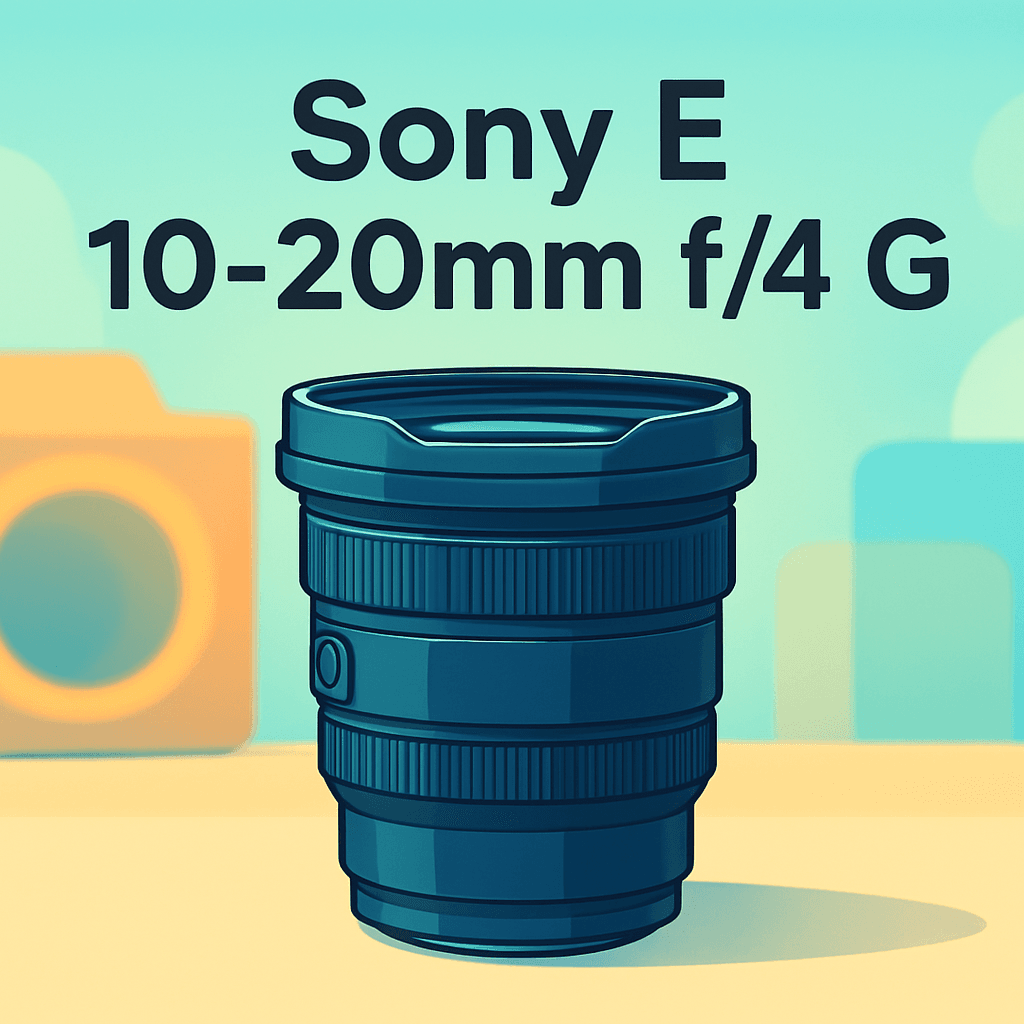
The Sony E 10-20mm f/4 G is a compact, lightweight ultra-wide zoom with a constant f/4, power-zoom and no optical stabilization. I’ve field-tested it across hikes and city shoots.
If you’re a vlogger, traveler, or architecture shooter, this one’s for you. I’ll cover handling and image quality — make sure to read the entire review, keep reading.

Sony E 10-20mm f/4 G
Ultra-wide zoom delivering edge-to-edge sharpness with a constant f/4 aperture, ideal for sweeping landscapes, architecture and interiors. Compact, reliable build with responsive autofocus for professional wide-angle creativity.
Check PriceThe Numbers You Need
| Spec | Value |
|---|---|
| Mount | Sony E-mount |
| Format | APS-C |
| Focal Length | 10-20mm |
| Maximum Aperture | Constant f/4 |
| Lens Type | Ultra-wide-angle zoom |
| Optical Construction | 14 elements in 12 groups |
| Minimum Focus Distance | 0.22 m |
| Maximum Magnification | 0.14x |
| Image Stabilization | No (rely on camera body stabilization) |
| Aperture Blades | 7, rounded |
| Filter Diameter | 62 mm |
| Dimensions (Diameter x Length) | Approx. 67.6 x 80.5 mm |
| Weight | Approx. 178 g |
| Autofocus | Power Zoom motor for smooth and quiet focusing |
| Special Lens Coatings | Nano AR Coating to reduce flare and ghosting |
How It’s Built
In my testing the Sony E 10-20mm f/4 G feels like a lens made to be carried and used all day. It’s compact and light, and it sits very nicely on small Sony APS‑C bodies so you don’t get worn out after a long walk. That real-world balance makes it easy for travel and run‑and‑gun shooting.
The power‑zoom is the best part for me — smooth, predictable, and quietly useful for video. I loved how effortless zoom pulls looked on camera and how little the lens got in the way of on‑board microphones. For stills the zoom is precise enough, and the focus motor is quiet when racking.
Rings have just the right amount of resistance for easy manual tweaks without feeling loose. The finish is tidy and well put together, and the front element doesn’t stick out so you can use regular NDs and polarizers without fuss. The rounded aperture blades also give pleasing out‑of‑focus areas when you get close.
One thing that could be better is the lack of optical stabilization, so you’ll want an IBIS body or a tripod for low‑light work. I also noticed a faint motor noise in very quiet rooms, but nothing that ruined recordings. For beginners this means simple handling and predictable control, with a couple of trade‑offs to keep in mind.
In Your Hands
The Sony E 10-20mm f/4 G proves remarkably versatile in real-world shooting. At the widest setting it tightens into small interiors and architecture with dramatic perspective; toward the longer end it handles sweeping landscapes and travel scenes without feeling gimmicky. The ultra-wide reach makes foreground-emphasis compositions effortless for establishing shots.
For video and vlogging the power-zoom is the lens’s standout feature, delivering noticeably smoother focal changes than a manual zoom in-camera. Autofocus and internal mechanisms run quietly enough that on-camera mics aren’t usually compromised, though in very low light you’ll want a stabilized body or support since the lens lacks optical stabilization. That trade-off is sensible if you prioritize mobility and fluid zooms.
Physically the lens is a joy to carry and balance on compact Sony APS-C bodies; I left it mounted for full days of walking tours and interior shoots without fatigue. Zoom and focus controls offer consistent, predictable resistance for both stills and video racks, and the front accepts common filters without awkward protrusion—workflow with NDs and polarizers is straightforward.
Close-range capability is useful for dramatic foregrounds and adding scale in cramped rooms, letting you get creative with near subjects without switching lenses. In quiet rooms the power-zoom motor is nearly inaudible, though very sensitive mics can pick up faint mechanical noise during slow zooms; for most run-and-gun scenarios it’s unobtrusive.
The Good and Bad
- True ultra‑wide coverage on APS‑C (10–20 mm)
- Constant f/4 aperture across the zoom range
- Very lightweight and compact (approx. 178 g; 67.6 x 80.5 mm)
- Quiet operation and power‑zoom for smooth video work
- No optical image stabilization (relies on camera IBIS or faster shutter speeds)
- f/4 may be limiting in low light vs. faster alternatives
Ideal Buyer
The Sony E 10-20mm f/4 G is aimed at APS‑C E‑mount shooters who want true ultra‑wide perspective in a pocketable package. Its compact size, constant f/4 and 62mm filter thread make it an obvious choice for travel, interiors, architecture and dramatic landscapes. If you value reach at the extreme wide end without lugging a heavy setup, and want quick foreground emphasis and easy framing on the move, this lens delivers.
Video creators and hybrid shooters will appreciate the power‑zoom and quiet focus system for smooth, usable zoom ramps on camera, plus a discreet profile around on‑camera mics. It’s lightweight for long handheld days and pairs best with bodies that offer IBIS for steadier low‑light video and stills. The 62mm front thread makes ND/polarizer workflows straightforward for landscape and vlog shoots.
This isn’t the lens for photographers chasing shallow depth of field or maximum low‑light speed; f/4 limits subject separation compared with f/2.8 alternatives and it won’t rival faster primes for background blur. It also relies on body stabilization, so shooters without IBIS may prefer an OSS option for handholding at slower shutter speeds. If you shoot full‑frame natively, look elsewhere, but for APS‑C travel, architecture and vlogging this is a very compelling, compact choice.
Better Alternatives?
We’ve gone over what the Sony E 10-20mm f/4 G does best: a tiny, light ultra‑wide that’s great for travel, vlogs and quick handheld work where smooth power‑zoom and weight matter. It’s a very practical lens if you shoot on an APS‑C Sony body with IBIS or you mostly work in daylight.
If that sounds right for you but you’re weighing other options, here are three real, hands‑on alternatives I’ve used a lot. I’ll point out where each one wins and where it falls short compared to the 10‑20 G, and who would pick each one in real shooting situations.
Alternative 1:

Sony E 10-18mm f/4
Lightweight ultra-wide zoom offering consistent f/4 exposure and natural perspective for landscapes, interiors and vlogging. Smooth focus, compact size and excellent corner-to-corner clarity for everyday wide-angle needs.
Check PriceThe Sony 10‑18mm f/4 is the budget, compact cousin to the 10‑20 G. I’ve carried it on long walks and interior shoots where every ounce mattered. What it does better than the 10‑20 G is built‑in OSS — that extra stabilization makes a real difference for stills and video on older bodies without IBIS. It’s also slightly cheaper and a touch smaller, so it’s easier to leave on the camera all day.
Where it loses to the 10‑20 G is in handling and video moves: it doesn’t have the power‑zoom, so zooms are manual and not as smooth for on‑camera transitions. Optically it’s very good for the price, but I felt the 10‑20 G gives a bit more microcontrast and a slightly punchier look in the same scenes. The 10‑18mm also stops at 18mm, so you lose a little reach at the long end compared to the 20mm on the 10‑20 G.
Pick the 10‑18mm if you want the best value and built‑in stabilization for handheld work, or if you’re on a camera without IBIS and need steadier low‑light shots. If you care most about the smooth power‑zoom and the last few degrees of wide angle, the 10‑20 G still has the edge.
Alternative 2:

Tamron Sony E 11-20mm f/2.8 Di III A
Bright constant f/2.8 ultra-wide zoom built for low-light and creative background separation on APS-C bodies. Fast optics deliver sharp, distortion-controlled images—perfect for nightscapes, interiors and dynamic wide-angle storytelling.
Check PriceThe Tamron 11‑20mm f/2.8 stands out immediately in low light. I’ve shot interiors and night streets with this lens and the f/2.8 makes a big, practical difference — you can keep shutter speeds lower and still get cleaner images than with an f/4. It also gives noticeably better subject separation when you want a background that falls away a bit, which the 10‑20 G can’t match at the same settings.
On the downside, the Tamron starts at 11mm, so you lose that extreme 10mm perspective. It’s also a bit larger and heavier than the Sony 10‑20, and it doesn’t offer power‑zoom or built‑in stabilization. In my experience the autofocus is quick and quiet and the lens is sharp overall, though at the widest end you might stop down a bit for the best corner performance.
This is the lens I’d reach for if I needed more light on tap — events, nightscapes, or interiors where flash isn’t an option. If your priorities are the absolute widest angle, the lightest setup, or smooth power‑zoom moves for video, then the Sony 10‑20 G still makes more sense.
Alternative 3:
Tamron Sony E 11-20mm f/2.8 Di III A
Compact, travel-friendly ultra-wide with a fast f/2.8 aperture for dramatic perspectives and excellent subject isolation. Responsive autofocus and high corner-to-corner resolution make it ideal for landscapes and event interiors.
Check PriceLooked at from a travel and event standpoint, the Tamron 11‑20mm is a surprisingly versatile tool. I’ve packed it for short trips where I wanted a faster lens without going full‑frame. It gives a more dramatic look in low light and better control over depth of field than the Sony 10‑20, which helps when shooting people in tight interiors or creating mood in evening scenes.
That said, it does feel heavier in the bag and on the camera than the tiny 10‑20 G, and you trade away the 10mm ultra‑wide reach and the PZ’s smooth zoom behavior. For vloggers who rely on power‑zoom moves, the Tamron won’t replace the workflow of the 10‑20 G. Also, if you shoot a lot handheld video on an IBIS‑less body, the lack of OSS can be felt.
Choose the Tamron again if you value speed and low‑light ability over the absolute widest angle and the smallest weight. It’s a good pick for storytellers who need faster glass for moody photos and fast AF, and for travelers who want a single lens that handles both daytime landscapes and night scenes better than a constant f/4 option.
What People Ask Most
Is the Sony E 10-20mm f/4 G worth buying?
Yes — for APS‑C shooters who want a sharp, distortion‑controlled ultra‑wide for landscapes, architecture and interiors, it’s a great buy. Skip it if you need a faster aperture or in‑lens stabilization.
How sharp is the Sony E 10-20mm f/4 G?
Very sharp in the center at f/4 and even better stopped down to f/5.6–f/8; edges improve when stopped down but can be slightly softer at the widest setting.
Does the Sony E 10-20mm f/4 G have image stabilization?
No — the lens has no optical image stabilization, so use a camera with IBIS or a tripod for slow‑shutter work.
Is the Sony E 10-20mm f/4 G weather-sealed?
Yes — it has dust and moisture resistance with a rubber gasket at the mount, but it’s not fully waterproof so be cautious in heavy rain.
What is the full-frame equivalent focal length of the Sony E 10-20mm f/4 G?
On Sony APS‑C bodies the 10–20mm range is roughly equivalent to 15–30mm on full‑frame (1.5× crop factor).
Is the Sony E 10-20mm f/4 G good for astrophotography?
Yes — it performs well for wide‑field astrophotography with low coma and good sharpness when stopped down, but f/4 means you’ll need higher ISO, longer exposures, or a star tracker for best results.
Conclusion
The Sony E 10-20mm f/4 G is a rare blend of genuine ultra-wide reach and pocketable handling, marrying a constant aperture with a pleasingly quiet power-zoom. It excels where size, smooth video moves and wide perspective matter most. In short, it feels like a G-series lens tuned for travel and run-and-gun work.
For travel photographers, vloggers and interior or landscape shooters it hits the sweet spot — wide framing, easy filter use and minimal bulk make long days more bearable. The power-zoom and low-noise operation noticeably lift on-camera video production. Pair it with an IBIS body and the combo becomes especially capable.
It’s not without compromise; the constant aperture and the absence of in-lens stabilization limit low-light reach and shallow depth-of-field options. If you need the very fastest glass or in-lens OSS you’ll find better fits among competing zooms. Those trade-offs are real but intentional to preserve the lens’s size and handling.
My bottom line: buy the Sony E 10-20mm f/4 G if you prize compactness and buttery zoom behavior for hybrid photo/video work on APS-C bodies. Skip it if your priority is the shallowest apertures or built-in stabilization, and explore the listed alternatives instead. For most on-the-go creators it delivers excellent value and a distinctive toolset.
Sony E 10-20mm f/4 G
Ultra-wide zoom delivering edge-to-edge sharpness with a constant f/4 aperture, ideal for sweeping landscapes, architecture and interiors. Compact, reliable build with responsive autofocus for professional wide-angle creativity.
Check Price

0 Comments