
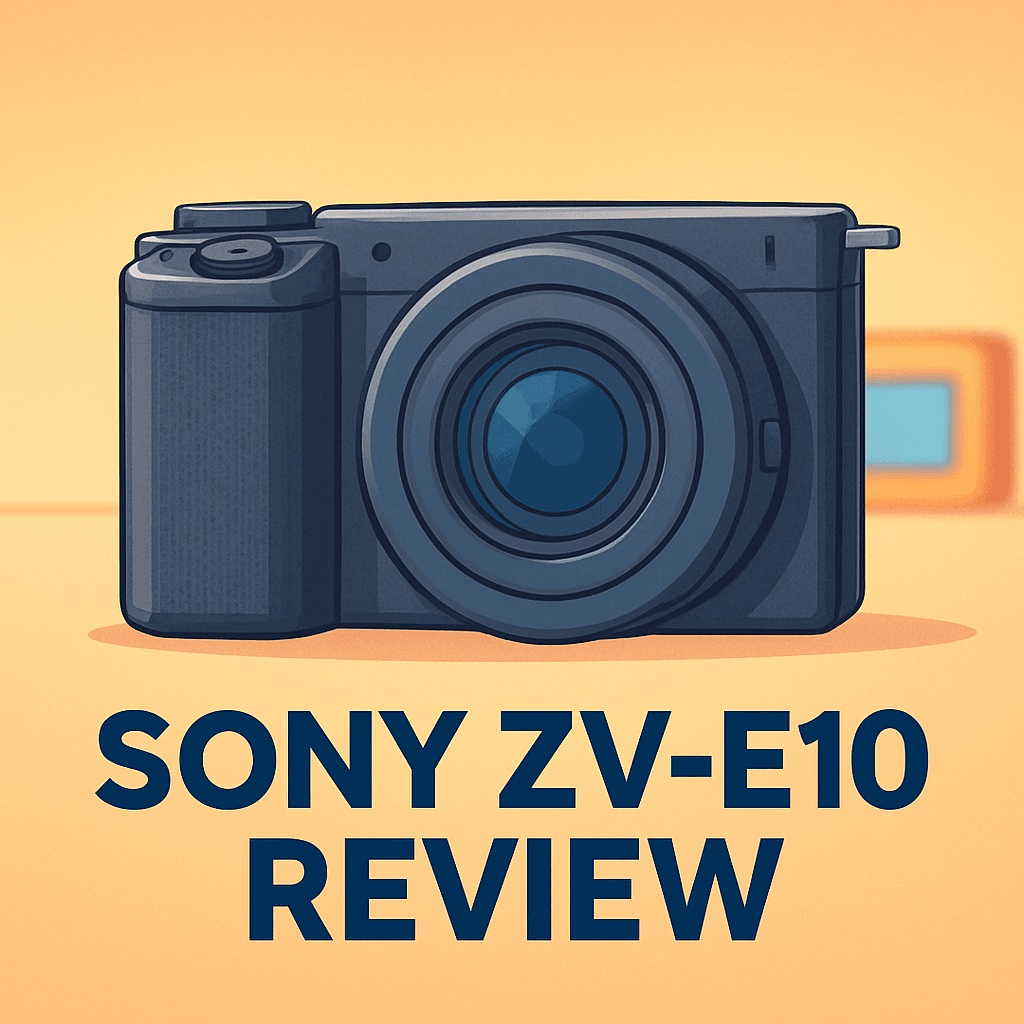
Want to level up your vlogs and solo shoots without lugging a full rig?
After field-testing the Sony ZV-E10 on real shoots, I’m sharing hands-on impressions that matter.
It’s a compact interchangeable-lens camera built for vloggers and solo creators.
Expect reliable real-time Eye AF, a fully articulating screen, a directional onboard mic with windscreen, 4K at 30 fps, and a very light body.
There are trade-offs: no in-body image stabilization (only electronic), no viewfinder, and 4K tops out at 30 fps.
Make sure to read the entire review as I dig into image quality, audio, handling, and how it stacks against rivals — keep reading.

Sony ZV-E10 Camera
Designed for creators, this compact mirrorless delivers razor-sharp autofocus, bright vari-angle touchscreen, clean audio input, and interchangeable-lens flexibility—effortlessly producing professional-looking vlogs and stills on the go.
Check PriceThe Numbers You Need
| Spec | Value |
|---|---|
| Sensor | APS-C, 24.2 MP |
| Autofocus | Fast Hybrid AF; 425 phase-detection points |
| Video Resolution | 4K UHD up to 30 fps |
| LCD Screen | 3.0-inch vari-angle touchscreen |
| ISO Range | 100–32000 (expandable to 51200) |
| Lens Mount | Sony E-mount (interchangeable lenses) |
| Image Stabilization | Electronic image stabilization (EIS) |
| Audio | Directional 3-capsule microphone with windscreen |
| Connectivity | USB-C, Micro HDMI, 3.5 mm mic input, headphone jack |
| Continuous Shooting Speed | Up to 11 fps |
| Battery Life | Approx. 440 shots per charge |
| Body Weight | Approx. 343 g (body only) |
| Focus Features | Real-time Eye AF and Real-time Tracking |
| Storage | SD/SDHC/SDXC (UHS-I compatible) |
| Video Features | S-Log3 and HLG (Hybrid Log-Gamma) profiles |
How It’s Built
In my testing the Sony ZV-E10 feels purposely small and friendly. The lightweight body and E-mount make it easy to carry a spare lens without feeling weighed down. The vari-angle touchscreen is a joy for self-shooting and quick reframes — I loved how simple it made framing without wrestling the camera.
There is no built-in viewfinder, and that matters if you shoot stills in bright sunlight. Button placement is sensible for one-handed vlogging and the record button is easy to thumb without fumbling. The grip is fine for short runs, but I did wish it was a little thicker for longer handheld sessions.
Ports are practical and laid out for creators — USB-C, micro HDMI, a mic jack, headphone monitoring, and a single card slot. In real use I appreciated being able to plug into an external monitor or run a lavmic without adapters. Battery life is fine for mixed shoots, but plan to carry a spare if you’re shooting long video blocks.
The camera relies on electronic stabilization rather than in-body stabilization, and that has real effects on handheld footage. For talking heads it smooths things out, but for walk-and-talks I leaned on a gimbal or stabilized lenses. If you’re a beginner, start with a wide lens and think about a small gimbal for really steady shots.
In Your Hands
The ZV-E10’s autofocus is the thing you notice first in the field: face and eye detection grabs subjects quickly and stays locked in, letting you concentrate on performance rather than hunting for focus. I pushed it through walk-and-talks, quick product-to-face pulls and passing subjects, and the tracking rarely lost its subject even with sudden movements. For solo creators that reliability turns a one-person shoot from fiddly into fluid.
Its APS-C sensor renders skin tones and fine detail with a crisp, social-ready aesthetic that responds well to light grading without demanding hours in post. In dimmer situations the image retains usable detail if you expose carefully and pair the camera with faster glass; noise shows up before detail collapses, so sensible choices keep footage clean. The crop latitude also makes reframing for vertical and social formats straightforward.
Operation feels snappy—menus, touch controls and autofocus are responsive enough that you don’t miss spontaneous moments. Burst shooting is handy for B-roll and quick action grabs, though sustained long runs will eventually force a brief pause while the camera clears its workload. In daily hybrid use it struck a good balance between speed and reliability.
The fully articulating screen and light body are a joy for self-framing, overheads and low-angle shots, and the ergonomics suit one-handed vlogging once you find the sweet spot for the record button. It’s light enough to live on a gimbal or handheld rig without tiring you out, but that lightness also means you should plan media offloads on busy days. Using a modest cage or grip helps keep accessories stable without bloating the setup.
USB-C charging and tethering, micro HDMI output and a headphone jack give you practical monitoring and power options during longer sessions. On set I route cables with right-angle adapters and secure them away from the flip hinge, and I favor a snug hotshoe mic or small cage to keep everything tidy and dependable.
The Good and Bad
- Excellent Real-time Eye AF and Tracking for solo creators
- Fully articulating touchscreen ideal for vlogging and flexible angles
- Built-in directional 3-capsule mic with included windscreen
- Lightweight body that rigs easily for handheld/gimbal use
- No in-body image stabilization (EIS only)
- No electronic viewfinder (challenging in bright outdoor stills shooting)
Ideal Buyer
The Sony ZV-E10 is a natural fit for solo video creators and vloggers who need reliable autofocus and a camera that disappears into the workflow. Real-time Eye AF, a fully articulating screen and a lightweight body make framing, talking-heads and walk-and-talks effortless. The built-in directional mic and easy expandability sweeten on-camera shooting.
Hybrid shooters who balance social video with stills will appreciate the 24.2MP APS-C sensor and usable 4K/30p capture. It’s compact enough for travel, rigs easily to gimbals, and gives good image flexibility for crop-friendly social formats. USB-C power and headphone/mic jacks keep a practical workflow on set.
This isn’t the best pick if you’re a stills-first photographer wanting an EVF or long handheld telephoto work that benefits from IBIS. Also look elsewhere if you need 4K at higher frame rates for slow-motion or pro sports duties. The UHS-I card slot and EIS-only stabilization are honest trade-offs.
Choose the ZV-E10 when autofocus reliability, a flip screen, simple but solid onboard audio and portability matter more than built-in stabilization or a viewfinder. If you need an EVF, IBIS, or faster 4K, consider alternatives that specialize in those features. For most solo creators, it’s an efficient, approachable tool that gets the job done.
Better Alternatives?
We’ve gone through the Sony ZV-E10 in detail — its great flip screen, spot-on face and eye tracking, light weight, and handy onboard mic make it a favorite for solo creators and vloggers. But that same focus means Sony made some choices that won’t sit well with every shooter: no built-in viewfinder, no in-body stabilization, and 4K capped at 30p.
If you find yourself wanting a more traditional stills camera feel, stronger action shooting, or different video frame-rate options, here are three real-world alternatives I’ve used. I’ll point out what each one does better and worse than the ZV-E10, and what kind of buyer will like it most.
Alternative 1:

Nikon Z50 Camera
A travel-ready APS-C mirrorless offering excellent image quality, responsive autofocus, crisp electronic viewfinder, and ergonomic controls—perfect for enthusiasts seeking a lightweight camera with pro-level performance and intuitive handling.
Check PriceOn the Z50 I noticed straight away how nice it is to have a built-in electronic viewfinder. Shooting outside in bright sun or tracking action feels more natural — I can frame and nail focus without shading the screen. The grip and button layout also feel more like a traditional camera, which helps when you’re doing longer stills sessions.
Compared to the ZV-E10, the Z50 is better for stills and bright-light shooting because of that EVF and the conventional handling. Where it loses out is video: the tilting screen isn’t as friendly for front-facing vlogs as Sony’s fully articulating display, and Nikon’s face/eye tracking for moving video didn’t lock on as smoothly for me in run-and-gun talking-head work. Also, the Z50’s lens choices for APS-C Z mount are more limited than Sony’s big E-mount ecosystem.
If you mainly shoot photos or want a small camera that still feels like a regular mirrorless, the Z50 is a solid pick. Choose it if you value an EVF and classic controls for travel and stills, but stick with the ZV-E10 if you need the flippy screen and the very best self-shooting autofocus for vlogs.
Alternative 2:
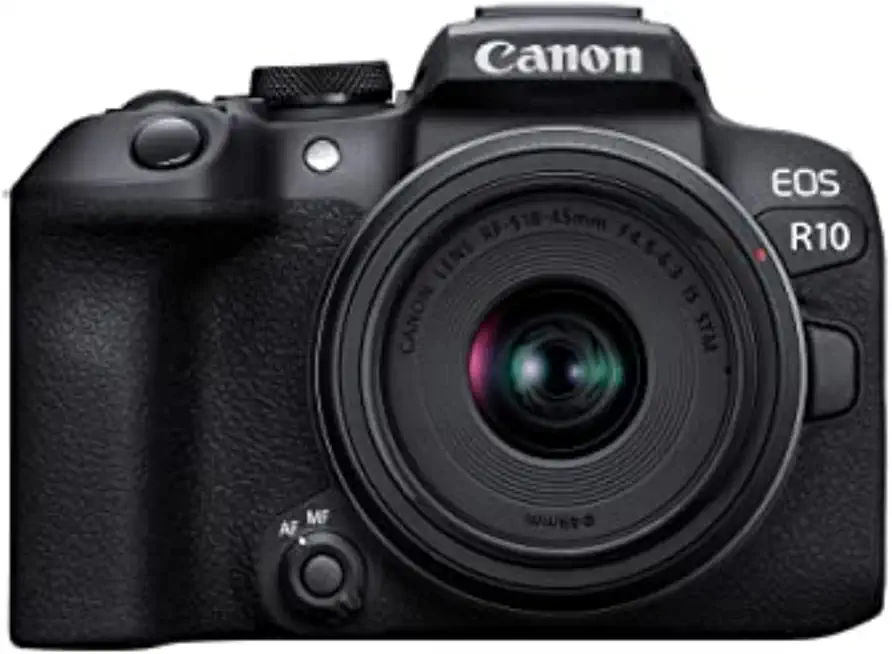
Canon EOS R10 Camera
Packed for hybrid shooters, this agile body achieves blistering continuous burst rates, industry-grade autofocus, and high-resolution 4K video—ideal for action, sports, and fast-paced storytelling with compact portability.
Check PriceThe R10 shines when things move fast. Its burst speed and subject detection make it easy to catch a decisive moment, whether you’re on sports sidelines or grabbing action B-roll. It also has a viewfinder and a fully articulating screen, so you get the best of both worlds for stills and self-shooting video.
Against the ZV-E10, the R10 feels stronger for action and has more flexible video frame-rate options, which is great if you want smoother slow-motion or different cinematic looks. On the downside, I still prefer Sony’s face/eye tracking for steady, faultless self-recording, and the ZV-E10’s onboard mic and simple windscreen are handier for casual vlogging out of the box.
Pick the R10 if you need a fast hybrid camera that can handle sports, events, and run-and-gun video with an EVF to boot. If your work is mostly talking-heads and solo shoots where face tracking and ready-made audio matter most, the ZV-E10 will usually be easier to live with.
Alternative 3:
Canon EOS R10 Camera
Bring cinematic creativity to everyday shoots with versatile frame rates, a fully articulating touchscreen, responsive handling, and broad lens compatibility—designed to help creators capture polished stills and dynamic video.
Check PriceI’ve used the R10 when I wanted more creative video options. The extra frame-rate choices and the articulating touch screen make it easy to experiment with slow-motion clips and different looks without changing cameras. The handling is snappy and the menus are straightforward, which keeps shoots moving.
Where the R10 beats the ZV-E10 is flexibility for hybrid shooting and a viewfinder for times when you need it. What it doesn’t beat is the ZV-E10’s simple, creator-first approach: Sony’s screen, autofocus behavior for solo subjects, and included windscreen mic are just easier for pure vlogging. The R10 asks a bit more from you to get the same clean out-of-camera audio and face-locking reliability.
If you’re a creator who wants to push into more cinematic work, try different frame rates, and still shoot strong photos, the R10 is a great step up. If you want the simplest, most reliable tool for talking-heads and quick solo shoots, the ZV-E10 remains the friendlier choice.
What People Ask Most
Is the Sony ZV-E10 worth buying?
Yes — it’s a great value if you want a compact APS-C camera with excellent autofocus and image quality for video and content work, though it lacks in-body stabilization and has modest battery life.
Is the Sony ZV-E10 good for vlogging?
Yes — it has a flip-out screen, good mic options, product-showcase mode and fast autofocus, making it ideal for vloggers and solo creators.
Does the Sony ZV-E10 have in-body image stabilization (IBIS)?
No — the ZV-E10 does not have IBIS, so use stabilized lenses, a gimbal, or electronic stabilization for smoother handheld footage.
How good is the autofocus on the Sony ZV-E10?
The autofocus is very good, with reliable real-time Eye AF and subject tracking that works well for both video and stills in most lighting conditions.
Can the Sony ZV-E10 record 4K video and at what frame rates?
Yes — it records 4K up to 30p (full sensor readout) and 1080p up to 120fps for slow motion.
How long does the battery last on the Sony ZV-E10?
Battery life is modest for video work, so expect to swap batteries for long shoots or use USB-C power/battery packs for extended recording.
Conclusion
The Sony ZV-E10 is a creator-first camera that gets the fundamentals right where it matters most: autofocus that locks on faces and eyes, a fully articulating screen built for self-shooting, and a simple on-camera audio solution that keeps run-and-gun work stress-free. In practice it feels like a tool designed by people who shoot alone. For vloggers and hybrid creators who value speed and portability it is a clear winner.
That focus comes with trade-offs you can’t ignore: there’s no viewfinder, no in-body stabilization, and video is capped at 4K 30p unless you look elsewhere. These omissions force choices about lenses, rigs, and shooting style. If you need traditional stills handling or rock-steady handheld footage you should weigh those gaps carefully.
Buy the ZV-E10 if reliable AF, the flip screen, and an on-board mic streamline your workflow more than an EVF or IBIS would. If you want a viewfinder, higher-frame-rate 4K, or built-in stabilization, consider the other cameras that address those specific needs. Each alternative offers a sensible trade depending on your priorities.
Bottom line: this is my pick for talking-heads, walk-and-talks, product demos and light hybrid travel shoots where nimbleness and flawless subject tracking matter most. It’s not perfect, but for its intended audience it’s an honest, practical tool that punches above its size. I’d rather carry this on a solo job than a heavier kit that complicates the day.
Sony ZV-E10 Camera
Designed for creators, this compact mirrorless delivers razor-sharp autofocus, bright vari-angle touchscreen, clean audio input, and interchangeable-lens flexibility—effortlessly producing professional-looking vlogs and stills on the go.
Check Price

0 Comments