
Which flash will finally give your Sony images the professional pop you want while staying light enough to carry all day? With so many speedlites and battery packs promising perfection, the right choice often comes down to fit — not just power.
In this guide we cut through the specs and test five top Sony‑compatible flashes, highlighting practical pros and cons so you can choose with confidence. We focus on real-world performance, not just guide numbers.
This piece is written for portrait, event, travel and outdoor photographers who need reliable on‑camera and off‑camera light. Whether you shoot weddings, street portraits or landscapes, there’s a better flash for each scenario.
You’ll find concise product summaries, compatibility notes for Sony bodies, clear buying tips and answers to the common flash FAQs. We explain what matters in the field — battery life, wireless control, portability and ease of use.
Practicality is king here: expect recommendations that balance power, portability and value. Read on to match the right flash to your Sony kit and start shaping light with confidence.
No matter your budget, we’ll point out where to compromise and where to invest for lasting value. By the end you’ll know which flash complements your Sony body and shooting style.
1. Godox V1-S Flash Overview

GODOX V1-S Flash for Sony
Round-head rechargeable TTL flash with soft, even light, built-in 2.4GHz wireless, high-speed sync, ideal for portraits and events.
Check PriceThe Godox V1-S is a speedlight I reach for when I want flattering, natural-looking light without dragging a modifier everywhere. Its round flash head produces soft, even illumination that smooths skin tones — ideal for portraits and weddings where pleasing catchlights matter.
It supports full TTL and High-Speed Sync (HSS), so you can work quickly in changing light or freeze motion while using wide apertures. The unit is also designed to recharge fast and the battery delivers up to 480 full-power flashes per charge, which keeps you shooting through long sessions without constantly swapping cells.
Weight and portability are strengths here; the V1-S is lightweight and easy to hand-hold or throw in a bag for location work. That portability, combined with a reliable 2.4 GHz wireless system, means you can run it on- or off-camera and integrate it into a Godox multi-flash setup for small-studio or multi-light portrait rigs.
From a working-photographer perspective the V1-S balances image quality, battery life and wireless control in a compact package. It’s not the most powerful flash for very large venues or long-throw lighting, so if you need maximum output for stadiums or huge ballrooms you’ll notice the limits. There have also been some reports of occasional battery-door/connection issues, so I recommend checking the battery latch and keeping a backup battery or two on longer gigs.
- Soft, natural output from round head
- Long battery life — up to 480 full-power flashes
- Full TTL and HSS support
- Lightweight and portable for location work
- Limited power for large venues
- Occasional battery-door/connection issues reported
2. Sony HVL-F60RM2 Flash Overview

Sony HVL-F60RM2 Flash + Lexar Professional 64GB UHS-II SD Card
Powerful, fast-recycling TTL flash paired with high-speed 64GB UHS-II memory card for reliable storage and rapid continuous shooting.
Check PriceThe Sony HVL-F60RM2 is a professional-grade flash built for photographers who need serious output. With a Guide Number (GN) of 60 it delivers the power to light larger rooms and outdoor subjects without struggling.
Its radio-frequency wireless control works out to roughly a 30 m effective range and does not require line of sight. That makes off-camera setups faster to rig and far more reliable in busy or unpredictable shooting environments.
Build quality matters when you’re on location, and this unit is dust- and moisture-resistant for demanding conditions. You can trust it for weddings, events, and outdoor work where weather or dust might otherwise limit smaller, fragile units.
The motorized zoom head covers 24–105mm and offers full swivel and versatile bounce options, so you can shape light for flattering portraits or dramatic event coverage. It also features fast recycle times and excellent TTL integration with Sony Alpha face/subject tracking, which speeds shooting and improves hit rates in fast-moving situations.
There are trade-offs: the flash is heavier for handheld use and it consumes more battery, so plan to carry extra power for long days. If you prioritize raw output, build durability, reliable radio control and native Sony TTL features, this flash is a strong choice; if you need the lightest kit possible, consider a lighter alternatve.
- Very powerful — GN 60
- Radio wireless control ~30 m range
- Dust- and moisture-resistant build
- Motorized zoom 24–105mm with full swivel
- Heavier for handheld use
- Higher battery consumption — extra batteries recommended
3. Godox AD200 Pro Flash Overview
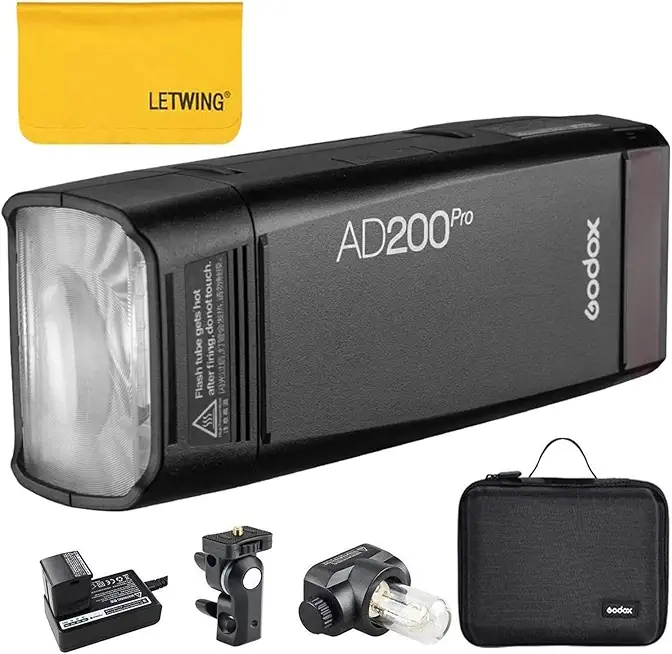
GODOX AD200Pro Pocket Flash with Bare Bulb and Speedlite Heads
Compact, versatile pro strobe offering interchangeable bare bulb and speedlite heads, portable battery power, and studio-quality output on location.
Check PriceThe Godox AD200 Pro is a compact, pocketable unit with interchangeable heads (bare bulb and speedlight style). As a working photographer I love that swap‑out design — it lets you switch from a focused flash to broad, sculpting light without lugging giant gear.
It supports full TTL and HSS on Sony cameras and offers wireless connectivity out of the box, so you get reliable exposure automation and remote control straight away. That Sony compatibility extends to bodies like the A7 series, making it an easy fit into a mirrorless workflow.
Despite its small footprint the AD200 Pro delivers high output suitable for outdoor and large‑venue work, giving you more power than typical on‑camera speedlites. Godox also improved battery life and shortened recycle times versus older AD200 versions, so you can keep shooting through events without long waits.
There are tradeoffs to be aware of. It is larger and heavier than a typical speedlite and takes a bit of practice to switch heads and dial in manual settings quickly. For portraits, events and run‑and‑gun location work it’s mostly a win — powerful, versatile and pocketable when you need real punch off‑camera.
- swappable heads
- high portable output
- wireless TTL control
- pocketable
- larger/heavier than typical speedlites
- steeper learning curve for quick manual adjustments
4. Godox TT350S Flash Overview

GODOX TT350S Flash for Sony
Tiny TTL off-camera flash with compact design, built-in 2.4GHz wireless, high-speed sync, perfect for travel and mirrorless setups.
Check PriceThe Godox TT350S is a compact, lightweight speedlite optimized for Sony cameras. It’s one of those flashes you barely notice on a mirrorless body, which makes it ideal when you need mobility without sacrificing core flash features.
It supports TTL and HSS, and it has 2.4 GHz wireless control for off-camera setups. That combination gives you automatic exposure with the flexibility to use high-speed sync and radio triggering when needed.
With a Guide Number approximately 36, the TT350S is best suited for small to medium environments. In practice that means indoor events, small studios, bounce fill in rooms, and working with modifiers — it handles those tasks cleanly but isn’t built to light large halls or overpower harsh daylight.
Performance feels crisp: quick recycle times and consistent TTL exposure mean fewer missed frames during run-and-gun work. The unit’s portability is a real advantage for travel and all-day shoots where weight and size matter as much as function.
Ergonomically it’s a trade-off. The flash is small and well balanced on compact bodies, but the small buttons and interface can be fiddly, especially with gloves or in fast-paced situations. Still, considering its price point, the TT350S represents very good value for photographers who want Sony-compatible TTL/HSS and radio control in a tiny package.
If you shoot portraits, events in small venues, or travel frequently and need reliable on-camera or simple off-camera flash, the TT350S is a smart, practical choice.
- excellent size/weight/functionality balance
- reliable TTL
- fast recycling
- good value
- limited output for bright outdoor use
- small buttons/interface can be fiddly
5. Sony HVL-F28RM Flash Overview

Sony HVL-F28RM External Flash
Lightweight, reliable external flash offering fast recycling, TTL metering, and portable illumination for casual and enthusiast photographers.
Check PriceThe Sony HVL-F28RM is a well-balanced on‑camera flash built around a Guide Number 28, which makes it a solid choice for indoor work and fill-flash. Its compact size keeps your kit light and lets you move quickly between setups without sacrificing basic power.
It offers full swivel and bounce functionality, so you can shape light easily for flattering portraits and natural-looking highlights. You also get wireless multi‑flash control plus TTL and HSS support, making it flexible for both automatic and creative high‑speed situations.
Where the F28RM stands out is in Sony integration — it plays nicely with Sony’s face‑detection and camera flash systems, so TTL behavior is predictably consistent on compatible bodies. Controls are straightforward, which helps when you need to change exposure on the fly during a shoot.
Battery performance is generally good for everyday indoor and fill use, but note that it runs on AA cells and the battery life can be shorter under intensive use. If you work long events or heavy wireless multi‑flash setups, plan for spares or fresh batteries.
In short, this is a practical, portable flash for photographers who want reliable Sony compatibility and easy, natural results without a lot of extra bulk. It’s mostly aimed at walkaround event, portrait and travel shooters who prioritize convenience and integration over raw power.
- Guide Number 28 — good for indoor/fill
- Compact and portable
- TTL and HSS with Sony face‑detection compatibility
- Natural skin tones; easy-to-use controls
- AA battery life can be short under intensive use
- Shorter wireless range vs higher‑end models
How to Choose a Sony Flash
Choosing the right flash starts with how, where and how fast you need to work. If you shoot events or weddings, prioritize TTL and reliable wireless control for responsive exposures. From experience, make sure the unit is designed for Sony’s Multi-Interface Shoe (MI Shoe) so TTL, HSS and camera features behave properly.
TTL is a lifesaver in changing light because the camera meters and adjusts flash output automatically. Use manual only when you have time to test and lock in power, such as in-studio or very consistent setups. Add High-Speed Sync (HSS) if you want wide apertures outdoors or to control ambient light with short shutter speeds.
Guide Number (GN) tells you raw flash power, so aim higher for outdoor work or large venues. Don’t overlook recycle time and battery stamina—fast recycling matters for bursts and event coverage. If you rely on heavy use, choose units with external battery options or carry fresh spares to avoid mid-shoot downtime.
Radio-based wireless systems are the practical choice outdoors since optical triggers fail in bright sun. Check the effective range and whether the flash integrates with Sony body features like face or subject tracking for more consistent TTL. Also consider build quality and weather sealing if you work in demanding conditions.
Decide how much weight you’ll tolerate: lighter speedlites travel well, but bigger units give more power and headroom. Head design affects light quality—round heads soften skin tones while full swivel and tilt are essential for natural bounce shots. Look for modeling LEDs, built-in diffusers and easy controls if you need creative versatility in the field.
Before buying, read manufacturer compatibility charts and update both flash and camera firmware for best performance. If possible, test the flash on your camera or rent a model to confirm ergonomics, menus and TTL behavior. Small choices—battery type, wireless protocol and head shape—will save time on shoots and improve your results.
Sony Flash Compatibility
When picking a flash for Sony bodies, compatibility is more than just whether it physically fits the shoe. The Multi‑Interface (MI) shoe carries electronic signals for TTL, HSS, sync and features like AF assist, so choosing the right protocol matters.
Native Sony flashes give you the cleanest integration — reliable TTL, HSS, advanced wireless control and ongoing firmware updates that keep things working with new camera features. They also tend to communicate directly with Sony face‑detect and subject‑tracking systems, which saves time and frustration during fast-paced shoots.
Many third‑party brands now offer Sony‑specific models that replicate those functions. Godox’s Sony versions (V1‑S, TT350S and similar) provide full TTL, HSS and radio control, while Nissin units (Air10s/Di700A) generally support TTL/HSS but may miss a few mirrorless‑specific extras on some bodies.
Watch out for legacy gear and adapters. Older Minolta/Konica Minolta flashes might behave with DSLRs but often won’t with modern Sony mirrorless cameras, and using adapters to mount Canon or Nikon flashes typically removes TTL/HSS and advanced sync, turning the setup into manual‑only operation.
In the field I prefer radio‑based wireless for multi‑unit or outdoor work because optical triggers struggle in bright sun. Also double‑check that critical functions you rely on — AF assist, second‑curtain sync, remote power control — are explicitly supported for your specific Sony body and flash model.
Before any important shoot update both camera and flash firmware and run a quick compatibility test with the exact gear and settings you’ll use. Bring a simple manual flash or spare unit as a fallback; a quick manual solution is often the difference between recovering a shot and losing it.
What People Ask Most
What is the best flash for Sony mirrorless cameras?
Native Sony flashes provide the most complete feature support and firmware updates, while several Sony-specific third-party models offer strong value. Choose based on the balance you need between power, portability, and wireless features.
Which external flash works best with the Sony A7 series?
Flashes that closely integrate with Sony systems deliver the smoothest automatic exposure and subject tracking performance. Select a model that fits your shooting style, whether you prioritize power for large venues or compactness for travel.
Can I use third-party flashes with Sony cameras?
Yes, many third-party brands make flashes specifically for Sony that support key features like automatic exposure and wireless control. Always check the manufacturer compatibility charts and firmware recommendations before purchasing.
How do I choose the right flash for my Sony camera?
Decide if automatic exposure is important, whether you need high-speed sync for wide apertures, and how much power and battery life you require. Also consider wireless/off-camera support, build quality, and portability for your typical shoots.
What is the difference between TTL and manual flash on Sony cameras?
Automatic metering lets the camera set flash output for changing light, which speeds up shooting and reduces adjustments. Manual mode requires you to set output yourself and offers consistent, repeatable results once configured.
How do I use an external flash with Sony mirrorless cameras?
Use a flash designed for Sony’s Multi-Interface Shoe to access full features, and prefer radio triggers for reliable off-camera control. Keep firmware up to date and follow the manufacturer’s setup instructions for best results.
Are Sony flashes compatible with older Sony camera models?
Native Sony flashes are built for current systems and typically receive firmware updates to maintain compatibility, while older legacy units may lack full support on modern mirrorless bodies. Verify compatibility before relying on older equipment.
Conclusion for Best Sony Flashes
Choosing the right flash is mostly about matching power, portability, wireless capability and Sony compatibility to the way you shoot.
Native Sony units will give you the most complete feature set and ongoing firmware support, while many Sony-specific third-party flashes offer excellent value and practical versatility.
Before you buy, double-check manufacturer compatibility charts and firmware notes, and plan for spare batteries, recycle time and the build quality you need for your typical shoots.
If you want to improve your lighting and gear choices, browse more articles on the site to sharpen your skills and confidence with on- and off-camera flash.
Have a question or want to share your experience with a specific flash? Leave a comment below and we usually reply within a few hours.


0 Comments