

Which lens will help you capture a newborn’s first yawn with the tenderness it deserves?
Choosing the best lenses for baby photography can turn fleeting, ordinary moments into images that feel timeless.
Babies are small, unpredictable, and often photographed in soft, low light at home or in a cozy studio.
The right glass lets you freeze tiny eyelashes, preserve atmosphere, and keep parents relaxed while you work.
Lens choice is as much about storytelling as it is about sharpness and technical capability.
Focal length affects perspective; aperture sculpts background blur; close-focus ability determines how intimate your details can be.
Some lenses excel at wide, environmental shots that include family and nursery context.
Others specialize in creamy portraits or life-size macro close-ups of tiny fingers and lashes.
This guide cuts through the noise and highlights five lenses that pros and enthusiasts return to again and again.
Read on for clear, practical advice to match your shooting style and light to the best lenses for baby photography.
We’ll also demystify how light, aperture, and focal length work together in real shoots so you can choose confidently.
By the end you’ll know which glass feels like an extra pair of gentle hands during those first, fleeting months.
1. Sigma Art 35mm f/1.4 Prime

Sigma 35mm F1.4 Art DG HSM for Canon
Fast wide-aperture prime delivering exceptional sharpness, creamy bokeh and outstanding low-light performance for environmental and documentary photography.
Check PriceThe Sigma Art 35mm f/1.4 is a go-to prime for newborn and baby photography because it balances intimacy and context exceptionally well. It captures tight, emotive close-ups while still letting you include environmental portraits without the distortion you get from wider optics.
Optically it’s impressive — extremely sharp edge-to-edge with outstanding color rendition and contrast. That kind of rendering makes skin tones look natural and textures resolve cleanly, which is critical when photographing tiny features and subtle expressions.
Its wide f/1.4 aperture is a real advantage in typical home and studio situations, excelling in low light and allowing you to keep ISO down. The aperture also produces a creamy, dreamy bokeh that isolates the baby from busy backgrounds, perfect for soft, timeless portraits.
Build and compatibility are practical strengths: the lens has a solid, durable build suitable for professional use. It’s offered across multiple mounts — Nikon, Canon, Sony, Leica, and Panasonic — so most photographers can adopt it without changing systems.
Users consistently praise its sharpness and versatility, calling it a solid investment for both amateurs and pros. In practice, it’s a lens that lets you work quickly and creatively, whether you’re shooting snug, up-close emotive frames or wider lifestyle scenes that tell a story.
- Superior image quality — excellent sharpness and color
- Exceptional low-light performance (f/1.4)
- Beautiful, creamy bokeh for dreamy portraits
- Broad cross-brand compatibility (Nikon, Canon, Sony, Leica, Panasonic)
- Slightly heavy for extended hand-held use
- Minor optical barrel distortion may need correction
2. Canon EF 100mm f/2.8L IS USM Macro

Canon EF 100mm f/2.8L IS USM Macro
True macro telephoto with stabilization, razor-sharp optics and close-focusing for life-size detail, portraits and precision product work.
Check PriceThe Canon EF 100mm f/2.8L IS USM Macro is a true workhorse for newborn detail shots. Photographers praise it for capturing tiny features like fingers, toes, eyelashes, and lips with crystal clarity. It’s the kind of lens that turns small details into emotional focal points.
Despite being a macro lens, it’s surprisingly lightweight and comfortable for handheld work. The built-in image stabilization makes a real difference for sharp shots without a tripod. That combination lets you quietly move in close while the baby is sleeping or settling.
Optically it’s extremely sharp and the autofocus is excellent for a macro design. You’ll get tack-sharp results where it matters—precise eyelashes and skin texture. The smooth, pleasing bokeh helps isolate those tiny subjects and creates an artistic mood.
Newborn photographers often call this lens a dream for creative close-ups. It’s ideal when your priority is intimate, detail-focused imagery rather than whole-body or environmental portraits. If you love artistic, unique newborn images, this lens will expand your creative toolkit.
Keep in mind the trade-offs: the 100mm macro is narrow for wider newborn portrait work. You’ll often need a second lens if you want both tight details and broader lifestyle or posed shots. But if your focus is on texture, minute features, and distinctive newborn images, this lens mostly delivers.
- Crystal-clear macro detail shots
- Lightweight and good for handheld shooting
- Fantastic autofocus and image stabilization
- Creates artistic and unique newborn images
- Narrow focal length not suitable for wider portraits
- Less versatile for general newborn shooting without lens changes
3. Nikon Z 85mm f/1.8

Nikon NIKKOR Z 85mm f/1.8 S
Short-tele portrait prime offering beautiful bokeh, crisp rendering and compact handling for flattering headshots and low-light shoots.
Check PriceThe Nikon Z 85mm f/1.8 is a true medium-telephoto prime built for flattering newborn and baby portraits. Its focal length delivers a natural, undistorted perspective that gently compresses features for timeless-looking images.
With an f/1.8 design, this lens performs very well in low-light home or studio settings and helps keep noise under control when you need higher ISO. The optics deliver ultra-sharp images, so eyelash and skin texture render with clarity without being clinical.
Autofocus is both quiet and fast, which is a huge practical win when you’re working around sleeping babies or in calm, controlled sessions. The creamy bokeh isolates the subject and turns distracting backgrounds into soft, pleasing washes of color that emphasize expression and detail.
For Nikon mirrorless shooters this is a go-to prime when you want a balance between close-up intimacy and a slightly wider portrait framing. It’s highly regarded by Nikon users for producing natural, timeless baby portraits while giving you the working distance to be comfortable and respectful of the baby’s space.
- Flattering, natural perspective without distortion
- Extremely sharp images
- Quiet and fast autofocus
- Beautiful, creamy bokeh
- Fixed focal length limits flexibility versus zooms
- Not suited for macro close-ups without cropping
4. Nikkor 105mm f/2.8 Macro

Nikon AF-S VR Micro-NIKKOR 105mm f/2.8G IF-ED
Professional macro lens with vibration reduction, edge-to-edge clarity and reliable close-focusing for nature, studio and detailed inspection work.
Check PriceThis Nikkor 105mm f/2.8 Macro is a tool made for detail. It’s praised for newborn macro shots and is extensively used by professionals who want every fine detail rendered crisply.
What sets it apart is the excellent close-up performance with 1:1 magnification ratio. That life-size reproduction means eyelashes, lips, and tiny toes fill the frame with outstanding clarity.
Optically it delivers gorgeous, creamy bokeh that separates the subject from the background. That smooth background helps delicate textures and skin tones stand out without distractions.
Autofocus is fast and accurate, which matters when you’re working around sleepy or squirmy babies. The lens also has a solid, durable build quality, so it stands up to regular pro use in studio and on location.
Be honest about workflow. This is a specialized lens that shines at close-detail work. Its specialized use limits versatility, so you’ll find yourself swapping lenses when you need wider portrait or room-context shots.
If your goal is to prioritize macro and close-detail work—tiny hands, soft lashes, the pattern of a swaddle—this lens is mostly a great choice. If you need a one-lens solution for varied sessions, plan for frequent lens changes or pair it with a more general-purpose optic.
- Superb macro capability with life-size (1:1) magnification
- Fast and accurate autofocus
- Gorgeous background bokeh
- Solid, durable build quality
- Specialized use limits versatility
- Requires frequent lens changes when shooting both macro and wider shots
5. Sigma Art 50mm f/1.4
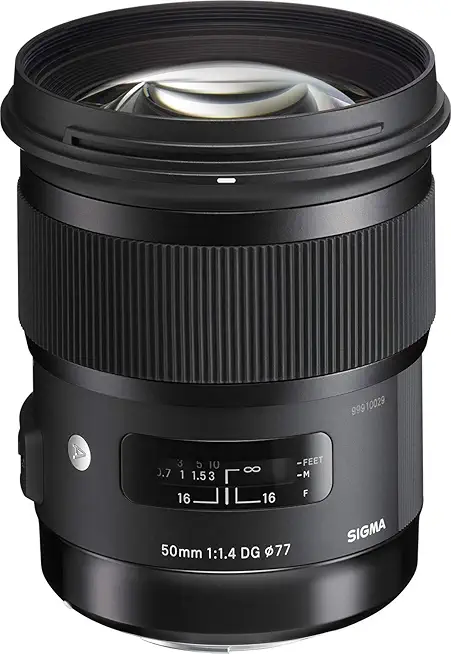
Sigma 50mm F1.4 Art DG HSM for Nikon
Classic standard prime with very fast aperture for dreamy background separation, sharp center detail and excellent low-light versatility.
Check PriceThe Sigma Art 50mm f/1.4 is a highly versatile prime that many baby photographers reach for. It pairs excellent sharpness with strong low-light capabilities thanks to its wide f/1.4 aperture. The balanced focal length gives tight portraits without distortion and renders images that feel natural and immediate.
Wide aperture performance gives you real depth-of-field control. You can isolate a tiny face or eyelash with smooth, creamy bokeh that softly separates the baby from the background. That bokeh and low-light ability make it ideal for late-night feeds, window-lit naps, or dim studio setups.
Image quality is a standout: expect sharp, crisp photos with pleasing, natural color rendition. The lens is valued in user communities for its “nifty fifty” qualities—solid DOF control, robustness, and reliable rendering of skin tones. Those traits make it equally useful for newborn posed shots and candid toddler moments.
Ergonomically it feels like a real working tool rather than a toy. It’s robust enough for frequent use and travel between homes and mini-studios. Because the focal length mimics the human-eye perspective, you get classic, lifelike baby portraits that include a bit of the environment without distraction.
The main trade-offs are predictable: it’s a fixed focal length, so you’ll step forward or back rather than zoom. It’s also slightly heavier than budget 50mm options. For most photographers who prioritize sharpness, creamy bokeh, and low-light performance, this Sigma is a very good, practical choice.
- Versatile focal length
- Sharp and crisp images
- Excellent low-light performance
- Smooth, creamy bokeh
- Fixed focal length; no zoom
- Slightly heavier than budget 50mm lenses
Choosing Lens Types for Baby Photography
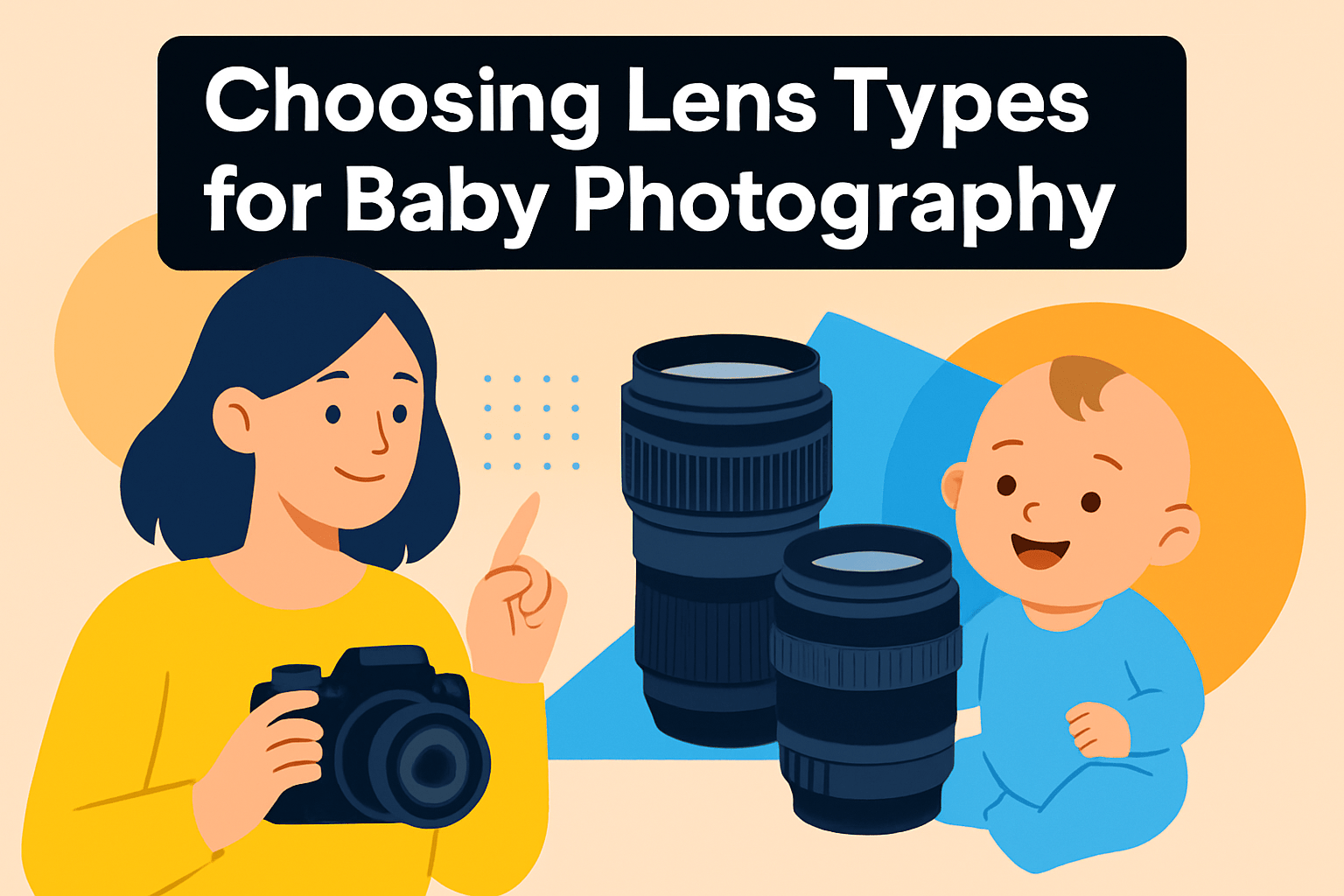
Lenses shape the mood and story of baby photos. They control how intimate or spacious each frame feels. Decide the look before you pick the glass.
Use 24–35mm for environmental and lifestyle images in small homes. It shows baby in context with family and props. Avoid shooting too close under 35mm — faces will stretch.
A 50mm prime is the most versatile tool for portraits and everyday shots. It gives a natural perspective and works well near windows and bedside lighting. Fast 50s rescue you in low light and make skin look gentle.
Reach for 85–100mm when you want flattering compression and creamy bokeh. The longer lens lets you stay back and not disturb a sleeping baby. Use 85mm for tight headshots and 100mm for slightly more compression.
Macro lenses (90–105mm) are perfect for eyelashes, toes and tiny wrinkles. They offer life‑size detail and incredible sharpness. Remember they’re specialized — plan to switch to a wider lens for full portraits.
Zooms like 24–70mm or 70–200mm buy you speed and flexibility during unpredictable sessions. You can move from wide to tight without missing moments. The downside is added weight and sometimes smaller maximum apertures, which can force higher ISO in dim rooms.
If you must pick one lens, choose by space: 35mm for tight rooms, 50mm for general work, 85mm for portrait‑focused sessions. If you can carry two, add a macro or an 85/100mm to cover details and flattering headshots. Renting a lens for a session is the best test before you buy.
Think about working distance, aperture and the baby’s temperament more than focal numbers. Fast primes give creative blur and low‑light freedom, but stop down when more depth is needed. Try lenses in real sessions and let your style guide the choice.
Lighting and Lens Choices for Babies
Lighting should be the first thing you consider when picking a lens for baby work. It determines exposure, depth of field and the mood of the image.
In dim homes and sleepy newborn sessions I lean on fast primes — f/1.4 to f/1.8 — like a 35mm or 50mm for lifestyle frames and an 85mm for portraits. They let me keep ISO low, preserve skin tones and create that creamy bokeh everyone loves.
Wide apertures give beautiful separation but razor-thin focus, so when you need both eyes or two people sharp I stop down to f/2–f/2.8. Also use a shutter fast enough to freeze small movements — aim for around 1/125s or faster for wriggly babies.
With bright window light or outdoors you can ease off the aperture; a 50mm f/1.8 or 24–70mm f/2.8 gives flexibility and more depth when you want it. Zooms are especially handy for changing composition without disturbing the baby.
Mixed lighting and backlit situations benefit from lenses with good coatings and minimal chromatic aberration so colors stay true and flares are controlled. Use rim light creatively and add a reflector or gentle fill to keep little faces readable.
For detail work bring a 90–105mm macro — the Canon EF 100mm f/2.8L IS or Nikkor 105mm are perfect for lashes, toes and tiny textures. Image stabilization helps when you’re handheld and chasing a fleeting curl or yawn.
For most sessions I carry a fast 35 or 50 and an 85–100 or macro, swapping in a 24–70 f/2.8 when speed is important. Balance optical quality with handling: lighter glass keeps sessions calm and gives you the freedom to capture honest moments.
What People Ask Most
What lens is best for newborn photography?
There is no single best lens; the right choice depends on the style you want to achieve. Wide primes, standard primes, medium telephoto primes, and macro lenses are all commonly used for different looks and details.
What focal length is best for baby portraits?
Standard primes around 50mm or medium telephoto lenses near 85mm are commonly preferred because they provide a natural, flattering perspective. Wider focal lengths are useful for environmental shots while macros serve close-up detail work.
Is a 50mm or 85mm lens better for baby photography?
It depends on the shooting situation and aesthetic: a 50mm is versatile and mimics a natural perspective, while an 85mm offers more compression and subject isolation. Choose based on available space and the distance you want from the baby.
Should I use a prime or zoom lens for baby photography?
Primes are often chosen for their optical quality and wide apertures, which help in low light and for creamy background blur. Zooms are valuable for flexibility and quicker framing changes during active or documentary-style sessions.
What aperture is best for baby photography?
Wide apertures on fast primes are popular for low-light situations and achieving soft backgrounds, while moderate apertures are useful when you want more depth of field. Balance aperture choice with the available light and the amount of background detail you want in the frame.
Which lens is best for indoor baby photos in low light?
Fast prime lenses with wide apertures are generally best in dim indoor conditions because they let in more light and produce cleaner images. They also help create a pleasing separation between the baby and the background.
What lenses do professional baby photographers use?
Professionals typically use a mix of standard primes, medium telephoto primes, and macro lenses to cover portraits and tiny details. They often favor fast optics for low light and lenses that render pleasing background blur.
Conclusion for Best Lenses for Baby Photography
Choosing the right lens for baby photography comes down to matching your creative intent and the shooting environment, and this article aimed to make that decision clearer by outlining the strengths and trade-offs of different lens types and uses.
Whether you prioritize dreamy background separation, intimate detail work, or the flexibility to move quickly between wide and tight shots, understanding those general categories helps you pick tools that support your vision rather than limit it.
Take the guidance here as a starting point: experiment with focal lengths, apertures, and working distances to develop a style that feels natural and confident for both studio and home sessions.
If you want to continue improving your baby photography skills, browse more articles on the site for practical tips, inspiration, and deeper dives into technique.
Have a question or want to share a shoot story? Leave a comment below and we usually reply within a few hours.




0 Comments