

What separates a merely capable camera from a truly professional tool for portrait work?
This guide compares five top professional cameras for portraits and explains how each performs in real shooting situations.
Whether you shoot studio headshots, editorial assignments, or on-location weddings, you’ll find practical advice aimed at photographers who demand excellence.
In clear, objective terms we’ll break down each camera’s strengths and weaknesses so you can see where trade-offs matter.
We’ll also cover lens and sensor considerations that shape subject isolation, bokeh quality, and framing choices.
A concise FAQ addresses common portrait photography concerns to help you make a confident purchase.
Expect comparisons focused on image quality, autofocus reliability, stabilization, ergonomics, and how file sizes affect your editing workflow.
We’ll highlight how different sensor sizes influence depth of field and tonal rendering without bogging you down in technical jargon.
The aim is to help you pick a camera that fits your shooting style, print ambitions, and post-production habits.
By the end of this guide you’ll have a clear sense of which bodies deliver the look and performance you need.
You’ll also know which compromises are reasonable and which will cost you time or image quality.
Think of this as a focused starting point—then try your favorites with your own lenses to make the final call.
1. Canon EOS R5 Mark II For Portraits

Canon EOS R5 Mark II Body
Professional mirrorless imaging with lightning-fast autofocus, exceptional dynamic range, and cinema-grade 8K video capabilities.
Check PriceThe Canon EOS R5 Mark II is a portrait powerhouse built around a 45MP full-frame sensor that delivers extraordinary detail. Its AI-powered upscaling can push files to 180MP, which is perfect if you shoot for very large prints or need extra cropping room.
Autofocus is a real asset for portrait work. Dual Pixel Intelligent AF with advanced AI-powered features—especially face and eye detection—keeps subjects sharp and expressive. That AF reliability lets you concentrate on posing and connection instead of chasing focus.
Stabilization and video features make this camera versatile for hybrid shooters. With up to 8.5 stops of image stabilization you can confidently shoot handheld at slower shutter speeds. It also records 8K/30p and 4K/120p, so capturing motion or creating cinematic behind-the-scenes clips is straightforward.
The ISO range of 100–51,200 (expandable to 50–102,400) gives you flexibility in studio and low-light situations. The body is built to withstand heavy professional use, so it holds up during back-to-back client days. Do note the practical trade-offs: those massive files and the AI-enhanced outputs are resource-intensive and demand a powerful computer for processing.
If you’re a pro who needs top-tier resolution, rock-solid portrait AF, and pro-level stabilization—this is one of the most capable tools you can buy. If budget or a lightweight workflow is a priority, be prepared for the processing and cost commitments this model entails.
- 45MP sensor with AI upscaling to 180MP
- Advanced face and eye detection Dual Pixel AF
- Up to 8.5 stops of image stabilization
- 8K/30p and 4K/120p video versatility
- Huge files; requires a powerful computer
- Expensive; significant investment
2. Sony A7R V High-Resolution Portraits

Sony Alpha 7R V
Ultra-high-resolution full-frame sensor delivering stunning detail, advanced autofocus, and superior image stabilization for demanding photographers.
Check PriceThe Sony A7R V is a 61MP full-frame powerhouse built for portrait shooters who need extreme detail and flexibility. Its high resolution delivers incredibly detailed images that hold up for large prints and heavy cropping without losing fine texture or skin tone nuance.
Autofocus on the A7R V is fast and accurate with advanced subject tracking, so you can trust it to keep eyes locked even when your subject moves. Combined with in-body image stabilization, it makes handheld portrait work more reliable in mixed lighting.
Video capabilities are strong as well, offering high-quality video for hybrid shooters who want both stills and motion from one body. The native ISO range of 100–32,000 (expandable to 50–102,400) gives you headroom in low light while retaining excellent dynamic range for skin tones.
Be aware that 61MP files are large, which impacts storage and processing time in your workflow. If you shoot many frames per session or tether for quick delivery, plan for faster cards, more storage, and a powerful editing machine.
For portrait photographers who prioritize detail, tracking, and a compact full-frame body, the A7R V is a compelling choice. It pairs studio-grade resolution with practical features for on-location work, though it does demand a robust workflow to handle its files and a little patience with menus when you’re learning the system.
- 61MP full-frame — ultra-detailed images
- Fast, accurate AF with advanced tracking
- In-body image stabilization for handheld work
- Compact design — surprisingly portable
- Very large file sizes to manage
- Complex menu system for beginners
3. Nikon Z8 Versatile Portrait Power

Nikon Z 8
Compact professional powerhouse offering fast continuous shooting, pro-grade autofocus, and versatile 8K video performance for hybrid shooters.
Check PriceThe Nikon Z8 is a compelling choice for portrait photographers who want high resolution without the bulk. Its 45.7MP full-frame sensor delivers detailed files with excellent tonal range and low noise, so prints and tight crops look clean and professional.
Autofocus on the Z8 is responsive and built for portrait work — it offers face, eye, and even animal detection. That means you can trust the camera to hold sharp focus on subjects’ eyes during candid sessions, child shoots, or pet portraits.
Base ISO performance is strong, with a native range of 64–25,600 and expandable options up to 32–102,400. In practice this gives you flexibility in low light while keeping noise in check at everyday shooting ISOs.
There’s in-body image stabilization to help with handheld shooting, but stabilization performance is average compared with some rivals. On the positive side, the Z8 is smaller and lighter than many competitors, making it much easier to carry for on-location portrait work.
Video capabilities are excellent if you like to mix stills and motion, though be aware of noted overheating during long recording sessions. If you plan extended video capture, manage clip length and breaks, or use external recorders to mitigate heat buildup.
Overall, the Z8 is a versatile portrait powerhouse: sharp images, reliable AF, and a portable body. It’s an excellent match for portrait shooters who prioritize image quality and autofocus, and who don’t need uninterrupted long-form video recording.
- 45.7MP full-frame resolution
- Responsive face/eye/animal AF
- Great image quality with low noise
- Smaller, lighter body — very portable
- Video overheating on long shoots
- Stabilization average compared to top competitors
4. Canon EOS R6 Mark II Portrait Value
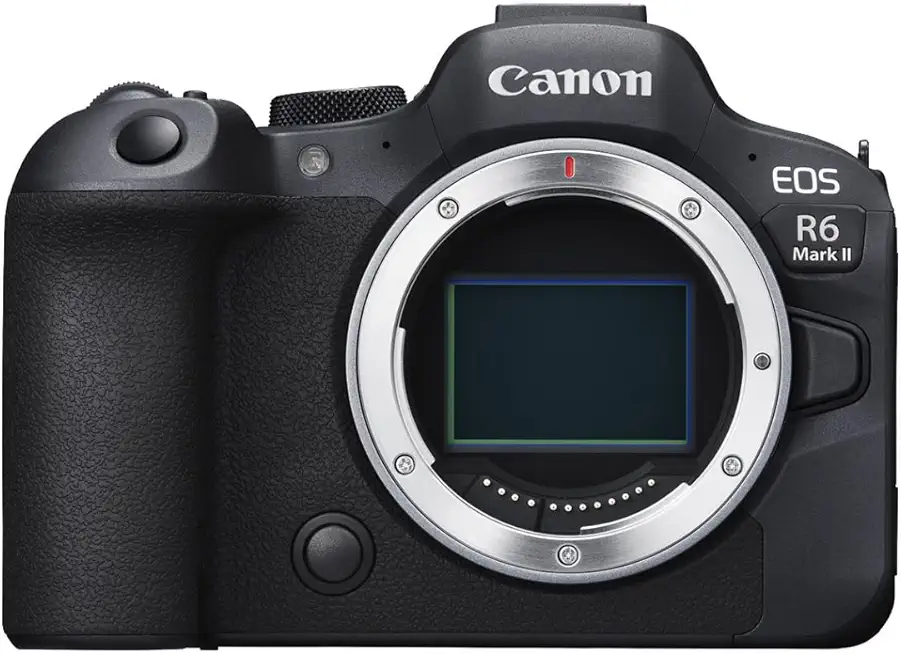
Canon EOS R6 Mark II Body
Speed-focused full-frame camera with blazing continuous shooting, reliable low-light autofocus, and stabilized handheld video excellence.
Check PriceThe Canon EOS R6 Mark II is a portrait workhorse that balances speed, low-light performance, and portability. Its 24.2MP full-frame sensor delivers rich tones and excellent dynamic range for skin tones, while Dual Pixel AF with advanced subject tracking locks onto eyes and faces quickly and reliably—great for headshots and working with subjects who shift slightly during a session.
In real-world shooting the in-body stabilization—rated up to 8 stops—lets you handhold longer lenses and shoot at slower shutter speeds without motion blur, which is a huge advantage for location and lifestyle portraits. The camera’s ISO range of 100–102,400 (expandable to 50–204,800) means it handles low-light scenarios cleanly, so you won’t be battling noise at typical portrait lighting levels.
Video-capable shooters will appreciate 4K/60p and Full HD 120p options for client reels or behind-the-scenes clips, but the R6 Mark II’s core appeal for portrait pros is its autofocus and usability. It’s compact and lightweight, so you can move between studios, events, and on-location shoots without fatigue.
Where it isn’t ideal is if your primary need is extremely large prints or ultra-high-resolution cropping; the 24.2MP sensor is more than sufficient for most editorial and client work but lags behind higher-megapixel bodies for very large-format prints. Still, for photographers who prioritize speed, reliability, and low-light shooting in a portable package, the R6 Mark II is an excellent, more affordable professional option.
- 24.2MP Full-Frame Sensor
- Dual Pixel AF with advanced subject tracking
- Up to 8 stops of image stabilization
- ISO 100–102,400 (expandable to 50–204,800)
- Lower resolution for very large prints
- Fewer advanced features than higher-end models
5. Sony A7 IV Hybrid Portrait Performer
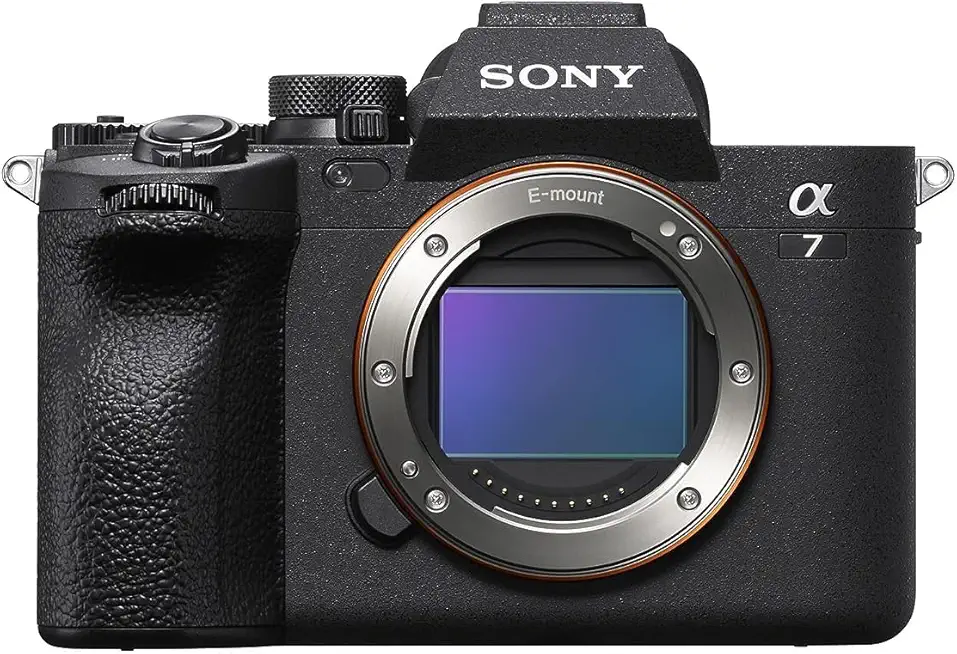
Sony Alpha 7 IV
Versatile hybrid shooter combining superb image quality, advanced autofocus, and cinematic 4K video for creators and enthusiasts.
Check PriceThe Sony A7 IV Hybrid Portrait Performer is a practical workhorse for portrait shooters who need a balance of resolution, speed, and video capability. Its 33MP Full-Frame sensor delivers sharp, detailed images without the extreme file sizes of 50–60MP bodies, which makes it easier to move through a busy shoot and keep a responsive workflow.
Autofocus on the A7 IV is fast and reliable with excellent subject tracking, so you can trust it to hold focus on eyes and faces during live shoots or when working with moving subjects. The in-body image stabilization helps keep portraits tack-sharp at slower shutter speeds and makes handheld sessions more forgiving.
Video capability is a genuine bonus for hybrid shooters — 4K/60p lets you capture high-quality behind-the-scenes clips or client deliverables without needing a separate cinema camera. The ISO range of 100–51,200 (expandable to 50–204,800) gives you latitude in mixed lighting, although I tend to stay in the base range for the cleanest skin tones.
If you value a compact, lightweight package that still covers professional needs, the A7 IV fits nicely into that slot and is generally more affordable compared to higher-end models. The trade-offs are clear: it’s not intended for ultra-large fine art prints where something like a 61MP sensor would reign, and some shooters report handling issues with ergonomics during long sessions.
- 33MP Full-Frame Sensor — balanced resolution
- Fast, reliable AF with excellent subject tracking
- In-body image stabilization for handheld portraits
- 4K/60p video — strong hybrid capability
- Not ideal for very large prints (lower resolution)
- Handling/ergonomics can feel uncomfortable
Best Lenses For Portraits

When I think portrait lenses, the 85mm prime comes to mind first — it flatters faces, compresses features nicely and gives that classic headshot look without distortion. For tightly framed portraits and creamy separation from the background, an 85mm at f/1.2–f/1.8 is hard to beat.
That said, a 50mm is the workhorse for many shoots. It’s versatile for half-body portraits and environmental shots when you want subject context, and it’s usually lighter and less intimidating for clients.
If you want to include more of the scene, a 35mm is your friend; think editorial portraits and lifestyle sessions where surroundings matter. On the opposite end, a 135mm or longer gives you dreamy bokeh and strong background compression while allowing you to keep distance from your subject.
Prime lenses generally deliver better sharpness and wider apertures compared with zooms, but don’t dismiss high-quality zooms like a 24–70mm f/2.8. That zoom gives compositional flexibility during fast-paced shoots — weddings, editorial jobs or when you need to switch quickly between headshots and full-body frames.
Pay attention to aperture and autofocus trade-offs. f/1.2 lenses produce gorgeous bokeh but are heavier, pricier and sometimes slower to autofocus than f/1.8 or f/2 options; for kids or events, faster AF can save the shot. Also remember that high-resolution bodies demand optically superb glass to resolve detail, so pair sharp lenses with your 45–61MP cameras if you plan large prints.
Finally, match lenses to your sensor and shooting style: on crop bodies an 85mm acts longer, which can be useful or restrictive in tight spaces. If you can, rent a couple of primes and a reliable zoom and see which combination feels right — your comfort with the lens often shows up in the images more than any spec sheet.
Sensor Size Considerations
Sensor size is one of those technical choices that quietly shapes the look of your portraits more than most people realize. As a working portrait photographer I’ve found that it affects not just image quality but how you compose, the lenses you choose, and how close you need to stand to your subject.
Full‑frame sensors give you a wider field of view, better noise performance, and more control over depth of field. That combination makes it easier to isolate a subject with creamy background separation and to maintain high image quality in low light—two things portrait shooters care about most.
Crop sensors, whether APS‑C or Micro Four Thirds, effectively lengthen your lenses. An 85mm on APS‑C behaves more like a 135mm, which can be great for tighter headshots or when you’re shooting from a distance, but that extra “reach” also eats into working space and can make awkward compositions in tight rooms. They’re practical and often lighter and less expensive, but getting the same shallow depth of field as full‑frame takes faster glass or different framing.
Larger sensors naturally produce a narrower depth of field at the same aperture and framing, so achieving that signature creamy bokeh is simpler on full‑frame and even more so on medium format. If you must use a crop body, pick fast primes and mind your distance to subject and background to maximize separation.
Medium format delivers unmatched resolution and tonal gradation—ideal for big prints and high‑end editorial work—but it comes with trade‑offs: cost, specialized lenses, and heavier files that slow your workflow. It’s a studio or commercial choice more often than a run‑and‑gun solution.
My practical rule: pick the sensor to match your work. Choose full‑frame for flexible, classic portrait results; opt for crop if you need reach, mobility, or a tighter budget; and consider medium format only if your clients demand ultra‑high resolution and you can handle the workflow. Always test your preferred lenses on the body you plan to use—the marriage of lens and sensor is what really makes portraits sing.
What People Ask Most
What is the best camera for portrait photography?
There is no single best camera for portraits; the right choice depends on your priorities like image quality, autofocus performance, and available lenses. Choose a system that fits your workflow, budget, and shooting style, and try gear in person when possible.
Is a full-frame camera better for portraits?
Full-frame bodies often make it easier to achieve shallow depth of field and generally perform well in low light, which many portrait photographers prefer. That said, crop-sensor cameras can still deliver excellent portrait results and may be more compact or affordable.
Mirrorless vs DSLR: which is better for portrait photography?
Mirrorless cameras tend to offer advanced autofocus and modern features that benefit portrait work, while DSLRs remain reliable with mature lens options. The best choice depends on lens availability, ergonomics, and which system feels most comfortable to you.
How many megapixels do I need for professional portrait photography?
Required resolution depends on output and how much you plan to crop; higher resolution helps with very large prints or heavy cropping but increases file handling. Balance image detail needs with storage and processing workflow when deciding.
What camera features are most important for portrait photographers?
Key features include accurate autofocus with eye or face detection, strong image quality, and access to high-quality portrait lenses. Ergonomics, stabilization, and reliable performance in your typical shooting conditions are also important.
Which camera brands do professional portrait photographers use?
Professionals use a range of brands based on lens ecosystems, support, and personal preference. Look for a brand that offers the lenses and service network you need rather than focusing on a single name.
What camera settings are best for portrait photography?
Settings vary with style and light, but using a wide aperture helps separate the subject from the background and a shutter speed that keeps the subject sharp is important. Adjust sensitivity to maintain a clean exposure while preserving the desired depth of field.
Conclusion For Professional Portrait Cameras
Choosing the right portrait camera comes down to balancing image quality, reliable autofocus, effective stabilization, the lenses you’ll use, and the sensor size that matches your creative goals.
Think about the prints you plan to make, how much data you can handle in your workflow, and whether your shooting style favors speed, resolution, or portability before committing to a body.
Higher resolution and advanced features are valuable, but real-world comfort, lens compatibility, and testing gear in your typical shooting conditions often matter more than specs on paper.
If you want to sharpen your portrait skills and make better gear choices, explore more of the guides and tips on this site to build confidence and technique over time.
Have a question or want help picking a setup—leave a comment below and we usually reply within a few hours.


0 Comments