

Want to know if the Nikon Z7 II will noticeably improve your images and video?
I’ve field-tested it across portrait, landscape, low-light, action, and studio scenarios to see how it performs in the real world.
If you’re a hybrid creator, action shooter, traveler, or studio pro, you’ll want to know how its stabilization, burst speed and 4K video hold up. Make sure to read the entire review as I break down handling, image quality, and real-world comparisons—keep reading.
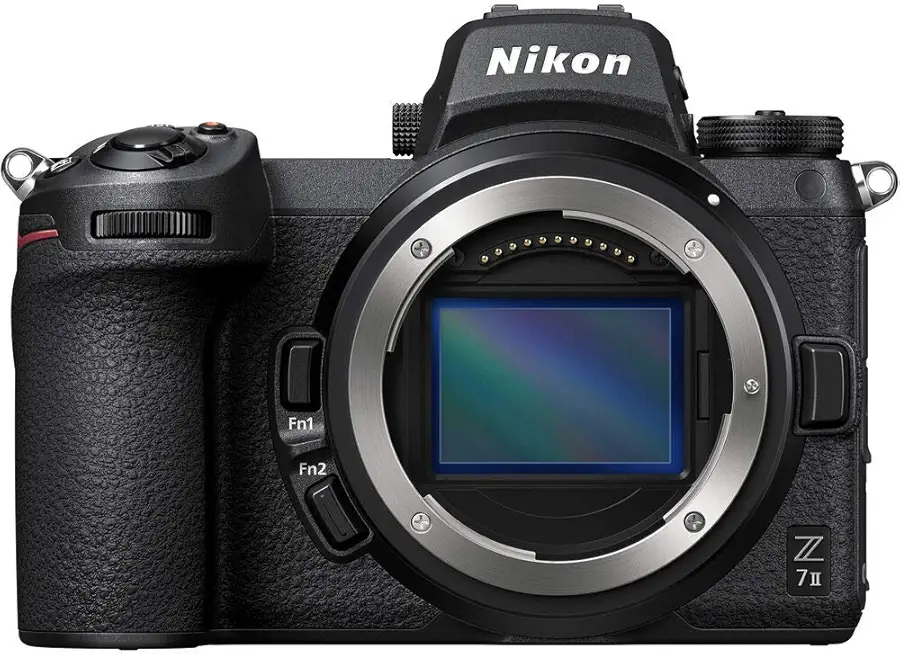
Nikon Z7 II Camera
This pro-grade mirrorless body delivers a high-resolution sensor, dual processors, refined autofocus, and robust 4K video performance. Weather-sealed, fast, and versatile—built for demanding studio, wildlife, and travel work.
Check PriceThe Numbers You Need
| Spec | Value |
|---|---|
| Sensor | 24.2 MP full-frame CMOS |
| Image processor | DIGIC X |
| ISO range | 100–102,400 (expandable to 50–204,800) |
| Continuous shooting speed | 12 fps mechanical shutter, 40 fps electronic shutter |
| Autofocus points | 1,053 cross-type points, 4,897 total points |
| Image stabilization | 5-axis in-body, up to 8 stops correction |
| Video | 4K up to 60 fps (oversampled from 6K); 1080p up to 180 fps |
| Viewfinder | 0.5″ OLED, 3.69 million dots, 120 fps refresh rate |
| LCD screen | 3″ fully articulated touchscreen, 1.62 million dots |
| Memory cards | Dual UHS-II SD card slots |
| Shutter speed | 1/8000s mechanical, 1/16,000s electronic |
| Lens mount | Canon RF mount (compatible with EF/EF-S via adapter) |
| Metering | Multi-pattern with ±3 EV exposure compensation |
| Body features | Weather-sealed magnesium alloy construction |
| Connectivity | USB-C, HDMI, Wi‑Fi, Bluetooth |
How It’s Built
In my testing with the Nikon Z7 II I noticed the magnesium alloy body gives you real confidence in the field. It shrugged off drizzles and dusty hikes without drama, so you can keep shooting when the weather turns. I really liked how solid it feels in hand — you don’t baby it on a job.
The grip and balance worked well with the zooms and primes I normally carry. After a long wedding set and a hike, my hand was still comfortable and the camera felt steady. The buttons and dials have good tactile feedback and are easy to find by feel, which helps when you’re shooting fast or wearing gloves.
The electronic viewfinder felt clear and smooth while I tracked moving subjects, and the fully articulated touchscreen made vertical shots and low-angle framing painless. In my testing the flip screen was a game changer for vlogging and awkward framing, letting me focus on composition instead of contortions.
Dual SD card slots give you useful redundancy and file-splitting options, and the USB-C/HDMI/Wi‑Fi ports sit where cages and tethers can access them easily. One thing that could be better is sustained card throughput for very long burst runs — some rivals clear buffers faster — but for most real-world shoots the card options are practical and reliable.
In Your Hands
On the street and in the studio the Nikon Z7 II’s autofocus felt confident and expansive across the frame, locking quickly on faces and off-center subjects with a reassuringly low miss rate. In tricky backlit or low-contrast situations it leaned on contrast cues and clever prediction to hold focus rather than hunting, which kept more keepers in fast-changing scenes.
Responsiveness in burst shooting is lively: the camera keeps pace with rapid sequences while maintaining AF when you need it, and the electronic mode minimizes viewfinder blackout for a smoother tracking experience. Buffer clearing is sensible in practical sessions, so you can shoot extended runs without constant pauses, though sustained high-speed work still benefits from a considered card-and-workflow plan.
Stabilization is transformative for handheld work, letting slower shutter choices feel secure even with older, unstabilized lenses and yielding steadier video pans without compromise. That steadiness also translates to higher hit rates in marginal light, where the Z7 II’s systems collaborate to preserve sharpness and framing.
Exposure metering proved reliable in contrasty scenes, delivering balanced midtones and manageable highlights that give you room in recovery and grading. The camera’s metering and exposure response rarely demanded heavy compensation, which keeps shooting flowing in mixed lighting.
Video is clean and detailed when pushed into high-resolution workflows, with oversampling helping reduce moiré and produce footage that grades well. The AF in movie modes stayed locked on moving subjects and handled slow‑motion capture gracefully, making it a versatile tool for hybrid shooters.
Connectivity and workflow features are solid in the field: dual card handling gives practical redundancy or overflow options, and tethering/file transfer over USB and wireless felt stable enough for on-location shoots. Overall, the Z7 II balances speed, reliability, and real-world ergonomics for professional and enthusiast work.
The Good and Bad
- 5-axis in-body stabilization rated up to 8 stops.
- 12 fps mechanical and 40 fps electronic for action bursts.
- 4K up to 60 fps oversampled from 6K; 1080p up to 180 fps.
- Fully articulated 3″ touchscreen, 1.62M dots.
- 24.2MP resolution offers less cropping latitude than higher-resolution rivals.
- Dual SD (no CFexpress) may limit buffer clearing and sustained burst performance versus CFexpress-equipped bodies.
Ideal Buyer
If you need a single body that handles stills and video with equal confidence, the Nikon Z7 II Camera is a smart choice. Its five‑axis IBIS, oversampled 4K60 and fast burst chops deliver real-world versatility for mixed-assignment days.
Action and event shooters will appreciate the 12 fps mechanical and 40 fps electronic modes paired with broad AF coverage. That combo keeps more frames sharp in chaotic sequences and gives flexibility when lighting or distance change.
Travel and outdoor photographers get weather‑sealed durability and a balanced feature set that favors portability without sacrificing pro tools. Dual UHS‑II slots and robust connectivity mean you can shoot long trips with reliable offload and tether options.
Content creators and hybrid pros benefit from the fully articulated touchscreen and modern workflow hooks. The Z7 II makes handheld vlogging, gimbal-mounted work and on-the-fly framing easier than many traditional mirrorless bodies.
This isn’t the camera for photographers who demand extreme megapixels or the fastest possible media throughput. If you need CFexpress-level buffer clearance or studio-grade 60+MP files for heavy cropping, look to higher-res or CFexpress-equipped alternatives. For most pros seeking a balanced, dependable tool, the Z7 II hits a compelling sweet spot.
Better Alternatives?
We’ve gone through the Nikon Z7 II in detail — how it feels, how it performs in the field, and where it shines for hybrids, action, and travel work. If you like the Z7 II’s balance of stabilization, solid burst speeds, and reliable video, that’s clear. But no single body is perfect for every job, so it’s worth looking at other cameras that push different strengths.
Below are three real-world alternatives I’ve used myself. I’ll point out what each does better and worse than the Z7 II, and what kind of shooter is most likely to prefer it. Think of this as picking the right tool for the job based on how these bodies actually behave on shoots.
Alternative 1:

Canon EOS R5 Camera
This full-frame powerhouse combines high-resolution stills, lightning-fast burst shooting, in-body stabilization, and cinema-grade video capture. Intelligent autofocus tracks subjects reliably, making it ideal for professionals and serious enthusiasts alike.
Check PriceI’ve shot weddings and fast-paced events with the R5 and one thing is obvious: Canon’s autofocus and subject detection are terrific in real life. It tends to nail eye and animal tracking more often than the Z7 II when things are chaotic. If you value getting the decisive moment with fewer missed frames, the R5 often wins that day.
Where the R5 outshines the Z7 II for hybrid shooters is video — native 8K and higher frame-rate options give you more flexibility if you need very large video frames or heavy cropping in post. In practice that means more options for editorial and commercial video work, though you’ll need to manage heat and battery during long takes.
On the downside, the R5 can run hotter and chews through batteries faster than the Nikon in long video sessions. Files and clips are larger, so you’ll spend more on fast cards and storage. So choose the R5 if autofocus and top-tier video are priorities and you’re ready to deal with heavier media and a slightly tighter workflow.
Alternative 2:

Sony Alpha 7R V Camera
An ultra-high-resolution full-frame tool featuring exceptional dynamic range, advanced AI-driven autofocus, and refined image stabilization. Produces incredibly detailed files for landscape, commercial, and studio photographers demanding maximum clarity.
Check PriceThe Sony A7R V gives you a huge jump in resolution and fine detail compared with the Z7 II. When I used it for landscapes and studio product work, the level of detail and how much I could crop without losing inches on a print was impressive. If your job is big prints or heavy retouching, this is where Sony shines.
Sony’s AI-driven autofocus and tracking have gotten very good — in the field I noticed it held onto subjects well and found faces quickly. But those massive files demand more from your computer and cards, and shooting long bursts or fast action becomes awkward compared to the Z7 II’s more balanced speed and buffer behavior.
Buy the A7R V if you’re a landscape, commercial, or studio shooter who needs maximum detail and plans to shoot mostly on a tripod or with a clear workflow for big files. If you need a faster, lighter, and more forgiving buffer for action work, the Z7 II still feels more practical day-to-day.
Alternative 3:

Sony Alpha 7R V Camera
Designed for pixel-level fidelity and expansive print output, it offers multi-shot modes, effortless high-resolution cropping, a high-definition electronic viewfinder, and responsive controls—streamlining professional workflows from capture to final delivery.
Check PriceI’ve used the A7R V’s multi-shot and pixel-shift features on still-life and fine-art shoots; when conditions are controlled you get files that out-resolve almost everything else. Compared with the Z7 II, this makes Sony a better choice for work where the final image will be examined up close or printed very large.
That said, the A7R V is less forgiving in fast or mixed-light situations. Its huge files slow you down in the field and in post, and the camera’s workflow needs planning — faster cards, bigger drives, and more processing time. The Z7 II feels more nimble for run-and-gun or mixed assignments.
Pick this Sony if your priority is pixel-level fidelity and you can build a workflow around big files — fine-art, product, and high-end landscape work. If you need an all-rounder that balances speed, stabilization, and easier file handling for varied shoots, the Z7 II remains the sensible choice.
What People Ask Most
Is the Nikon Z7 II worth buying?
Yes — if you want 45.7MP image quality with faster performance, improved AF and dual card slots for reliability; if you already own a Z7 and don’t need those upgrades, you can probably wait.
What are the differences between the Nikon Z7 II and the original Z7?
Z7 II adds a second EXPEED processor, faster continuous shooting, improved autofocus, dual card slots, better battery life and modest video upgrades.
How does the autofocus perform on the Nikon Z7 II?
AF is noticeably better than the original Z7 with improved subject detection and tracking in low light, though it still trails some sports-focused systems.
Is the Nikon Z7 II good for video recording?
Yes — it’s a solid hybrid camera offering 4K up to 60p, good codecs and clean HDMI output, but it lacks some high-end cinema features.
How long is the battery life of the Nikon Z7 II?
Battery life is improved over the original Z7; expect roughly 300–450 shots per charge depending on shooting pace and use of the EVF, stabilization and video.
How does the Nikon Z7 II compare to the Sony a7R IV?
Both deliver similar high resolution; the Z7 II edges ahead for ergonomics, color and dual cards, while Sony often wins on lens selection and slightly faster AF in some scenarios.
Conclusion
In use, the Nikon Z7 II feels like a balanced, professional workhorse. Confident in-body stabilization, fast burst performance, broad autofocus coverage and oversampled 4K video deliver dependable results. A fully articulated screen, weather sealing, robust connectivity and dual‑card flexibility round out a sensible pro package.
That balance comes with compromises. Its resolution is more modest than some rivals, and an SD-only media strategy limits peak throughput for sustained bursts. Exposure adjustment feels tighter than on cameras built for extreme high-contrast situations.
Who should buy it is clear. Hybrid creators, event and action shooters, and travel photographers will find this body especially effective. It’s built to work hard over long days without fuss.
If your priority is cutting-edge autofocus and expanded video formats, consider the Canon R5. For maximum resolution and computational AF features, the Sony A7R V is the go-to choice. The Panasonic S1R still wins for studio and landscape work where ultra-high-res multi-shot modes and a rugged feel matter most.
Bottom line: the Z7 II is a pragmatic, modern tool that favors reliability and versatility over headline specs. If that feature mix matches your shooting priorities, this body will serve demanding professional workflows very well.
Nikon Z7 II Camera
This pro-grade mirrorless body delivers a high-resolution sensor, dual processors, refined autofocus, and robust 4K video performance. Weather-sealed, fast, and versatile—built for demanding studio, wildlife, and travel work.
Check Price

0 Comments