

If you’re tired of guessing what cameras are used for music videos and which kit will actually make your next video look pro, you’re not alone. This article will help you choose gear that delivers sharper shots, cleaner low-light performance, and a faster editing workflow. You’ll get clear trade-offs so you can stop overbuying gear you won’t use.
We’ll compare cinema bodies, full-frame mirrorless, and smart budget options so you can pick what fits your shoot and wallet. You’ll also learn when autofocus or manual focus matters, and when smaller bodies beat big rigs. Surprisingly, compact cameras can sometimes outshine expensive rigs on dynamic, run-and-gun shoots.
This intro is for indie directors, lighting-focused cinematographers, and handheld shooters who need pro looks without wasting time. No deep tech lectures, just practical choices that save time on set and in edit. We’ll also touch on stabilization, codecs, lenses, and post workflows to speed your projects — keep reading because the fix is simpler than you think.
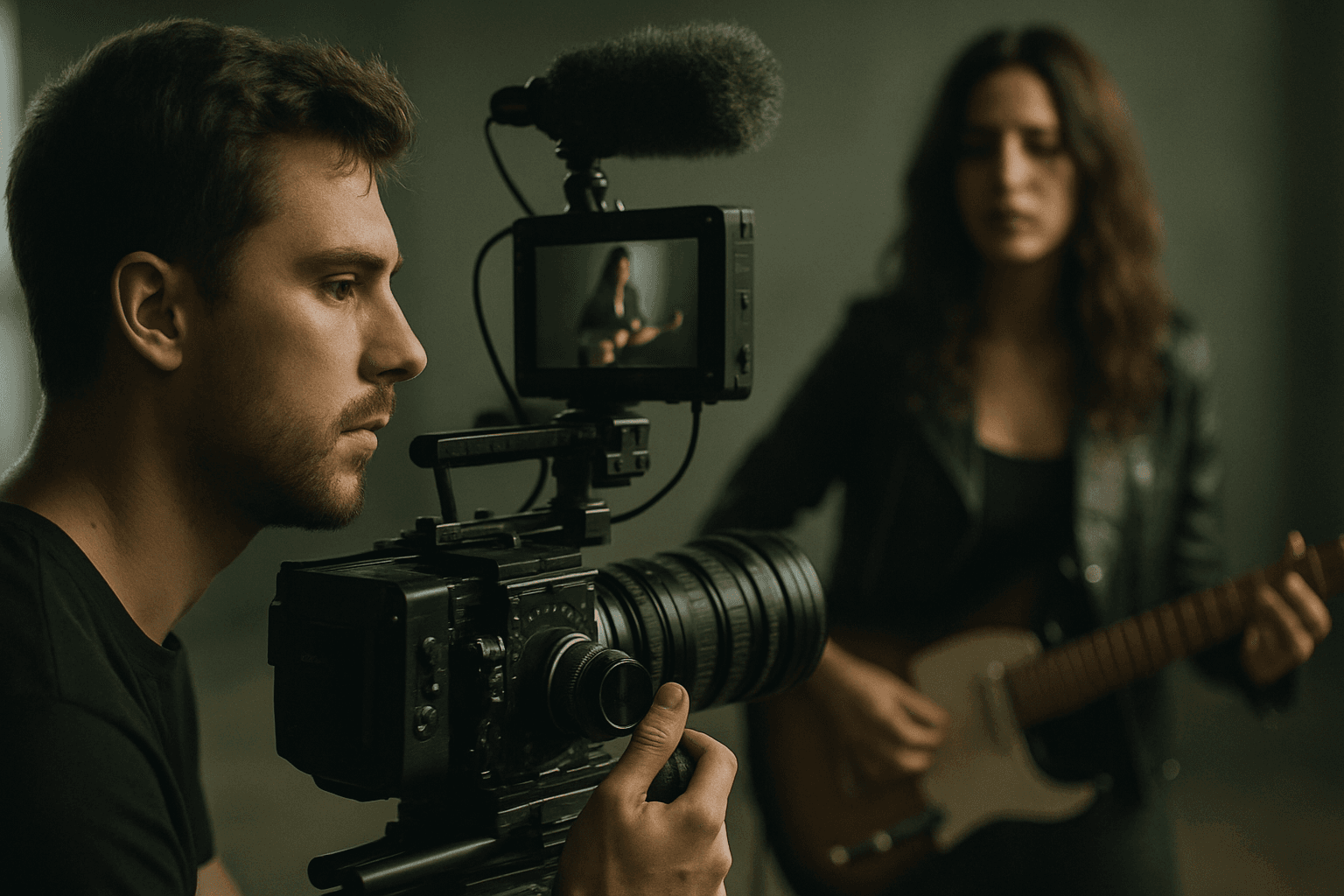
Popular cameras used in music videos
People often ask me what cameras are used for music videos, and the honest answer is: it depends. Your look, budget, and post workflow shape the ideal choice.
I group options into three camps: cinema bodies, full‑frame mirrorless, and budget or specialty tools. Each camp solves different problems on set and in the edit.
As we walk through them, imagine your lighting, movement, and timeline. That clarity makes picking a camera feel less like guessing and more like design.
Cinema cameras (recommended for high-end looks)
I reach for the RED Komodo‑X when action and strobing lights are on the call sheet. Its global shutter tames motion skew, and 6K60 in REDCODE RAW gives deep grading latitude.
For indie budgets, the Pocket Cinema Camera 6K G2 is a workhorse. Blackmagic RAW grades beautifully, and optional motorized ND support keeps exposure consistent as lighting shifts.
Full‑frame mirrorless (balance of size, low‑light, AF)
When I need reliable autofocus and small rigs, the Sony FX3 or A7S III wins. Their S‑Log profiles hold highlights, and face/eye tracking sticks during frenetic performances.
The Panasonic Lumix S5IIX counters with full‑frame 6K Open Gate at 30p and excellent 5‑axis stabilization. Its AF is improved, yet still trails Sony when talent moves unpredictably.
Budget and specialty options
A Panasonic GH5 or entry‑level DSLR/mirrorless can carry a project with solid lighting and careful exposure. You trade some dynamic range, color depth, and codec robustness for price.
For POV or crowd‑surfing energy, a GoPro HERO12 Black is invaluable. Compactness and horizon lock beat cinematic depth when the camera needs to be in the action.
Sensor size and aesthetic impact (Full‑frame vs Super 35)
Full‑frame sensors, like the S5IIX, naturally give shallower depth of field at the same framing. They also collect more light, which helps when locations limit your lighting package.
Super 35 sensors, like the BMPCC 6K G2 and Komodo‑X, deliver that classic cinematic crop. They open doors to affordable cine glass and vintage lenses with character.
If you’re asking what cameras are used for music videos with creamy bokeh, go full‑frame. For sharper falloff, easier lens coverage, and nimble rigs, Super 35 is a sweet spot.
Resolution and frame rates for music videos
4K is the current baseline for crisp delivery and reframing flexibility. Higher resolutions, like 6K on BMPCC 6K G2 or Komodo‑X, future‑proof and enable punch‑ins without softness.
High frame rates shine for slow motion and rhythmic cuts. I shoot 48p, 60p, or 120p for impact moments, conforming to timeline speed for buttery motion.
For performance takes, 23.976p or 25p keeps the motion cinematic. When clients ask what cameras are used for music videos with silky slow‑mo, I show 60p and 120p examples.
Autofocus performance and practical relevance
Reliable AF matters during handheld performances and gimbal work. The FX3 and A7S III track faces through strobes, smoke, and quick turns better than most.
On stylized, carefully lit setups, I switch to manual focus and marks. A focus puller ensures consistency, especially with fast primes and shallow depth of field.
Hybrid shoots benefit from a mix: AF for energetic run‑and‑gun, manual for hero shots. Testing lenses and AF behavior with your lighting is time well spent.
Codec and file‑format considerations (RAW vs ProRes vs compressed)
RAW formats like Blackmagic RAW and REDCODE RAW preserve sensor data, maximizing grading freedom. They cost storage and demand faster cards and machines.
ProRes strikes a balance: great image quality, wide compatibility, and smoother editing. Many mirrorless cameras can output ProRes externally when internal options are limited.
Highly compressed codecs save space but constrain heavy grades and VFX. Choose the heaviest codec your editor can handle without bogging the timeline.
Camera size, portability, and rigging
Compact bodies like the FX3 and BMPCC 6K G2 slip onto gimbals and car rigs quickly. Smaller cameras help when locations are tight or moves are ambitious.
On fast schedules, light rigs preserve energy and keep the day moving. I carry cage plates, top handles, and quick‑release systems for rapid configuration.
Heavier cinema rigs still earn their keep for dynamic range, RAW, and connectivity. Plan crew and support to match the weight and complexity you bring.
Stabilization technologies and on‑set tactics
In‑body stabilization (IBIS) on the S5IIX smooths footsteps and micro‑jitters. It’s ideal for quick setups, walk‑and‑talks, and long lenses in a pinch.
Gimbals provide stronger isolation for running shots and complex moves. I often combine gentle IBIS with a gimbal for organic yet controlled motion.
On the BMPCC 6K G2, motorized ND options keep shutter speed fixed while you move between lighting zones. Stable exposure equals consistent motion blur and easier cuts.
Lens compatibility, mounts, and creative choices
Primes offer sharpness and speed for low light and shallow depth. I start with a 24/35/50 trio to cover most performance and narrative beats.
Zooms win when time is tight or coverage is king. A 24‑70mm f/2.8 lives on my gimbal for quick reframes without rebalancing.
Mount ecosystems affect your access to vintage glass and adapters. Super 35 bodies often adapt classic cinema lenses that add texture and flare character.
Budget vs professional gear: trade‑offs and buying guidance
Budget bodies like the GH5 or consumer mirrorless can look fantastic with skilled lighting. You compromise on dynamic range, AF, and codecs under extreme conditions.
Professional rigs add RAW, monitoring tools, timecode, and sometimes global shutters. Those features protect highlights, reduce rolling artifacts, and simplify post.
Spend where it saves time or rescues shots. If clients ask what cameras are used for music videos at your level, show results that align with their expectations.
Post‑production workflow implications
Your codec choice dictates drive space and edit smoothness. RAW demands fast NVMe storage and proxy workflows, while ProRes often edits natively without drama.
Match formats to your color pipeline. ProRes grades well across platforms, while BRAW and REDCODE integrate deeply with advanced grading and noise reduction tools.
Talk to your editor before rolling. Picking a camera that fits their system often matters more than a marginal spec advantage on paper.
Audio and accessories to consider for music‑video shoots
Even when you’re syncing to a master track, clean reference audio is crucial. It speeds sync and catches timing nuances in live vocals or crowd elements.
On‑set monitoring keeps performances tight. I distribute timecode or a visible slate so every take lines up in post without guesswork.
- External recorder for ProRes or higher bit‑rates
- On‑camera mic for scratch audio
- Boom or lav mics for solid reference tracks
- Timecode boxes for instant sync
Case studies and practical examples
For a dance‑heavy shoot with strobing LEDs, the RED Komodo‑X kept motion clean. Global shutter avoided skew, and 6K60 let us punch in without softness.
On a rooftop sunset session, the FX3 nailed face tracking in changing light. S‑Log held the sky while autofocus kept the vocalist tack‑sharp on a gimbal.
For a gritty narrative, the BMPCC 6K G2 delivered nuanced skin tones in BRAW. We leaned on vintage glass and subtle grain for a timeless, moody finish.
Tips for stabilizing handheld music‑video footage
Pair IBIS with a heavier lens for natural inertia. I brace my elbows to the ribcage and walk heel‑to‑toe to dampen vertical jitters.
On gimbals, balance meticulously and keep grip movements small. Use wider lenses to hide residual shake and maintain a steady horizon.
If a shot still wobbles, add gentle warp stabilization in post. Keep it subtle to avoid warping lines, and trim frames where footsteps hit hardest.
What People Ask Most
What is the best camera for shooting professional music videos?
There isn’t a single best camera — I pick based on desired look, workflow, and budget: cinema cameras like the RED Komodo‑X or BMPCC 6K G2 for maximum image and grading flexibility, and mirrorless bodies like the Sony FX3/A7S III or Panasonic S5IIX when I need low‑light performance, autofocus, or portability.
Which camera brand is preferred by music video directors?
No one brand dominates — RED, Blackmagic, Sony, and Panasonic all get used depending on the director’s aesthetic and the post workflow; I choose the brand that best matches the project’s look and editorial needs.
How important is 4K resolution for music videos?
4K is the industry standard for crisp delivery and future‑proofing, and I use higher resolutions like 6K when I want extra detail for reframing or slow‑motion crops.
Can I shoot music videos with a smartphone camera?
Yes — smartphones are great for quick, low‑budget or social content, but they have smaller sensors and less control over depth of field, codecs, and color grading compared with dedicated cameras.
What camera features matter most for music videos (autofocus, stabilization, codec)?
Autofocus matters for handheld and run‑and‑gun performance shots, stabilization (IBIS or gimbals) matters for movement, and codecs (RAW vs ProRes) matter for how much grading flexibility and storage you need.
How do you choose lenses for music video production?
I usually pick fast primes for low‑light performance and shallow depth of field, and zooms for run‑and‑gun versatility; mount compatibility and access to vintage glass or adapters also shape creative choices.
Are cinema cameras worth the investment for music videos?
Cinema cameras are worth it if you need RAW, high dynamic range, or features like a global shutter for action, but mirrorless systems can deliver excellent results for many music videos at a lower cost and with easier handling.
Wrapping Up: Choosing the Right Camera for Your Music Video
You came in wondering what cameras are used for music videos and which choices actually help you get that cinematic look without breaking the bank. The article mapped the practical differences—sensors, codecs, AF, and stabilization—so you can weigh what matters for your shoot rather than chasing buzzwords. That clarity is the real payoff: knowing which compromise yields the look you want.
Remember one realistic limit: higher-end codecs and large sensors bring grading freedom but add costs in storage, editing time, and workflow complexity, so plan resources accordingly. The advice here will be most useful for indie directors, videographers, and DPs who need scalable choices that suit creative intent and crew size. It’s about matching tool to intent, not piling on features you won’t use.
We opened with a simple pain—too many options, not enough time—and closed by giving concrete lenses for decision-making so you can pick gear with confidence. Try applying these trade-offs on your next shoot and watch how deliberate choices sharpen both process and image. You’ll learn faster by doing, and each shoot will reward smarter camera decisions.





0 Comments