

Can a single camera truly replace both your stills rig and your cinema kit, or is compromise inevitable?
This guide presents five top hybrid cameras for photo and video in 2026, chosen for their balance of image quality and practical usability.
Each pick reflects real-world needs across genres, from fast-paced social content to longer-form narrative work.
Geared toward hybrid shooters—content creators, indie filmmakers, photographers, videographers, and travel vloggers—this roundup speaks to anyone who needs one tool for both stills and motion.
Whether you shoot portraits, social shorts, or long-form video, you need a camera that keeps up and frees your creativity.
We prioritized cameras that accelerate workflow and reduce gear headaches on location.
We evaluated each option across the metrics that matter most to hybrid workflows.
Photo and video quality, autofocus reliability, in-body image stabilization, codecs and recording options, plus ergonomics, were the core focus.
This balance of technical performance and day-to-day usability is what separates a good camera from one you actually enjoy using.
Expect concise, practical takeaways that help you match a camera to your shooting style and output needs.
We avoid jargon-heavy tests and instead look at how these systems perform under real shooting conditions.
Read on to find a hybrid camera that feels like an extension of your creativity, not an obstacle.

Sony Alpha 6700 ILCE-6700K APS-C Mirrorless Camera with E PZ 16-50mm OSS II Lens
1. Panasonic Lumix S5IIX Full Frame
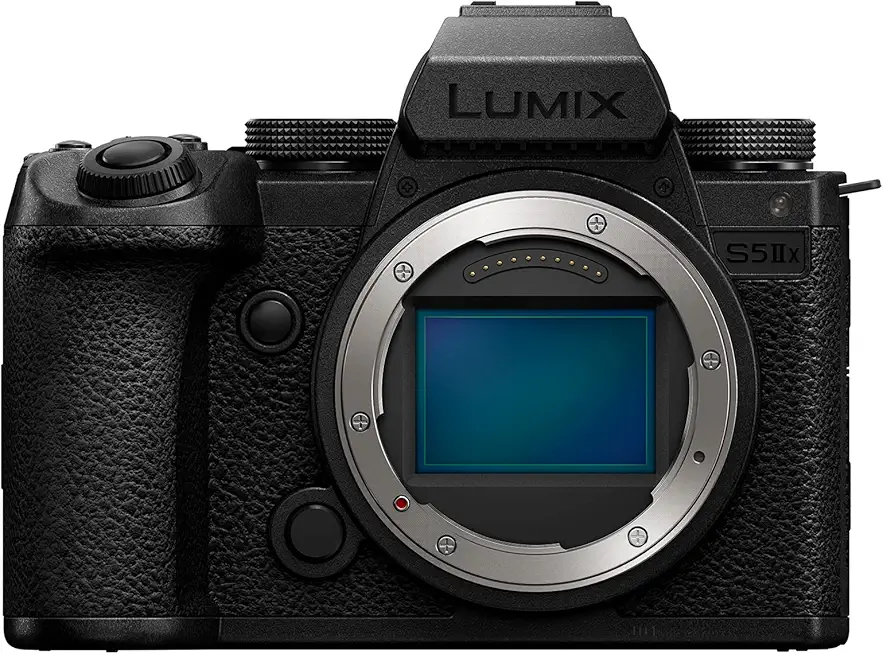
Panasonic LUMIX S5IIX DC-S5M2X Mirrorless Camera
Compact full-frame hybrid for creators, cinematic video, fast autofocus, impressive low-light performance and versatile recording options.
Check PriceThe Panasonic Lumix S5IIX is a compact full‑frame workhorse built for creators who prioritize video without giving up solid stills. It pairs a 24.2MP sensor with 6K capture, letting you pull beautifully detailed frames and benefit from cinematic 6K downsampling for cleaner 4K images.
Video workflows are a standout: internal Apple ProRes and direct‑to‑SSD recording simplify post production and long takes. You also get unlimited 4K/60p recording, which is rare at this price and great for interview runs, event coverage, and extended shoots.
Autofocus is reliable and includes advanced subject tracking that handles people and motion well for movies. That said, the AF can be a touch less snappy for high‑speed stills compared with some rivals, so sports shooters might want to test it against their needs.
Stabilization is strong — the IBIS keeps handheld footage steady and usable straight out of camera, reducing the need for gimbals in many situations. The body is quiet and compact for a full‑frame camera, with a minimalist control layout that keeps the focus on shooting rather than menu diving.
Practical touches include dual SD card slots for backup or overflow and ergonomics that favour run‑and‑gun creators. Battery life is moderate, so bring spares for long days, but overall this camera is ideal for hybrid shooters who want pro‑level video tools without paying flagship prices.
- 6K video + 6K downsampling
- Internal Apple ProRes + direct‑to‑SSD
- Strong IBIS for handheld video
- Compact, quiet body with dual SD slots
- AF less snappy for fast stills
- Moderate battery life
2. Canon EOS R6 Mark II Full Frame
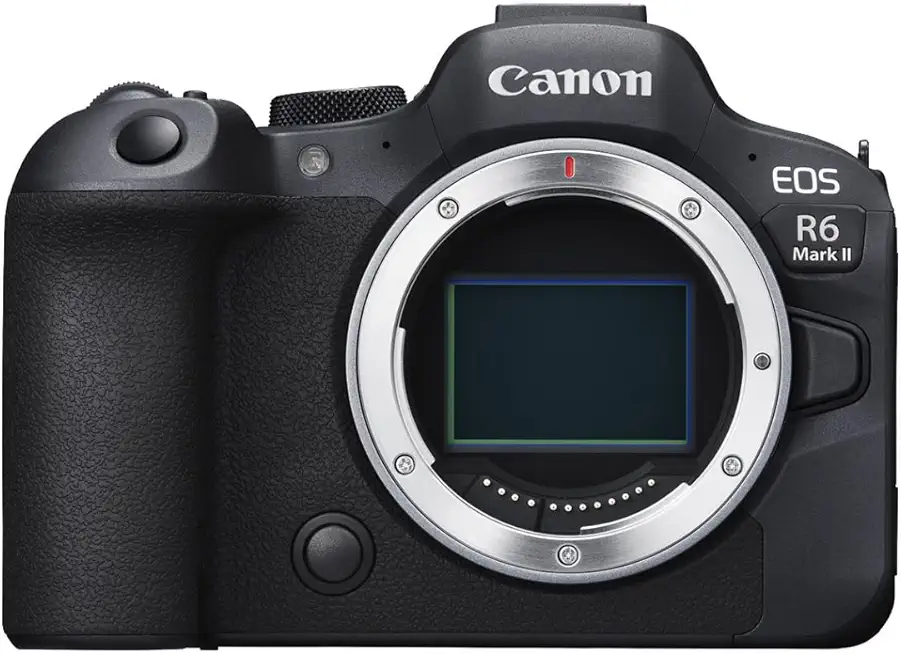
Canon EOS R6 Mark II Body Only Mirrorless Camera
High-speed enthusiast body delivering superb autofocus, in-body stabilization, excellent low-light performance and blazing continuous shooting for sports and wildlife.
Check PriceThe Canon EOS R6 Mark II is a genuinely versatile hybrid that feels like it was designed for run‑and‑gun shooters. It pairs a 24.2MP full‑frame sensor with in‑body image stabilization (IBIS), so you get solid stills and steady handheld video without lugging a ton of gear.
Video is a standout here — the R6 Mark II delivers uncropped 4K at 24/30/60fps downsampled from 6K, and C‑Log3 is available for color grading. That means crisp, film‑friendly footage and latitude for post, which is exactly what hybrid shooters need for client work or high‑quality social content.
Autofocus and low‑light performance are real strengths. Canon’s excellent AF with AI subject detection (people, animals, cars) tracks subjects reliably, and the sensor holds clean image quality to around ISO 12,800 and beyond. For action and fast moments you also get 12 fps mechanical and 40 fps electronic continuous shooting — plenty of speed for events or wildlife.
Ergonomically it’s classic Canon: comfortable handling and familiar controls, though the touchscreen/menu complexity can be a learning curve if you’re coming from a simpler system. A small caveat for video shooters is that some users report rolling shutter during fast pans, so be mindful when doing high‑speed camera moves.
- 24.2MP full‑frame sensor
- Uncropped 4K at 24/30/60fps (downsampled from 6K)
- Excellent AF with AI subject detection (people, animals, cars)
- Strong low‑light performance (clean to ~12,800 and beyond)
- Touchscreen/menu complexity can be a learning curve
- Some users report rolling shutter during fast pans
3. Sony A7 IV Full Frame
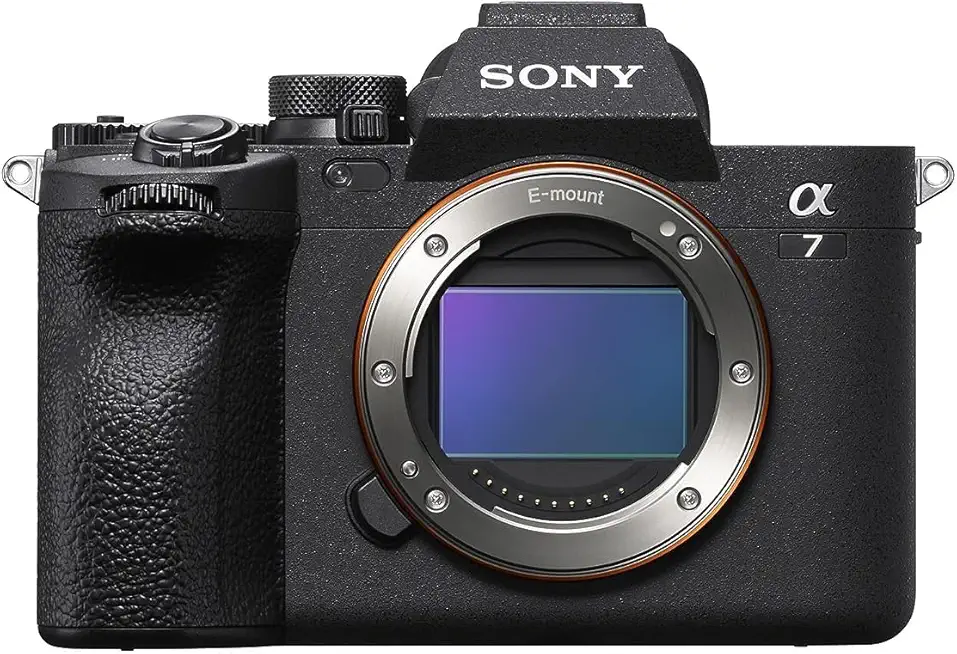
Sony Alpha 7 IV Mirrorless Camera
Versatile full-frame hybrid delivering detailed 4K video, advanced autofocus, rich dynamic range and customizable controls for professional photo and video work.
Check PriceAs a hybrid camera the Sony A7 IV strikes a strong balance between stills and video workflows. It packs a full-frame 33MP sensor, IBIS and 10-bit 4:2:2 internal recording, plus 4K up to 60fps for flexible capture options.
Autofocus is fast and accurate with strong subject tracking, which translates to sharp, high-resolution stills and reliable focus for moving subjects. The camera also enjoys a wide native and third-party lens ecosystem that keeps your creative options open.
Ergonomically it’s compact and well balanced for long shoots, so you can comfortably handhold for extended periods. Some users report a steeper menu learning curve, but once you customise controls the workflow becomes much more efficient.
The 10-bit 4:2:2 internal recording is a real asset for filmmakers, giving you latitude for grading and clean masters straight out of the camera. Do note that some shooters prefer other brands’ color science for skin tones, so you may need to apply extra grading to match certain looks.
In practice, the A7 IV is an excellent fit for enthusiast and professional hybrid shooters who want high‑resolution stills alongside robust video tools. If you value resolution, strong AF tracking, and a versatile lens ecosystem—and don’t mind a bit of color grading and menu setup—this camera will serve you very well.
- 33MP full-frame resolution
- 10-bit 4:2:2 internal recording
- IBIS for handheld stability
- Fast, accurate AF with strong subject tracking
- Color science may need extra grading for skin tones
- Steeper menu learning curve for some users
4. Nikon Z6 III Full Frame

Nikon Z6 III Mirrorless Camera
Balanced full-frame system with speedy processing, excellent low-light sensitivity, robust build, reliable autofocus and flexible connectivity for demanding creators.
Check PriceThe Nikon Z6 III is a full‑frame hybrid built around a 24.5MP stacked sensor and capable of 4K UHD up to 60fps. It also offers practical media flexibility with dual card slots — 1x SD plus 1x CFexpress B — which is handy for long shoots and overflow recording.
Autofocus on the Z6 III is fast and dependable, with reliable eye‑detection that keeps subjects sharp whether you’re photographing or rolling video. Ergonomically it’s comfortable in the hand and feels solid, which matters when you’re shooting long jobs or switching between stills and video frequently.
Image and video output are where this camera shines: the color rendition is rich and natural, and the 4K output is consistently clean. That makes it a real workhorse for hybrid shooters who want minimal fuss in color and a dependable file straight out of camera.
There are tradeoffs to consider. Battery life is described as only adequate, so expect to carry spares for extended days. It’s also not the most compact or lightweight option, so if absolute portability is your priority you might look elsewhere.
All told, the Z6 III suits professionals and serious enthusiasts who prioritize reliable hybrid performance, strong ergonomics, and natural color science. If you value dependable AF, solid build, and robust media options, this camera will serve you well on photo and video assignments.
- 24.5MP stacked sensor
- 4K UHD up to 60fps
- Dual card slots (1x SD + 1x CFexpress B)
- Fast, dependable autofocus with eye‑detection
- Battery life only adequate
- Not as compact/lightweight as some rivals
5. Sony A6700 APS-C
Sony Alpha 6700 ILCE-6700K APS-C Mirrorless Camera with E PZ 16-50mm OSS II Lens
Compact APS-C kit delivering fast autofocus, smooth stabilized zoom, high-resolution stills and cinematic video in a pocketable, travel-friendly package.
Check PriceThe Sony A6700 is a compact, go‑anywhere hybrid built around a 26MP APS‑C sensor that delivers crisp stills without the bulk of a full‑frame body. Its size and weight — roughly 493g — make it ideal for travel and day‑long shoots where every gram counts.
For video, the headline is 4K/120fps. That opens up high‑quality slow‑motion and flexible frame‑rate choices for short films and social clips. The camera’s video chops give you cinematic motion options in a body you can toss in a bag and forget about until you need it.
Autofocus is a standout. Sony pairs an AI autofocus system with strong tracking in challenging light, so subjects stay sharp whether you’re running and gunning or capturing fast action. That reliability removes a lot of the stress from handheld shooting and vlogging scenarios.
Ergonomically, the A6700 leans into portability without sacrificing control. It’s pocketable for creators who prioritize mobility and quick setup. That makes it a favorite for travel vloggers and social creators who need professional features on the move.
There are tradeoffs. The electronic viewfinder’s brightness and resolution trail some competitors, which matters if you frequently compose in bright sunlight or need critical focus through the EVF. Battery life is decent but not exceptional, so plan for spare cells on longer days.
- 26MP APS‑C sensor
- 4K/120fps slow‑motion
- AI autofocus with excellent tracking
- Compact, pocketable (~493g)
- Viewfinder brightness/resolution lower than some rivals
- Battery life decent but not exceptional
How to Evaluate Photo Quality

When you’re judging photo quality, don’t be seduced by megapixel counts or marketing blurbs. I always start with real-world files: shoot a detailed texture (fabric, brick), a skin-tone portrait, and a high-contrast scene. Open images at 100% and look for what matters in your work, not what looks good on a phone-sized preview.
Sharpness and detail rendering tell you how faithfully a camera and lens record texture. Check the center and the corners separately, since lenses often fall off at the edges. Pay attention to microcontrast — that subtle separation between tones — because it makes an image feel “crisp” even if pixel counts are similar.
High-ISO performance is another practical test. Compare RAW files with in-camera JPEGs to see how much denoising is applied and whether fine detail survives. Beware aggressive noise reduction that smooths away skin texture or texture in foliage; sometimes a little grain is preferable to plastic-looking detail.
Color and dynamic range are where a camera either flatters your subject or forces you to correct aggressively. Shoot neutral scenes and portraits to judge skin tones and saturation, then expose a high-contrast scene to see highlight roll-off and shadow recovery. Look for smooth tonal gradation without banding — that’s crucial if you plan to grade heavily.
Finally, scan for artifacts: moiré, chromatic aberration, blocking, and banding can all derail a technically good file. Side-by-side comparisons at output size (print or social-resolution) are the most honest test. If you want hard numbers, metrics like SSIM or VMAF help, but don’t let them replace your eyes — combine objective tests with practical, scene-based checks that mirror how you actually shoot.
How to Evaluate Video Quality
Video quality is more than a spec sheet — it’s how a camera behaves when you’re telling a story. Start by shooting real-world clips: handheld pans, a fast-moving subject, flat gradation skies, and a low-light interior with mixed tungsten and daylight. Those scenarios will expose resolution limits, rolling shutter, and how motion is rendered.
Look closely at resolution and detail at 100% — downsampling from higher-res sensors often yields cleaner 4K, so compare native 4K versus downsampled footage. Watch temporal smoothness: is motion natural or does it judder? Slow motion at higher frame rates helps reveal motion blur and interpolation artifacts.
Compression and codec choices matter as much as sensor size. Record in the highest bitrate and chroma sampling available (10‑bit 4:2:2 or ProRes when possible) to preserve color and grading latitude. Then compare the same scene with a more compressed mode to spot blocking, banding and mosquito noise around high-contrast edges.
Color and dynamic range are where real decisions get made. Shoot a high-contrast scene to see highlight rolloff and shadow detail; test skin tones under mixed light to judge a camera’s color science without relying on LUTs. If the camera offers log or raw, try it — it opens grading options but demands more bitrate and good exposure.
Don’t forget stabilization and autofocus in motion. Test IBIS handheld and observe any crop or micro‑jitter; do subject-tracking AF transitions stay smooth during pans or do they hunt? Rolling shutter and AF lag are subtle in stills but obvious in fast-moving video.
You can use objective metrics like VMAF or SSIM for lab comparisons, but trust your eyes and final delivery format. A quick practical test: shoot a short tripod static, a handheld walk, and a fast pan in both high- and low-bitrate modes — if the camera survives those gracefully, it’ll behave well on your shoots.
What People Ask Most
What is the best all-around hybrid camera for photo and video?
There is no single best option; the ideal choice balances image quality, autofocus, stabilization, recording options, and ergonomics for your workflow. Prioritize the features you use most and test handling before deciding.
Which camera is best for both photography and videography?
Look for a model that offers reliable autofocus, good low‑light performance, and flexible video codecs alongside strong stills capabilities. A camera that matches your lens needs and feels comfortable to use will serve both roles well.
What features should I look for in a hybrid camera for photo and video?
Focus on autofocus performance, stabilization, sensor size and image quality, and the available recording formats and frame rates. Ergonomics, battery life, and lens ecosystem are also important for practical, day‑to‑day use.
Is mirrorless better than DSLR for hybrid photo and video use?
Mirrorless systems often offer advantages for hybrid work such as advanced live view autofocus and more modern video features. DSLRs can still be capable, so the best choice depends on lens availability and your preferred shooting workflow.
Which sensor size is best for hybrid cameras: full-frame, APS-C, or Micro Four Thirds?
Each sensor size has tradeoffs: full‑frame tends to excel in low light and depth‑of‑field control, APS‑C balances image quality and compactness, and Micro Four Thirds favors portability and reach. Choose based on the balance you need between image quality, size, and lens options.
How important is autofocus performance for hybrid photo and video cameras?
Autofocus is crucial for capturing moving subjects and maintaining sharp footage without constant manual adjustment. Strong AF increases keeper rates and reduces the need for complex setups during run‑and‑gun work.
Do I need in-body image stabilization (IBIS) for hybrid photo and video?
IBIS is very helpful for handheld shooting and low‑light stills, and it reduces reliance on external stabilizers for many situations. It may be less critical if you use stabilized lenses or plan to always shoot with a gimbal or tripod, so assess your typical shooting style.
Conclusion for Hybrid Photo and Video
We compared five hybrid cameras for 2026 — the Panasonic Lumix S5IIX, Canon EOS R6 Mark II, Sony A7 IV, Nikon Z6 III, and Sony A6700 — with an eye toward who each best serves and why their photo and video strengths matter.
The real value here is the side‑by‑side look at photo/video quality, autofocus, IBIS, codecs and recording options, and ergonomics so you can see tradeoffs clearly.
Use the evaluation criteria in the article — objective and subjective tests, motion and stills checks, plus AF and stabilization notes — to match a camera’s strengths to your workflow and creative priorities.
If you want to keep improving your skills and stay current with gear and techniques, read more articles on our site for deeper tests, tips, and real‑world workflows.
Have questions or want help choosing the right body for your projects? Leave a comment below and we usually reply within a few hours.




0 Comments