
You’re frustrated when your camera won’t join the hotel network and you just need the live feed. If you’ve searched how to connect camera to hotel wifi, you know hotels block headless devices with web logins. This guide will get you remote viewing, steady streams, and fewer late-night fixes.
Most consumer cameras expect a plain SSID and password; they can’t complete the web login hotels use. You’ll be surprised that a pocket travel router or phone tether often clears the hurdle fast.
Parents using hotel baby monitors, business travelers, and digital nomads sharing one connection will benefit most. Beginners and intermediate users will get hands-on options, quick test routines, and privacy tips.
We’ll show which travel routers handle captive portals, explain hotspot and microSD workarounds, and flag brand quirks you’ll want to test. You won’t need deep networking theory—just clear choices and a short checklist to try on arrival. So keep reading because the fix is simpler than you think.
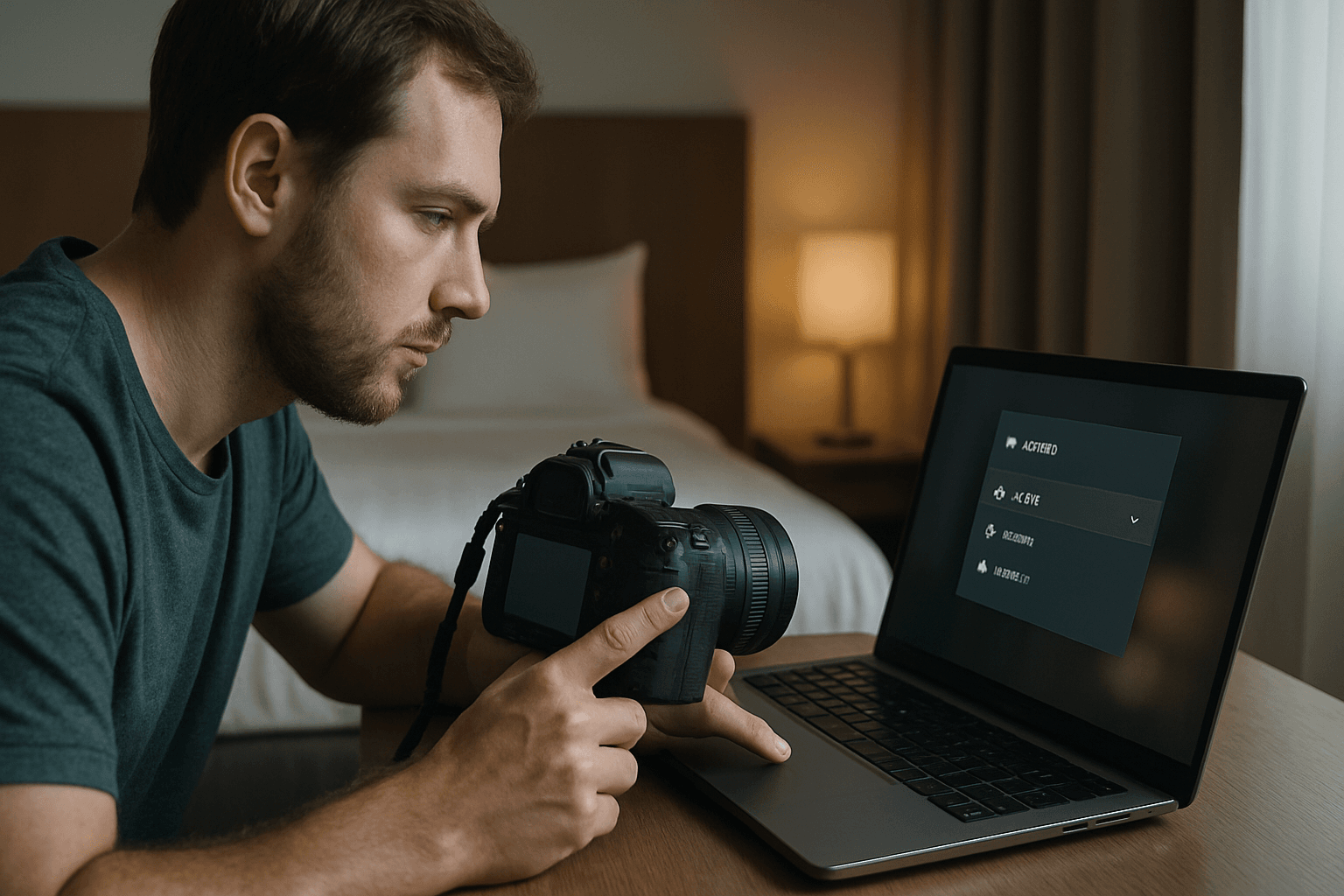
Why Most Cameras Can’t Connect to Hotel WiFi Directly
Most consumer Wi‑Fi cameras expect a simple network: just an SSID and password. Hotels usually add extra steps, so the camera never fully joins the internet. That mismatch is the core problem.
Many cameras are “headless,” meaning they don’t have a browser for pop‑ups or forms. They can’t click “I agree” or enter a room number. Without that, the hotel blocks them at the door.
Even when a hotel network looks open, a hidden captive portal still intercepts traffic. Your phone handles it smoothly, but the camera stalls. It waits for internet that never arrives.
If you’ve wondered how to connect camera to hotel wifi without hair‑pulling, you’re not alone. The trick is providing the camera a normal home‑like network. That’s where travel routers shine.
Understanding Captive Portals and Authentication Barriers
A captive portal is that web page you see after joining hotel Wi‑Fi. It asks you to accept terms, enter a last name, or type a room number. Only then does the internet open up.
Cameras don’t have a built‑in browser to complete those steps. They supply a password, try to reach the cloud, and time out. No successful handshake, no video stream.
Some hotels also rotate session tokens or limit devices by room. Cameras can’t manage those renewals. That’s why “how to connect camera to hotel wifi” often ends in frustration without extra gear.
Travel Router Solutions: How They Work
A travel router sits between the hotel network and your gear. It logs into the hotel once, then rebroadcasts a private Wi‑Fi you control. Your camera sees a normal WPA2/WPA3 network.
Brands like GL.iNet and TP‑Link make compact routers for this exact job. They can clone MAC addresses, handle captive portals, and sidestep device limits. One login powers all your devices.
When a hotel hiccups, you re‑authenticate the router, not the camera. Everything behind it keeps the same SSID and password. It’s the smoothest answer to how to connect camera to hotel wifi.
Travel Router: Step-by-Step Setup Walkthrough
First, power the travel router and connect to its admin Wi‑Fi from your phone or laptop. In the router dashboard, choose the hotel network and enter any password if prompted.
Open the router’s captive portal tab or its built‑in browser tool and complete the hotel login. Once you see internet access, connect your camera to the router’s SSID and re‑pair if the app asks.
Alternative Methods: Mobile Hotspot, Tethering, and microSD Recording
Hotspotting from a phone or tablet can work if your camera supports it. You’ll broadcast your own SSID and connect the camera like at home. Watch your data plan and signal strength.
Some brands, including certain Wyze models, don’t support hotspot setups. Others refuse 5 GHz or hidden SSIDs. When in doubt, check the manual before packing.
As a fallback, use a microSD card for local recording. You’ll still capture motion clips without Wi‑Fi. You just won’t get remote viewing until you’re back on a normal network.
Product-Specific Setup Notes (Wyze, Nanit, Others)
Nanit generally plays well with a travel router. I’ve used a GL‑SFT1200 to create a private network, then re‑paired Nanit to that SSID. Expect one-time reconfiguration when you first arrive.
If you want a deeper walkthrough, this Nanit how‑to guide breaks down step-by-step changes and common hurdles. It’s a handy reference when hotel Wi‑Fi gets quirky.
Wyze has its own gotchas in hotels and hotspots. The community details limitations and workarounds in this Wyze forum thread. Check your exact model’s notes before travel.
For other brands, confirm 2.4 GHz support, WPA2/WPA3 compatibility, and re‑pairing steps. A quick test at home with your travel router saves late‑night troubleshooting on the road.
Troubleshooting Common Connection Failures
When the camera won’t come online, I run a short checklist. Most failures come down to encryption mismatches or a missed captive portal click. A few minutes usually clears it up.
- Verify the router completed the hotel’s captive portal and still has internet.
- Match Wi‑Fi settings: 2.4 GHz, WPA2/WPA3, and an uncomplicated SSID.
- Re‑pair the camera after any SSID or password change on your router.
- Scan manufacturer notes for hotel and hotspot compatibility quirks.
If streaming stutters, reduce video resolution in the app. Hotel networks often throttle bandwidth. Sometimes a wired uplink to the router, if available, steadies the connection.
Security and Privacy Considerations in Public Networks
Enable WPA2 or WPA3 on your travel router and set a strong passphrase. Also change the router’s admin password. Those two steps block the most common snooping.
Your private router isolates the camera from other guests. That prevents casual scanning on the shared hotel LAN. It’s a big security win beyond just convenience.
Remember, hotel networks are public spaces. Avoid exposing sensitive camera feeds, and disable cloud sharing you don’t need. Privacy starts with limiting who can see your network.
Gear Recommendations and Compatibility Checklist
Look for travel routers that advertise captive portal support, like GL.iNet or TP‑Link models. A simple interface helps when you’re jet‑lagged. Dual‑band radios give flexibility for phones and cameras.
Confirm your camera’s Wi‑Fi requirements in the manufacturer docs. Some insist on 2.4 GHz or specific encryption. Test the full flow at home, including re‑pairing, before you pack.
If you learn best visually, a concise video walkthrough clarifies the process. Seeing the router login and pairing steps removes guesswork.
Real-World Use Cases and Practical Tips
Parents often set up a baby monitor on vacation. A travel router gives Nanit or similar cameras a familiar home network. That consistency keeps nap time peaceful in new rooms.
Business travelers use cameras to watch a temporary workroom. I’ve secured gear during trade shows with a small router and a discreet camera. It’s simple peace of mind.
Digital nomads share one router across laptops, tablets, and cameras. One hotel login powers everything, bypassing device limits. Label the SSID with your initials to avoid confusion.
Legal and Ethical Considerations of Recording in Hotel Rooms
Rules vary by country, state, and hotel policy. Before recording, check local laws and the property’s terms. Some places restrict audio more than video.
Avoid filming housekeepers or neighbors through peep holes or windows. Keep your camera aimed inward and at your space. Consent is the safest path with any recording.
If you’re unsure, stick to local recording without remote viewing. That minimizes data sharing while you clarify the rules. Responsible use keeps everyone comfortable and compliant.
What People Ask Most
Can you connect a WiFi camera directly to hotel WiFi without extra gear?
Usually no — most consumer cameras expect a simple SSID+password network and can’t complete the hotel’s web‑based captive portal, so I recommend using a travel router or hotspot to bridge the connection.
What is a captive portal and why does it block my camera?
A captive portal is a web page that requires user interaction (like agreeing to terms or entering room info) before granting internet, and I can’t complete that browser step from a headless camera, so the camera stays blocked.
Which travel router brands work best for this setup?
I often recommend GL.iNet and TP‑Link models because they explicitly support logging into captive portals and creating a private WPA2/WPA3 network for your camera.
Are there security risks using a travel router in a hotel?
There are some risks, but I reduce them by enabling WPA2/WPA3, changing the router’s default password, and keeping firmware updated so your camera traffic is isolated from other hotel guests.
Does using a mobile hotspot work for all camera brands?
No — mobile hotspots and tethering work for many cameras, but some brands (for example, certain Wyze models) don’t support hotspot setups, so I always check the manufacturer docs first.
Is it legal to set up a security camera in a hotel room?
Laws and hotel policies vary by location, so I always check local regulations and the hotel’s rules and avoid filming other people without their consent.
Wrapping Up: Making Cameras Work in Hotel Networks
If you ever wondered how to connect camera to hotel wifi, this guide gives a clear, practical path around captive‑portal walls so your device actually gets online when it matters. We opened with a frustrated traveler who couldn’t pair a baby monitor or work camera, and the article explained why that failure happens and which realistic workarounds will restore remote access. Parents, business travelers, and digital nomads will benefit most, since these approaches turn a hotel room into a usable monitoring setup without nonstop guessing.
Don’t expect a magic bullet: the best fixes usually mean extra gear, a little setup time, and occasional re‑pairing, and some camera models just won’t support certain hotspot tricks. Keep in mind hotel policies and local recording laws, and lock down any private router you use so traffic stays isolated. Test the configuration before you leave and you’ll travel with the confidence that your camera will behave when you need it.




0 Comments